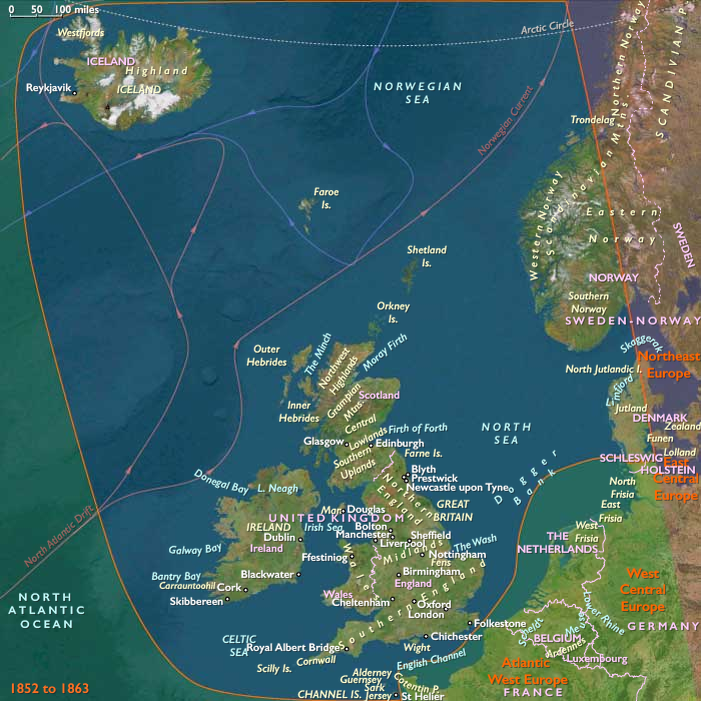
An epidemic of cholera in London kills…
September 1854 CE
The 1854 Broad Street Cholera outbreak, which kills five hundred, ends after the physician John Snow identifies a neighborhood Broad Street pump as contaminated and persuades officials to remove its handle.
Snow will later use a dot map to illustrate the cluster of cholera cases around the pump.
He will also use statistics to illustrate the connection between the quality of the water source and cholera cases, showing that water was being delivered to the outbreak area from sewage-polluted sections of the Thames, leading to an increased incidence of cholera.
Snow's study is a major event in the history of public health and geography.
It is regarded as one of the founding events of the science of epidemiology.
This discovery will come to influence public health and the construction of improved sanitation facilities beginning in the mid-nineteenth century.
Later, the term "focus of infection" will be used to describe sites, such as the Broad Street pump, in which conditions are good for transmission of an infection.
John Snow's endeavor to find the cause of the transmission of cholera had caused him to unknowingly create a double-blind experiment.
Locations
Subjects
Regions
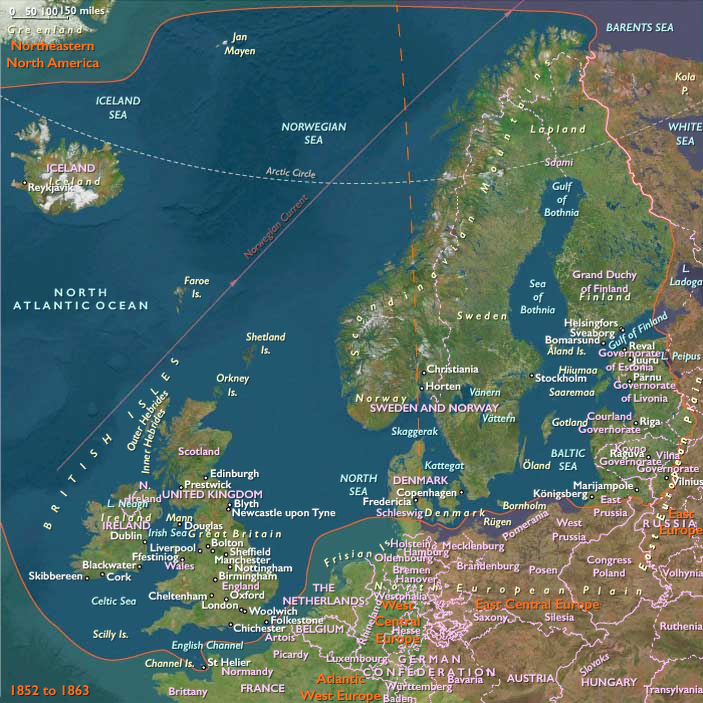
North Europe
View →Subregions