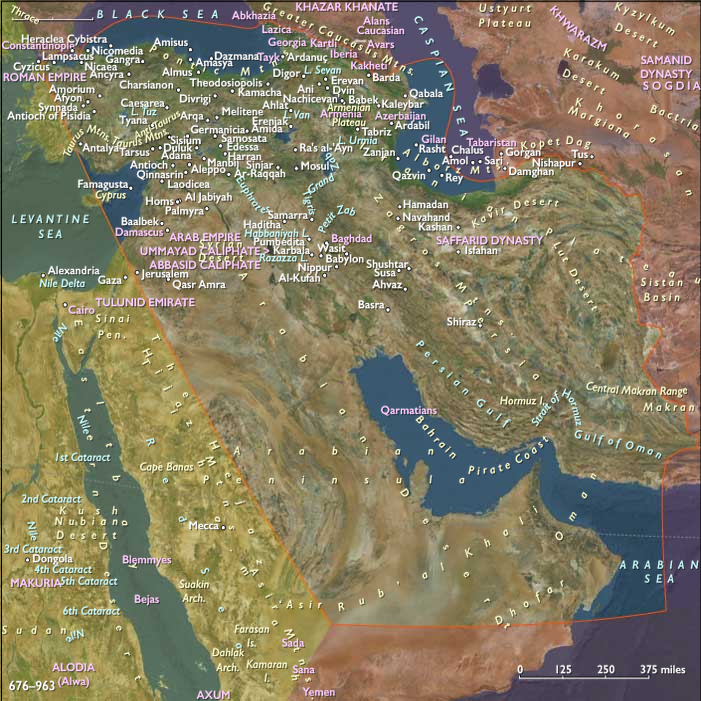
The inland empires of Persia and Iraq…
820 CE to 963 CE
The inland empires of Persia and Iraq depend on customs duties from East-West trade, much of which passes by Oman.
Accordingly, the caliph and his successors can not allow the regional coastal cities out of their control.
Oman acquires a dual nature as a consequence.
Ibadi leaders usually control the mountainous interior while, for the most part, foreign powers control the coast.
Coastal Omanis, who are often foreigners or have considerable contact with foreigners because of trade, profit from their involvement with outsiders, whereas Omanis in the interior tend to reject the foreign presence as an intrusion into the small, tightly knit Ibadi community.
Ibadi Islam thus preserves some of the hostility toward outsiders that was a hallmark of the early Kharijites.
In Ibadite Oman, the selection of a new imam is determined by an agreement made among the religious leaders and the heads of the major groups, particularly the leaders of the two major tribal confederations that come to be known as the Ghafiris and the Hinawis.
Following the Ibadite invasion of southern Arabia in 893, Oman wavers between independence and subjection to the 'Abbasids.
Oman's First Imamate reaches its zenith in the ninth century.
As it begins to decline, elected imams tend to give way to hereditary dynasties, which then collapse because of family disputes and the resurgence of Ibadite ideals.
Maritime trade also contributes to dynastic decline from the tenth century onward.
Locations
Topics
Regions
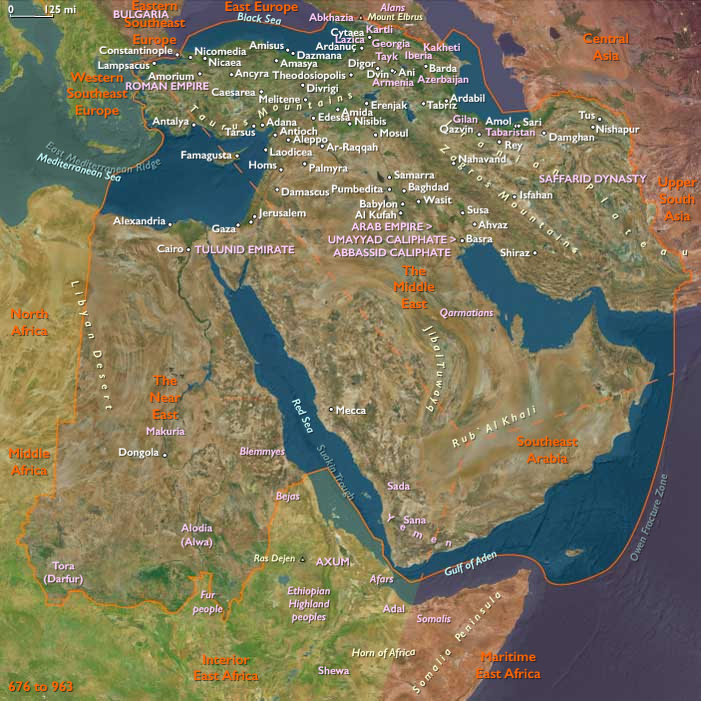
The Near and Middle East
View →Subregions