
Filters:
Kanem-Borno peaks during the reign of the …
Years: 1540 - 1683
Kanem-Borno peaks during the reign of the outstanding statesman Mai Idris Alooma (ca. 1571-1603).
Alooma (also spelled Aluma or Alwma) is remembered for his military skills, administrative reforms, and Islamic piety.
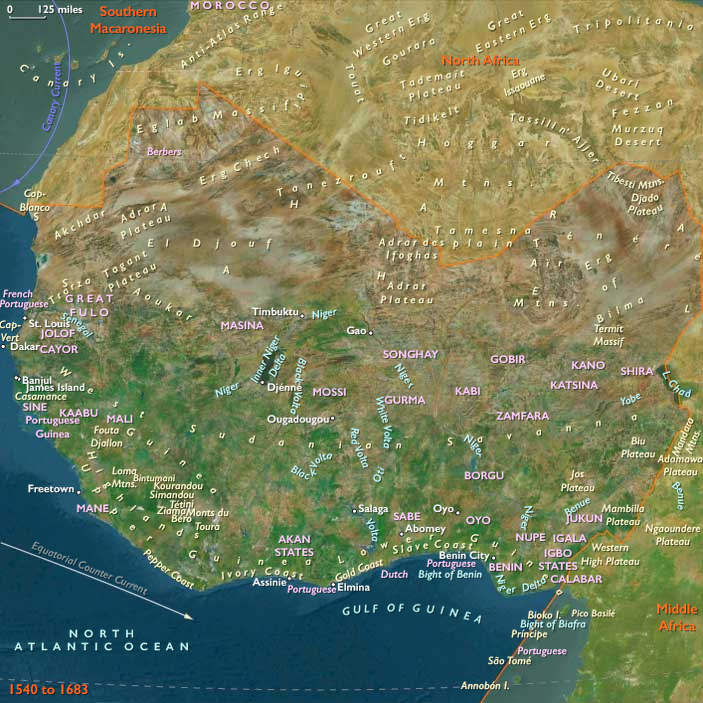
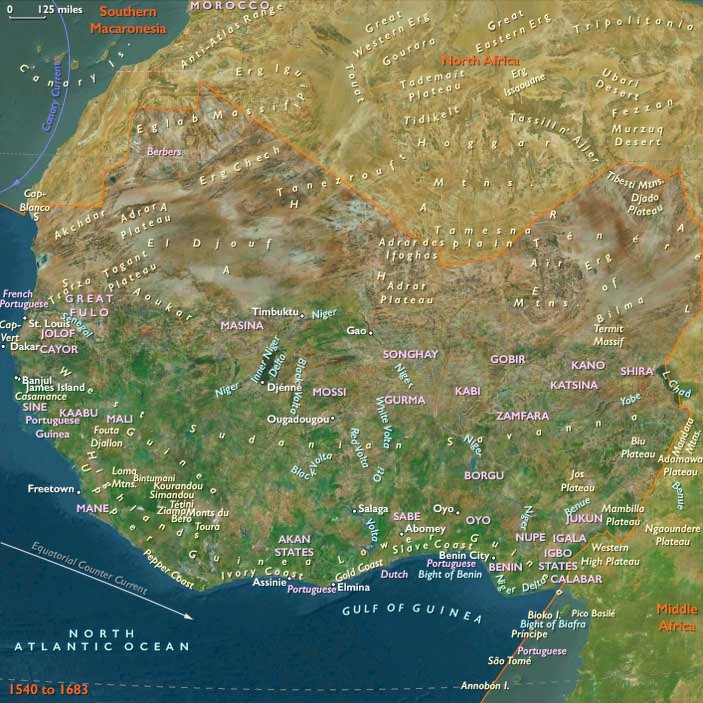
His main adversaries are the Hausa to the west, the Tuareg and Toubou to the north, and the Bilala to the east.
One epic poem extols his victories in three hundred and thirty wars and more than a thousand battles.
His innovations include the employment of fixed military camps (with walls); permanent sieges and “scorched earth” tactics, where soldiers burn everything in their path; armored horses and riders and the use of Berber camel cavalry, Kotoko boatmen, and iron-helmeted musketeers trained by Turkish military advisers.
His active diplomacy features relations with Tripoli, Egypt, and the Ottoman Empire, which sends a two hundred-member ambassadorial party across the desert to Alooma’s court at Ngazargamu.
Alooma also signs what is probably the first written treaty or cease-fire in Chadian history. (Like many cease-fires that will be negotiated in the 1970s and 1980s, it is promptly broken.)
Alooma introduces a number of legal and administrative reforms based on his religious beliefs and Islamic law(sharia).
He sponsors the construction of numerous mosques and makes a pilgrimage to Mecca, where he arranges for the establishment of a hostel to be used by pilgrims from his empire.
As with other dynamic politicians, Aluooma's reformist goals lead him to seek loyal and competent advisers and allies, and he frequently relies on slaves who had been educated n noble homes.
Alma regularly seeks advice from a council composed of heads of the most important clans.
He requires major political figures to live at the court, and he reinforces political alliances through appropriate marriages (Alooma himself is the son of a Kanuri father and a Bilala mother).
Kanem-Borno under Alooma was strong and wealthy.
Government revenue comes from tribute (or booty, if the recalcitrant people have to be conquered), sales of slaves, and duties on and participation in trans-Saharan trade.
Unlike West Africa, the Chadian region does not have gold.
Still, it is central to one of the most convenient trans-Saharan routes.
Between Lake Chad and Fezzan lie a sequence of well-spaced wells and oases, and from Fezzan there are easy connections to North Africa and the Mediterranean Sea.
Many products are sent north, including natron (sodium carbonate), cotton, kola nuts, ivory, ostrich feathers, perfume, wax, and hides, but the most important of all were slaves.
Imports included salt, horses, silks, glass, muskets, and copper.
Alma takes a keen interest in trade and other economic matters.
He is credited with having the roads cleared, designing better boats for Lake Chad, introducing standard units of measure for grain, and moving farmers into new lands.
In addition, he improves the ease and security of transit through the empire with the goal of making it so safe that “a lone woman clad in gold might walk with none to fear but God."
The administrative reforms and military brilliance of Alooma sustains the empire until the mid-1600s, when its power begins to fade.
Alooma (also spelled Aluma or Alwma) is remembered for his military skills, administrative reforms, and Islamic piety.
His main adversaries are the Hausa to the west, the Tuareg and Toubou to the north, and the Bilala to the east.
One epic poem extols his victories in three hundred and thirty wars and more than a thousand battles.
His innovations include the employment of fixed military camps (with walls); permanent sieges and “scorched earth” tactics, where soldiers burn everything in their path; armored horses and riders and the use of Berber camel cavalry, Kotoko boatmen, and iron-helmeted musketeers trained by Turkish military advisers.
His active diplomacy features relations with Tripoli, Egypt, and the Ottoman Empire, which sends a two hundred-member ambassadorial party across the desert to Alooma’s court at Ngazargamu.
Alooma also signs what is probably the first written treaty or cease-fire in Chadian history. (Like many cease-fires that will be negotiated in the 1970s and 1980s, it is promptly broken.)
Alooma introduces a number of legal and administrative reforms based on his religious beliefs and Islamic law(sharia).
He sponsors the construction of numerous mosques and makes a pilgrimage to Mecca, where he arranges for the establishment of a hostel to be used by pilgrims from his empire.
As with other dynamic politicians, Aluooma's reformist goals lead him to seek loyal and competent advisers and allies, and he frequently relies on slaves who had been educated n noble homes.
Alma regularly seeks advice from a council composed of heads of the most important clans.
He requires major political figures to live at the court, and he reinforces political alliances through appropriate marriages (Alooma himself is the son of a Kanuri father and a Bilala mother).
Kanem-Borno under Alooma was strong and wealthy.
Government revenue comes from tribute (or booty, if the recalcitrant people have to be conquered), sales of slaves, and duties on and participation in trans-Saharan trade.
Unlike West Africa, the Chadian region does not have gold.
Still, it is central to one of the most convenient trans-Saharan routes.
Between Lake Chad and Fezzan lie a sequence of well-spaced wells and oases, and from Fezzan there are easy connections to North Africa and the Mediterranean Sea.
Many products are sent north, including natron (sodium carbonate), cotton, kola nuts, ivory, ostrich feathers, perfume, wax, and hides, but the most important of all were slaves.
Imports included salt, horses, silks, glass, muskets, and copper.
Alma takes a keen interest in trade and other economic matters.
He is credited with having the roads cleared, designing better boats for Lake Chad, introducing standard units of measure for grain, and moving farmers into new lands.
In addition, he improves the ease and security of transit through the empire with the goal of making it so safe that “a lone woman clad in gold might walk with none to fear but God."
The administrative reforms and military brilliance of Alooma sustains the empire until the mid-1600s, when its power begins to fade.
Locations
People
Groups
- Arab people
- Tuaregs, or Touareg, people
- Hausa Kingdoms, the
- Hausa people
- Islam
- Zaghawa people
- Toubou people
- Kanem, Empire of
- Kanembu people
- Kanuri people
- Bilala people
- Bornu, Kingdom of
- Egypt and Syria, Mamluk Burji Sultanate of
- Kotoko people
- Ottoman Empire
- Turkish people
- Tripoli, Beylik of
Commodoties
- Weapons
- Hides and feathers
- Gem materials
- Glass
- Domestic animals
- Oils, gums, resins, and waxes
- Grains and produce
- Fibers
- Textiles
- Slaves
- Salt
Subjects
Regions
Subregions
Years: 1540 - 1683
Locations
People
Groups
- Arab people
- Tuaregs, or Touareg, people
- Hausa Kingdoms, the
- Hausa people
- Islam
- Zaghawa people
- Toubou people
- Kanem, Empire of
- Kanembu people
- Kanuri people
- Bilala people
- Bornu, Kingdom of
- Egypt and Syria, Mamluk Burji Sultanate of
- Kotoko people
- Ottoman Empire
- Turkish people
- Tripoli, Beylik of
Commodoties
- Weapons
- Hides and feathers
- Gem materials
- Glass
- Domestic animals
- Oils, gums, resins, and waxes
- Grains and produce
- Fibers
- Textiles
- Slaves
- Salt
Subjects
Regions
Subregions