The irrigation works, ball courts, and settlements…
October 1540 CE
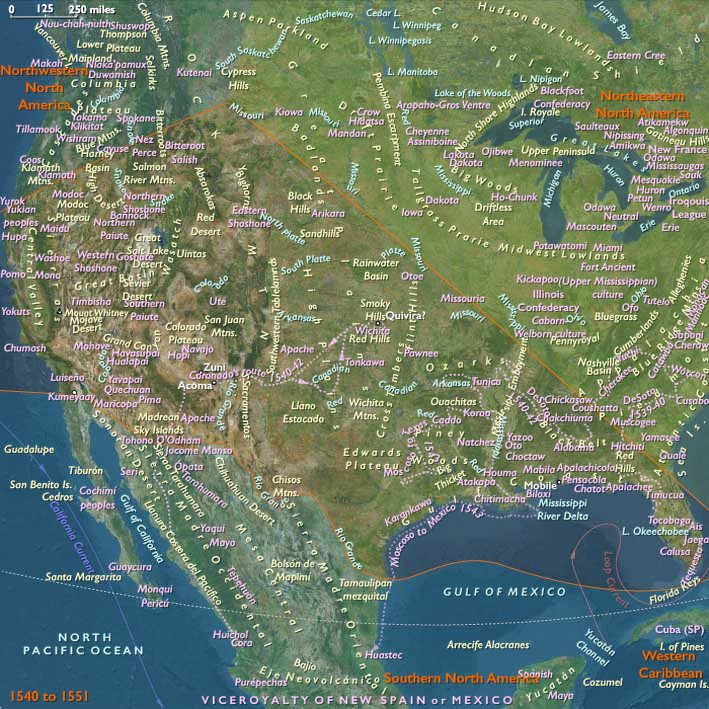
The irrigation works, ball courts, and settlements of the Hohokam have fallen into disuse by the time Spaniards explore the American Southwest in 1540.
The Pima and Papago, Aztec-Tanoan speakers believed to be their descendants, live in small, semi-independent patrilineage-based villages and frequently war with Apache bands.
The Pima, unlike the Papago, have plenty of water available in the Gila River for irrigating their fields; they therefore have less need to wander in search of wild foods and are able to live a settled life in villages near the river.
Because of frequent Apache attacks, they concentrate their numbers in larger villages under an elected chief and develop a degree of tribal solidarity that is lacking among the Papago.
Papago means "bean-eating people" in the Pima language; the modern name for the Papago is Tohono O'Odham, meaning "People of the Desert".
Groups
Topics
Commodities
Subjects
Regions

Northern North America
View →Subregions