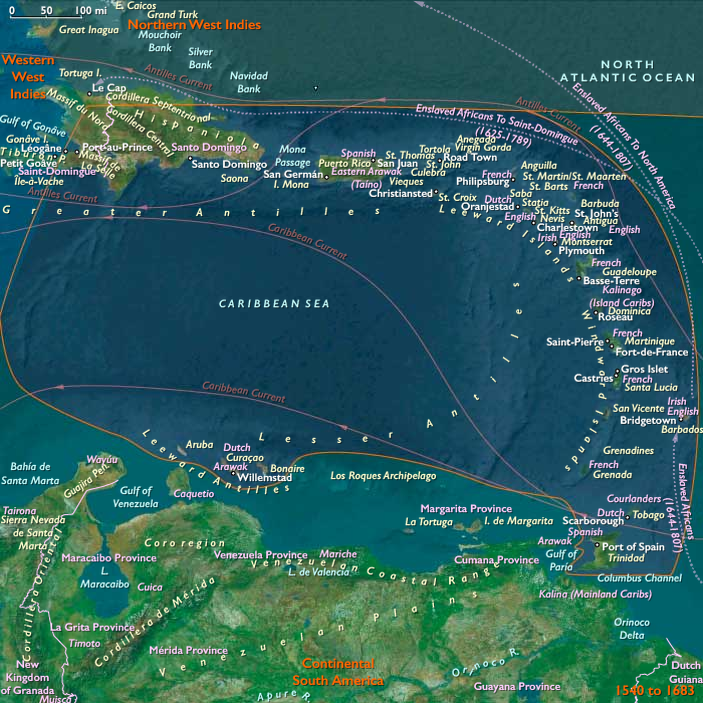
The island of Grenada had been formed…
1650 CE
The island of Grenada had been formed about two million years ago as an underwater volcano.
Before the arrival of Europeans, the island had been inhabited by Carib Indians who had driven the more peaceful Arawaks from the island.
Columbus had sighted Grenada in 1498 during his third voyage to the new world.
He named the island "Concepcion."
The origin of the name "Grenada" is obscure, but it is likely that Spanish sailors renamed the island for the city of Granada.
The name "Grenada," or "la Grenade" in French, will be in common use by the beginning of the eighteenth century.
Partly because of the Caribs, Grenada remained uncolonized for more than one hundred years after its discovery; early English efforts to settle the island had been unsuccessful.
A French company, originally founded by Cardinal Richelieu, purchases Grenada from the English in 1650 and establishes a small settlement.
After several skirmishes with the Caribs, the French bring in reinforcements from Martinique and defeat the Caribs, the last of whom leaps into the sea rather than surrender.
Locations
Groups
Commodities
Subjects
Regions
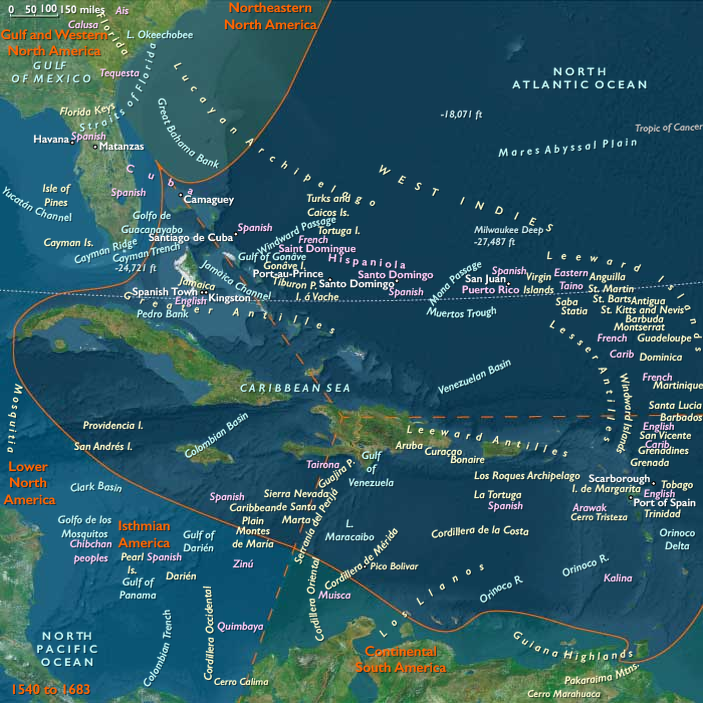
West Indies
View →Subregions