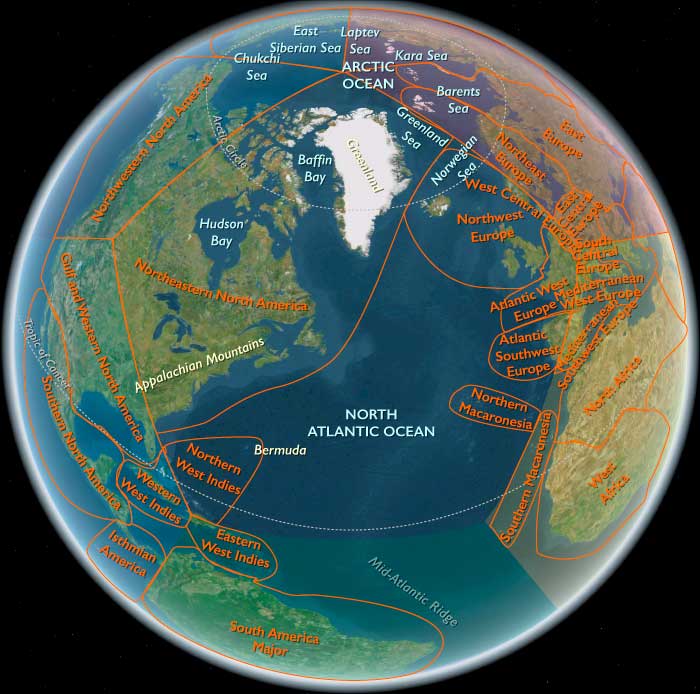
Event
The Jacobites had reached Derby on December…
The Jacobites had reached Derby on December 4.
A Council meeting is convened at Exeter House in Derby, where Charles is staying, on the morning of December 5.
Lord George Murray begins by arguing for a retreat to Scotland, citing the three British armies in England: Cumberland's, Wade's and an army supposedly north of London.
If the Jacobites defeat Cumberland's forces, Murray argued, they will still lose between one thousand and fifteen hundred soldiers, which will leave the army unfit for further fighting.
If they are defeated in that battle then the militia will pick them off and a retreat to Scotland will be extremely difficult in such circumstances.
Charles, after a long pause, speaks on preparations for the next day's marching.
Murray interrupts to question the wisdom of marching on.
Charles appeals to other officers, who pronounce in favor of Murray.
Charles criticizes them for giving up guaranteed victory and a Stuart restoration.
Murray replies that everyone is in favor of a Stuart restoration and are prepared to die for it, but that all are certain to die if they proceed.
Lord Elcho and Lord Ogilvy agree with Murray and declare that the Jacobite army cannot defeat two or three armies in succession and therefore it is likely that Charles would be killed or captured.
Charles in reply points to the favorable strategic position of the Jacobite army and its morale.
Moreover, he says the English Jacobites will finally come out in support in the event of a march on London and the French will land in Kent or Essex, citing a letter he had received from Lord Drummond demonstrating French support.
Murray says Drummond's letter only proves that the French will help the Jacobites in Scotland, not England, and that with Drummond's and Strathallan's armies amounting to the size of the present Jacobite army, it is wise to retreat to Scotland to combine with them.
An advance on London can only be successful with English Jacobite support or French support.
Charles professes that he believes the English Jacobites will rise but admits he is not in touch with them.
Lord Elcho intervenes to say that the Jacobite army has marched on England to combine with English Jacobites and the French but that no prominent English support has been given and the common people are antagonistic.
Furthermore, the French have not landed and there are two armies between the Jacobites and London.
He says the Jacobites have come to aid the English sympathizers, not to enthrone a king when they refuse to help.
Lord Elcho finishes by saying he will support a march on London only if Charles has written proof that this is what the English Jacobites have requested.
Charles proclaims that a Jacobite hold on London will cripple the Whig government; Murray responds by saying that that relies on the Jacobites winning London.
Even if the Jacobites defeat Cumberland, the leftovers of his army will decimate the Jacobite army as they march to London and will link up with other soldiers in London.
A battle-weary Jacobite army will not inspire Jacobite Londoners to come out in support of them with two British armies still in England.
Charles is supported only by Ranald Clanranald, John O'Sullivan and the Duke of Perth.
When Murray of Broughton enters the Council, Charles requests his opinion and Murray pronounces in favor of a retreat.
Lord George Murray, Lord Elcho and Lord Ogilvy argue that Londoners will make it hard for the Jacobites to capture the capital and even if they manage to capture it, they themselves will be besieged in turn by Wade and Cumberland's armies.
A diversion to Wales, suggested by the Duke of Perth, is also defeated on the grounds that it would be cut off from Scotland.
The Council retires until the evening.
Charles spends the afternoon visiting the local gentry in order to persuade them to come out in support of him but fails.
He manages to persuade the Duke of Perth and the Marquis of Tullibardine to support a march on London.
The Duke of Perth disagrees, arguing for an immediate attack on Cumberland, but when Murray of Broughton voices his agreement he is asked to give this in writing but when he refuses he is silenced.
Charles points out that if the Jacobite army retreats they will be in increased danger due to being in between Wade and Cumberland; however, Wade will not be an immediate danger if they march on London.
This is countered by the clan chiefs Cluny. MacDonald of Keppoch, and Cameron of Lochiel, who argue that the Jacobites can march faster than Cumberland and can defeat Wade if he attempts to intercept them on the way to Scotland.
Dudley Bradstreet, an English spy, now enter the Council to inform them of (false) new intelligence: that there is another army under the command of either Lieutenant General Hawley or Lieutenant General Ligonier, with nine thousand soldiers, who stand between them and London.
Ranald Clanranald and the Marquis of Tullibardine now drop their support for an advance, and Charles, though keenly disappointed, eventually assents to the Council decision to retreat.
-
{# Image navigates to the detail page; the magnifying-glass chip is the only Fancybox lightbox trigger (kept a separate sibling — anchors can't nest). #}
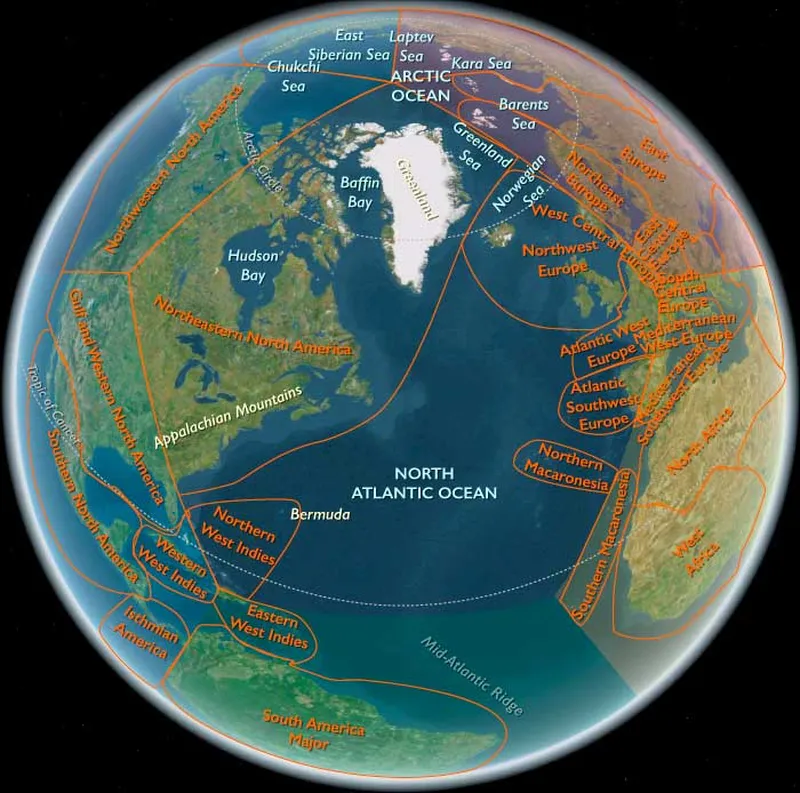 The Atlantic Lands
World
The Atlantic Lands
World
-
{# Image navigates to the detail page; the magnifying-glass chip is the only Fancybox lightbox trigger (kept a separate sibling — anchors can't nest). #}
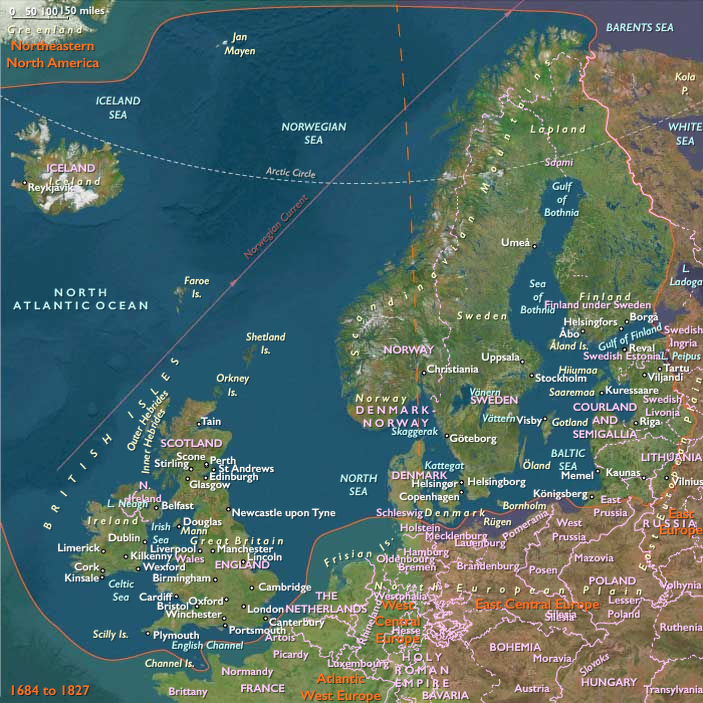 North Europe
Region
North Europe
Region
-
{# Image navigates to the detail page; the magnifying-glass chip is the only Fancybox lightbox trigger (kept a separate sibling — anchors can't nest). #}
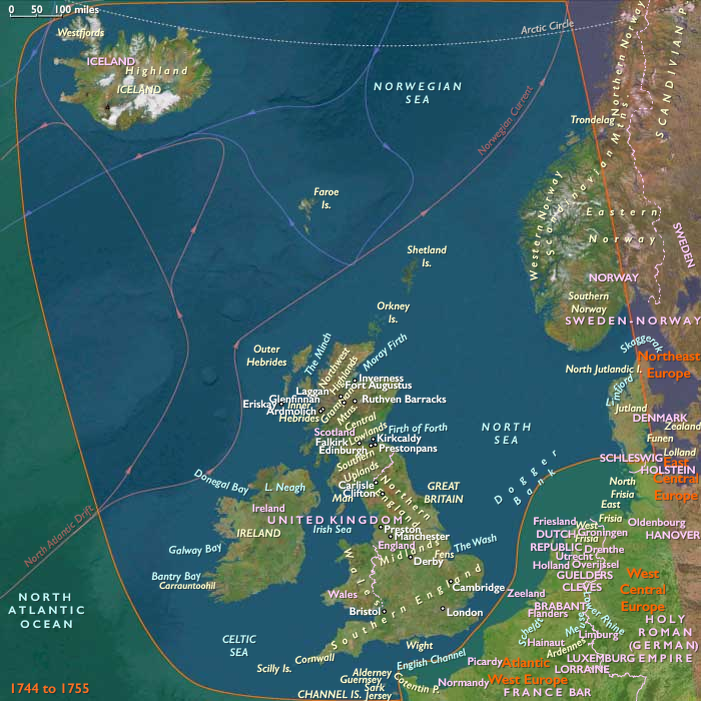 Northwest Europe
Subregion
Northwest Europe
Subregion