Franz Joseph appoints Gyula Andrassy—a member of…
1864 CE to 1875 CE
His government strongly favors the Compromise of 1867 and follows a laissez-faire economic policy.
Guilds are abolished, workers are permitted to bargain for wages, and the government attempts to improve education and construct roads and railroads.
Between 1850 and 1875, Hungary's farms have prospered: grain prices are high, and exports triple, but Hungary's economy has accumulated capital too slowly, and the government relies heavily on foreign credits.
In addition, the national and local bureaucracies had begun to grow immediately after the
compromise became effective.
Soon the cost of the bureaucracy outpaces the country's tax revenues, and the national debt soars.
After an economic downturn in the mid-1870s, Deak's party succumbs to charges of financial mismanagement and scandal.
Locations
Subjects
Regions
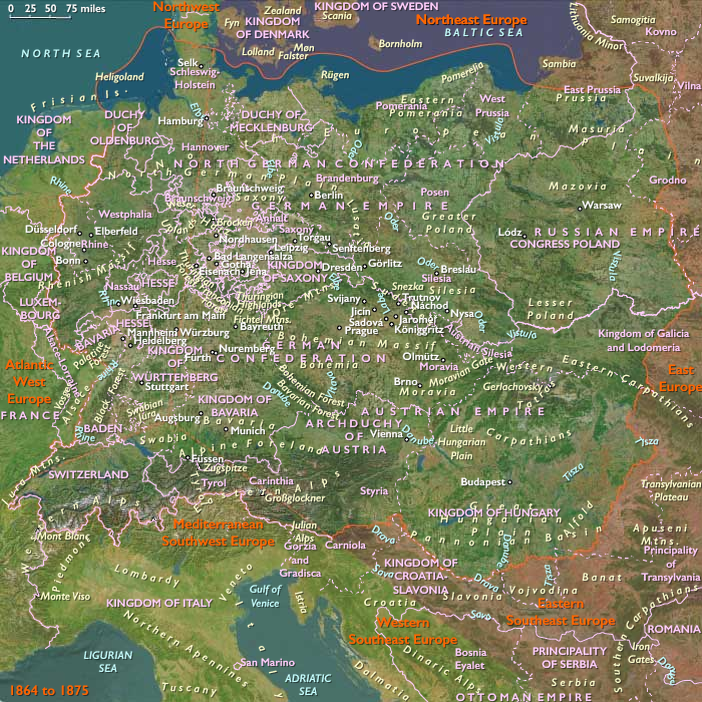
Central Europe
View →Subregions