The cost of the earliest functional marine…
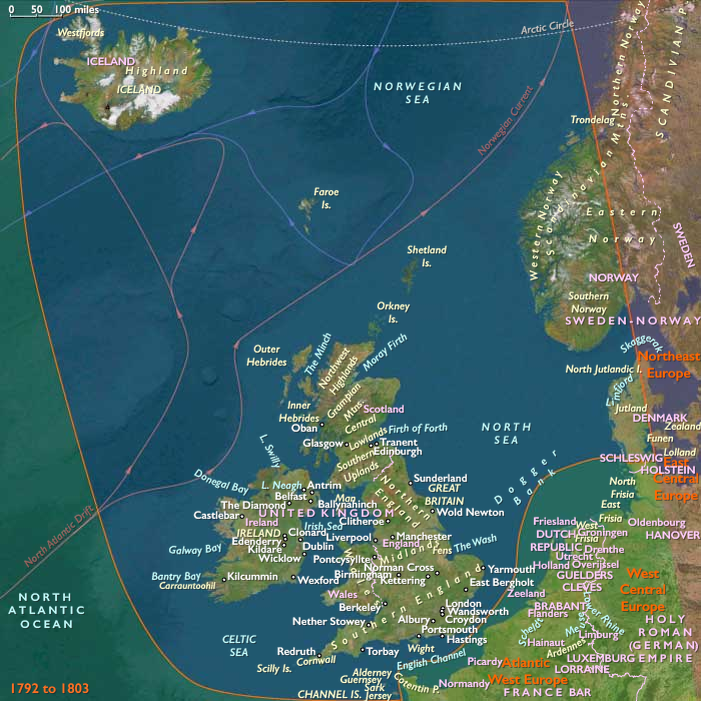
1792 CE to 1803 CE
However, over time, the costs have dropped to between £25 and £100 (half a year's to two years' salary for a skilled worker) in the early nineteenth century.
Many historians point to relatively low production volumes over time as evidence that the chronometers were not widely used.
However, Landes points out that the chronometers lasted for decades and did not need to be replaced frequently—indeed the number of makers of marine chronometers reduced over time due to the ease in supplying the demand even as the merchant marine expanded.
Also, many merchant mariners make do with a deck chronometer at half the price.
These are not as accurate as the boxed marine chronometer but are adequate for many.
While the Lunar Distances method complements and rivals the marine chronometer initially, the chronometer will overtake it in the 19th century.
Yet the timekeeping device with such accuracy will eventually also allow the determination of longitude accurately, making the device a fundamental key to the modern age.
Following Harrison, the marine timekeeper is reinvented yet again by John Arnold, who, while basing his design on John Harrison's most important principles, at the same time simplifies it enough for him to produce equally accurate but far less costly marine chronometers in quantity from around 1783.
Nonetheless, for many years even towards the end of the eighteenth century, chronometers were expensive rarities, as their adoption and use proceeds slowly due to the precision manufacturing necessary and hence high expense.
The expiry of Arnold's patents at the end of the 1790s enablea many other watchmakers including Thomas Earnshaw to produce chronometers in greater quantities at less cost even than those of Arnold.
By the early nineteenth century, navigation at sea without one is considered unwise to unthinkable.
Using a chronometer to aid navigation simply saves lives and ships—the insurance industry, self-interest, and common sense do the rest in making the device a universal tool of maritime trade.
Locations
Subjects
Regions
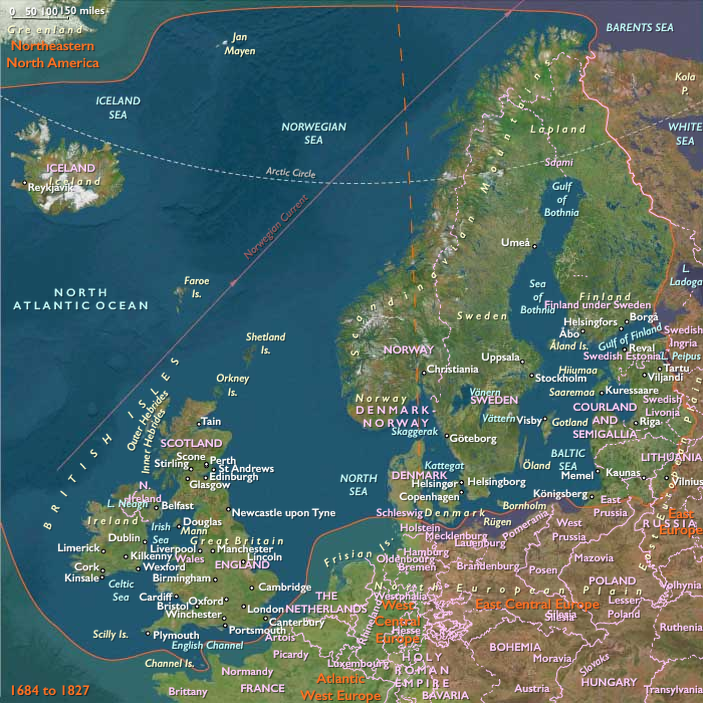
North Europe
View →Subregions