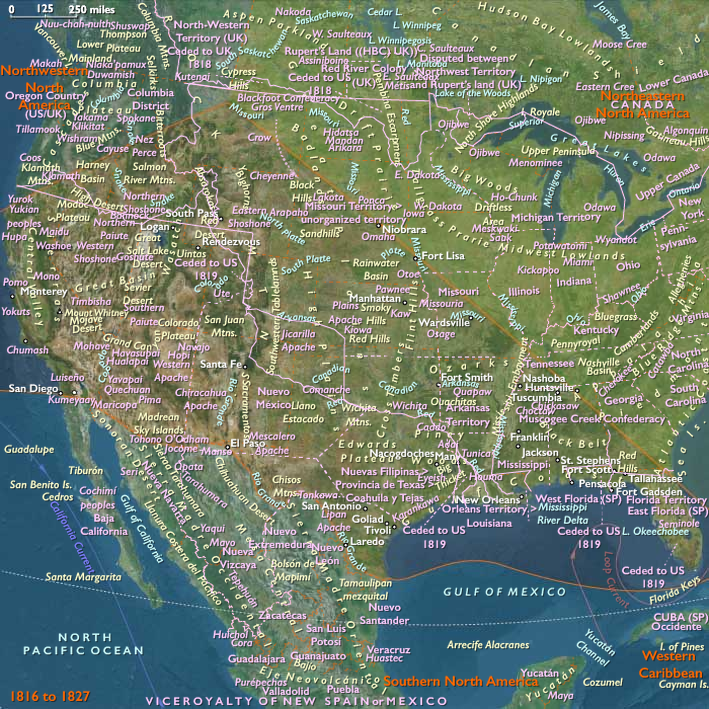
The Kiowa and Kiowa Apache bands have…
1684 CE to 1827 CE
Their tribal territory stretches from what is now Yellowstone National Park and the headwaters of the Yellowstone Riverblack (E-chee-karsh-ah-shay—"Elk River") to the west, north to the Musselshell River, then northeast to the Yellowstone's mouth at the Missouri River, then southeast to the confluence of the Yellowstone and Powder rivers (Bilap chashee—"Powder River" or "Ash River"), south along the South Fork of the Powder River, confined in the southeast by the Rattlesnake Mountains and westwards in the southwest by the Wind River Range.
Their tribal area includes the river valleys of the Judith River (Buluhpa'ashe—"Plum River"), Powder River, Tongue River, Big Horn River and Wind River as well as the Bighorn Mountains (Iisiaxpúatachee Isawaxaawúua), Pryor Mountains (Baahpuuo Isawaxaawúua), Wolf Mountains (Cheetiish—"Wolf Teeth Mountains") and Absaroka Range (also called Absalaga Mountains).
Once established in the Valley of the Yellowstone River and its tributaries on the Northern Plains in Montana and Wyoming, the Crow divided into four groups: the Mountain Crow, River Crow, Kicked in the Bellies, and Beaver Dries its Fur.
Formerly semi-nomad hunters and farmers in the northeastern woodland, they adapt to the nomadic lifestyle of the Plains Indians as hunters and gatherers, and hunted bison.
Before 1700, they were using dog travois for carrying goods.
Groups
Lakota, aka Teton Sioux (Amerind tribe)
View →
Hidatsa people (Amerind tribe)
View →
Shoshone, Shoshoni, or Snakes (Amerind tribe)
View →
Crow people, aka Absaroka or Apsáalooke (Amerind tribe)
View →
Cheyenne people (Amerind tribe)
View →
Kiowa people (Amerind tribe)
View →
Plains Apache, or Kiowa Apache; also Kiowa-Apache, Naʼisha, Naisha (Amerind tribe)
View →
Subjects
Regions
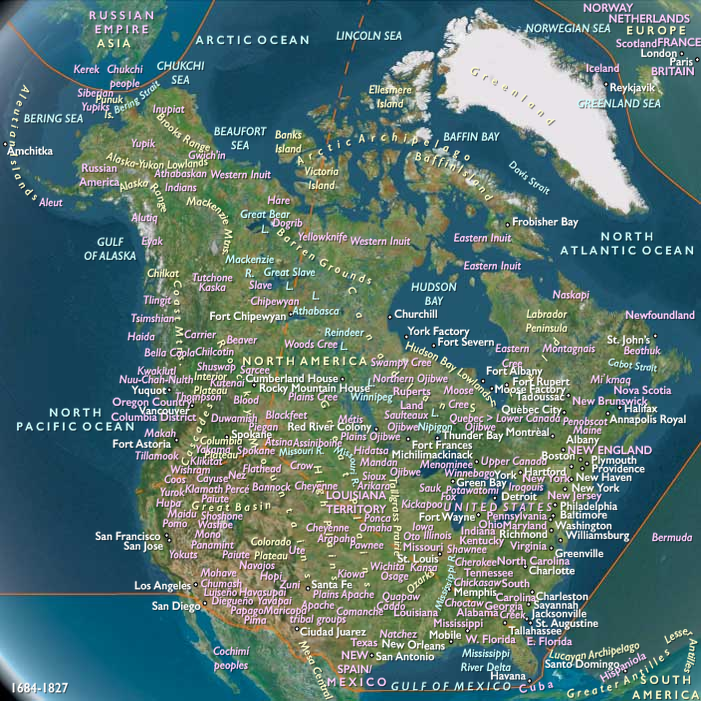
Northern North America
View →Subregions