
The level of unpopularity Tiberius had achieved …
Years: 37 - 37
The level of unpopularity Tiberius had achieved by the time of his death with both the upper and lower classes is revealed by these facts: the Senate refused to vote him divine honors, and mobs filled the streets yelling "To the Tiber with Tiberius!
"—in reference to a method of disposal reserved for the corpses of criminals.
Instead the body of the emperor is cremated and his ashes are quietly laid in the Mausoleum of Augustus.
Tiberius' ashes will be scattered in CE 410 during the Sack of Rome.
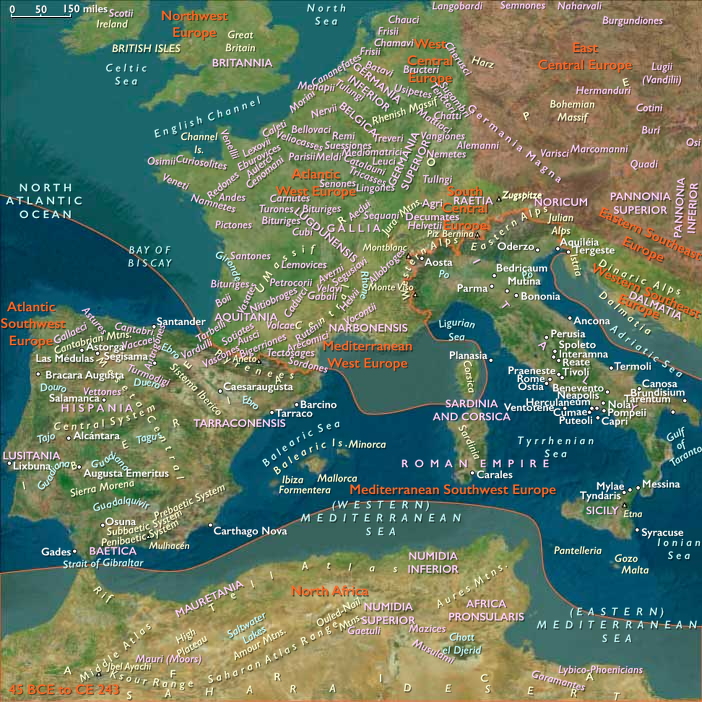
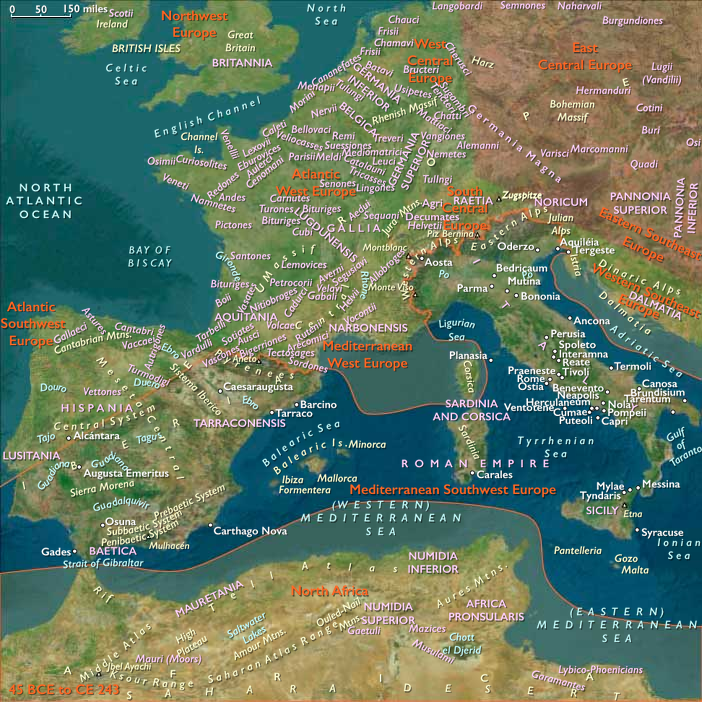
Caligula accepts the powers of the Principate as conferred by the Senate and enters Rome on March 28 amid a crowd that hails him as "our baby" and "our star," among other nicknames.
Caligula is loved by many for being the beloved son of the popular Germanicus, and because he is not Tiberius.
After Caligula delivers Tiberius’ eulogy, he sails to Pandataria and the Pontine Islands and returns carrying in his own hands the ashes of his mother and brother Nero in urns.
As proof of devotion to his family, Caligula arranges the most distinguished soldiers available to carry the urns of his mother and two brothers in two biers at noon in Rome, when the streets are at their busiest, to the Mausoleum of Augustus.
A bronze medal on display in the British Museum shows Agrippina’s ashes being brought back to Rome by Caligula.
Caligula's first acts are said to be generous in spirit, though many are political in nature.
To gain support, he grants bonuses to those in the military including the Praetorian Guard, city troops and the army outside Italy.
He helps those who had been harmed by the Imperial tax system, banishes certain sexual deviants, and puts on lavish spectacles for the public, such as gladiator battles.
He appoints an annual day each year in Rome, for people to offer funeral sacrifices to honor their late relatives.
As a dedication to Agrippina, Caligula sets aside the Circus Games to honor the memory of his late mother.
On the day that the Circus Games occur, Caligula has a statue made of Agrippina’s image to be paraded in a covered carriage at the Games.
After the Circus Games, Caligula declares that treason trials are a thing of the past and recalls those who had been sent into exile.
He orders written evidence of the court cases from Tiberius’ treason trials to be brought to the Forum to be burnt, first being the cases of Agrippina and her two sons.
It was said by Suetonius that over one hundred and sixty thousand animals were sacrificed during three months of public rejoicing to usher in the new reign.
Philo describes the first seven months of Caligula's reign as completely blissful.
Caligula will not only spend Tiberius' fortune of 2,700,000,000 sesterces but has also begun the chain of events that are to bring about the downfall of the Julio-Claudian dynasty in CE 68.
Recognizing his paternal uncle Claudius, the surviving nephew of Tiberius, to be of some use, Caligula had appointed him him his co-consul in 37 in order to emphasize the memory of Caligula's deceased father Germanicus.
Despite this, Caligula had relentlessly tormented his uncle: playing practical jokes, charging him enormous sums of money, humiliating him before the Senate, and the like.
In his will, Tiberius had left his powers jointly to Caligula and Tiberius Gemellus; Caligula had made Gemellus his adopted son, but in late 37 BCE orders Gemellus killed for allegedly plotting against him while he was ill±an act that outrages Caligula's and Gemellus's mutual grandmother Antonia Minor.
She is said to have committed suicide, although Suetonius hints that Caligula actually poisoned her.
He has his father-in-law, the eminent senator Marcus Junius Silanus ,executed as well, for unclear reasons.
Suetonius claims he plotted against Caligula while Philo and other sources claim the emperor was simply annoyed by him.
Locations
People
Groups
Topics
Commodoties
Subjects
- Commerce
- Watercraft
- Environment
- Labor and Service
- Conflict
- Mayhem
- Games and Sports
- Faith
- Government
- Custom and Law
- Technology
- Economics
Regions
Subregions
Years: 37 - 37
Locations
People
Groups
Topics
Commodoties
Subjects
- Commerce
- Watercraft
- Environment
- Labor and Service
- Conflict
- Mayhem
- Games and Sports
- Faith
- Government
- Custom and Law
- Technology
- Economics
Regions
Subregions