
The reemergence in Iraq of the Mamluks, …
Years: 1684 - 1827
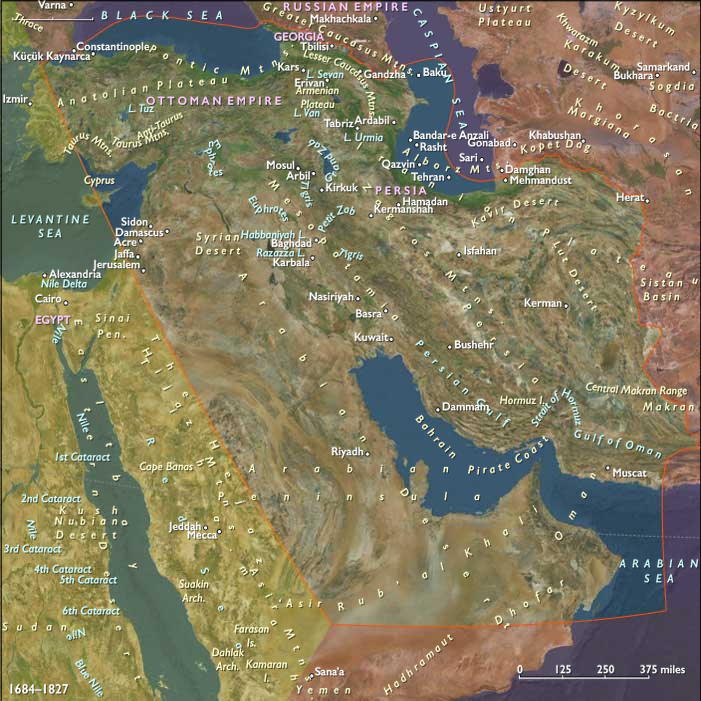
The reemergence in Iraq of the Mamluks, who begin asserting authority apart from the Ottomans in the early eighteenth century, temporarily reverses the cycle of tribal warfare and of deteriorating urban life in Iraq that had begun in the thirteenth century with the Mongol invasions.
Extending their rule first over Basra, the Mamluks eventually control the Tigris and Euphrates river valleys from the Persian Gulf to the foothills of Kurdistan.
The Mamluks are able administrators for the most part, and their rule is marked by political stability and by economic revival.
The greatest of the Mamluk leaders, Sulayman Pasha the Great (1780-1802), makes great strides in imposing the rule of law.
The last Mamluk leader, Dawüd Pasha (1816-31), initiates important modernization programs that include clearing canals, establishing industries, training a twenty-thousand-man army, and starting a printing press.
Locations
People
Groups
- Iranian peoples
- Arab people
- Persian people
- Kurdish people
- Bedouin
- Anazzah
- Shammar
- Oghuz Turks
- Muslims, Sunni
- Muslims, Shi'a
- Turkmen, Iraqi
- Marsh Arabs
- Banu Lam
- Al-Muntafiq
- Ottoman Empire
- Mamluk Dynasty (Iraq)
Subjects
Regions
Subregions
Years: 1684 - 1827
Locations
People
Groups
- Iranian peoples
- Arab people
- Persian people
- Kurdish people
- Bedouin
- Anazzah
- Shammar
- Oghuz Turks
- Muslims, Sunni
- Muslims, Shi'a
- Turkmen, Iraqi
- Marsh Arabs
- Banu Lam
- Al-Muntafiq
- Ottoman Empire
- Mamluk Dynasty (Iraq)
Subjects
Regions
Subregions