
The Matterhorn is one of the last…
July 1865 CE
The Matterhorn is one of the last of the main Alpine mountains to be ascended, not because of its technical difficulty, but because of the fear it had inspired in early mountaineers.
The first serious attempts had begun around 1857, mostly from the Italian side; but despite appearances, the southern routes are harder, and parties had repeatedly found themselves having to turn back.
However, on July 14, 1865, in what is considered the last ascent of the golden age of alpinism, the English party of Edward Whymper, Charles Hudson, Lord Francis Douglas, Douglas Robert Hadow, Michel Croz and the two Peter Taugwalders (father and son) are able to reach the summit by an ascent of the Hörnli ridge in Switzerland.
Upon descent, Hadow, Croz, Hudson and Douglas fall to their deaths on the Matterhorn Glacier, and all but Douglas (whose body will never be found) are buried in the Zermatt churchyard.
Only three days after Whymper's ascent, the mountain is ascended from the Italian side via an indirect route by Jean-Antoine Carrel and Jean-Baptiste Bich on July 17, 1865.
Subjects
Regions
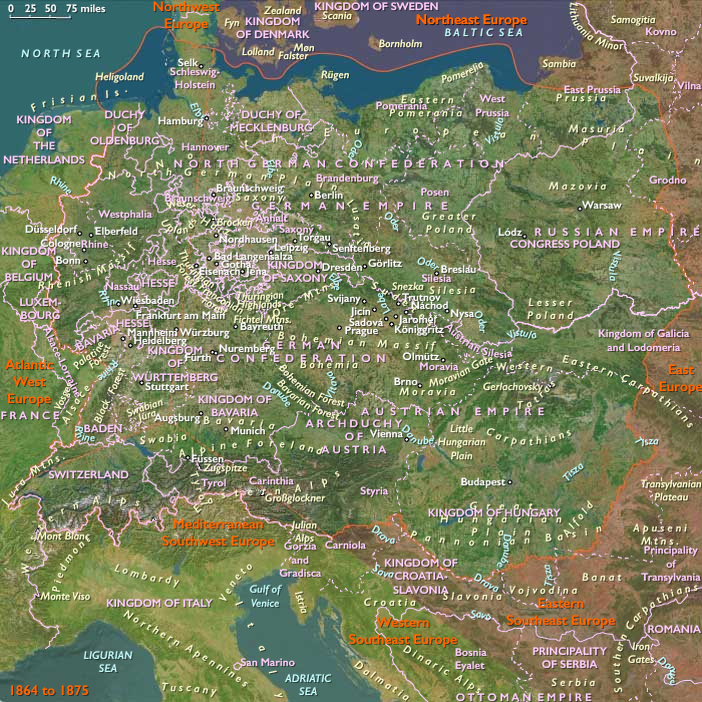
Central Europe
View →Subregions
