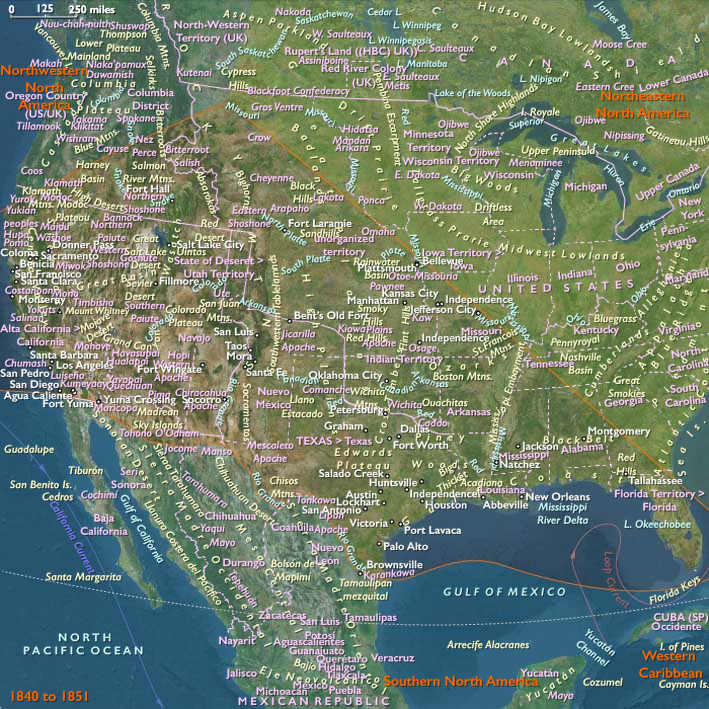
The central issue after 1848 is the…
1840 CE to 1851 CE
A small number of active Northerners are abolitionists who declare that ownership of slaves is a sin (in terms of Protestant theology) and demand its immediate abolition.
Much larger numbers in the North are against the expansion of slavery, seeking to put it on the path to extinction so that America will be committed to free land (as in low-cost farms owned and cultivated by a family), free labor, and free speech (as opposed to censorship of abolitionist material in the South).
Southern whites insist that slavery is of economic, social, and cultural benefit to all whites (and even to the slaves themselves), and denounces all anti-slavery spokesmen as "abolitionists."
Justifications of slavery include economics, history, religion, legality, social good, and even humanitarianism, to further their arguments.
Defenders of slavery argue that the sudden end to the slave economy will; have a profound and killing economic impact in the South where reliance on slave labor is the foundation of their economy.
They also argue hat if all the slaves are freed, there will be widespread unemployment and chaos.
Commodities
Regions