
The Middle East: 1576–1587 CE Ottoman …
Years: 1576 - 1587
The Middle East: 1576–1587 CE
Ottoman Transitions and New Conflicts
Murad III and Administrative Shifts
Following the death of Sultan Selim II in 1574, his son Murad III ascends the Ottoman throne. Murad’s reign is marked by significant shifts in imperial administration, notably the continued dominance of influential Grand Viziers, especially Mehmed Sokollu Pasha, until his assassination in 1579. With Sokollu’s death, the administrative apparatus becomes increasingly vulnerable to palace intrigues and factionalism, prompting concerns about long-term governmental stability.
Ottoman-Safavid Renewed Hostilities
Tensions with the Shi’ite Safavid Dynasty escalate into renewed open conflict. Border skirmishes along the Caucasus frontier become frequent, reflecting deepening religious and territorial antagonisms. Murad III, though initially reluctant to engage in prolonged warfare, finds himself compelled by internal political pressures and regional challenges to assert Ottoman military strength along the eastern borders.
Safavid Resilience and Expansion of Shi'ism
Shah Mohammad Khodabanda and Internal Strife
After the death of the influential Shah Tahmasp I in 1576, Persia experiences a turbulent interlude under his successor, Shah Mohammad Khodabanda. Characterized by physical infirmity and poor eyesight, Khodabanda’s rule is unstable, marked by internal rebellions, factional rivalry among Qizilbash chieftains, and palace intrigues. Despite this instability, Shi'ite cultural identity and institutions continue to deepen, embedding Shi'ism more firmly within Iranian society.
Emergence of Abbas I
Amid escalating internal chaos, Khodabanda’s son, young Prince Abbas, emerges as a prominent figure. His initial provincial authority in Khorasan prepares the foundation for his subsequent rise to the throne. Abbas will soon become one of the greatest Safavid monarchs, instrumental in reshaping Persia and decisively confronting the Ottomans, but during this era, he remains in the periphery, building alliances and consolidating local power.
Maritime Contest and Local Resistance
Continued Omani-Portuguese Rivalry
In the Persian Gulf, conflicts between the Portuguese and indigenous Omani forces intensify. Omani maritime resistance, driven by the Ibadi leadership, mounts significant naval challenges, slowly eroding Portuguese dominance. Oman’s struggle symbolizes broader local resistance to European maritime incursions, laying foundations for future independence and the revival of Arab maritime trade networks.
Ottoman Maritime Efforts in the Red Sea
The Ottomans reinforce their maritime presence in the Red Sea, countering Portuguese advances and securing strategic ports along the Arabian Peninsula and Horn of Africa. This effort helps preserve Ottoman control over trade routes linking the Indian Ocean to Egypt and the Levant, reflecting the empire’s commitment to safeguarding its economic interests against European powers.
Cultural Vibrancy Amidst Uncertainty
Ottoman Artistic Continuity
Despite administrative volatility, Ottoman artistic traditions remain vibrant under Murad III. Notably, Istanbul sees ongoing patronage of architects, poets, and manuscript illuminators, perpetuating the cultural vitality established in earlier reigns. However, an increasing preoccupation with palace life and factionalism among the elite diverts some resources from public works to private patronage.
Persian Arts and Literary Patronage
In Safavid Persia, cultural patronage continues despite political instability. Persian miniatures, manuscript production, and poetry flourish, contributing to the resilience of Persian artistic identity. This cultural output significantly reinforces the Safavid ideological and religious foundations, particularly amidst intense rivalry with the Sunni Ottoman Empire.
Legacy of the Era
The years between 1576 and 1587 highlight a period of transition and intensified conflict in the Middle East. Administrative shifts, internal rivalries, and increasing Ottoman-Safavid tensions reshape the political landscape. Simultaneously, maritime contests with European powers and local resistance movements foreshadow broader regional dynamics, while cultural vibrancy in both empires sustains their distinct legacies amid uncertainty.
People
Groups
- Omanis
- Ottoman Empire
- Portuguese Empire
- Qizilbash or Kizilbash, (Ottoman Turkish for "Crimson/Red Heads")
- Persia, Safavid Kingdom of
Topics
Subjects
Regions
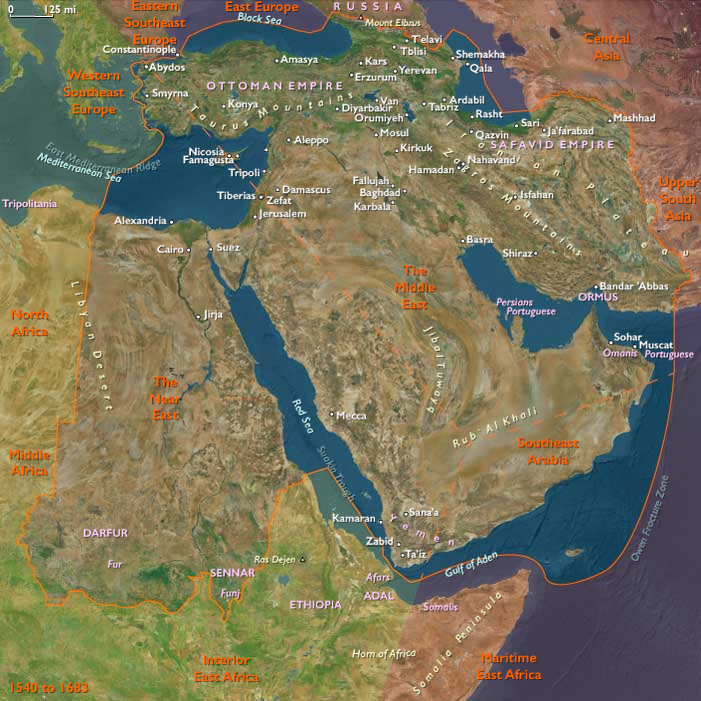
Subregions
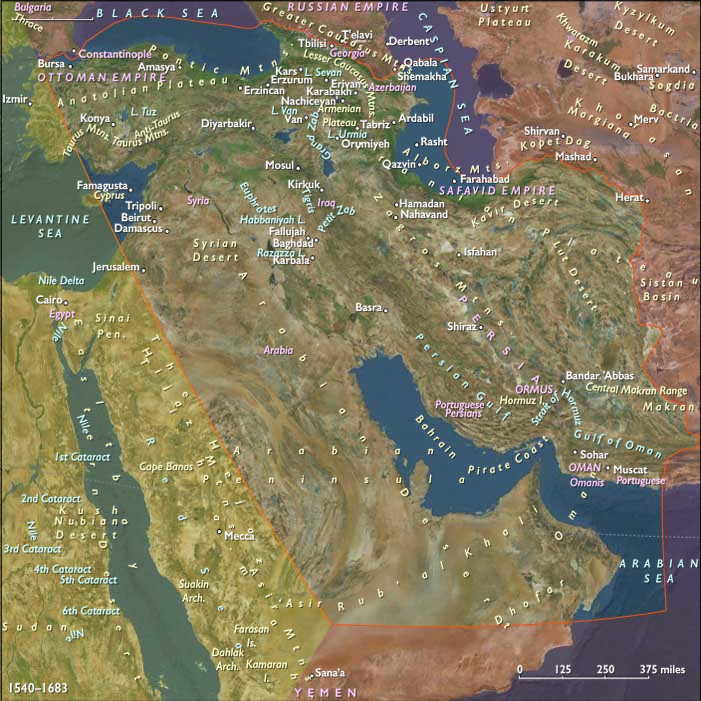
Years: 1576 - 1587
People
Groups
- Omanis
- Ottoman Empire
- Portuguese Empire
- Qizilbash or Kizilbash, (Ottoman Turkish for "Crimson/Red Heads")
- Persia, Safavid Kingdom of
Topics
Subjects
Regions
Subregions