
The Middle East (4509–4366 BCE): Chalcolithic Expansion …
Years: 4509BCE - 4366BCE
The Middle East (4509–4366 BCE): Chalcolithic Expansion and Animal Domestication
Occupation of Tepe Yahya
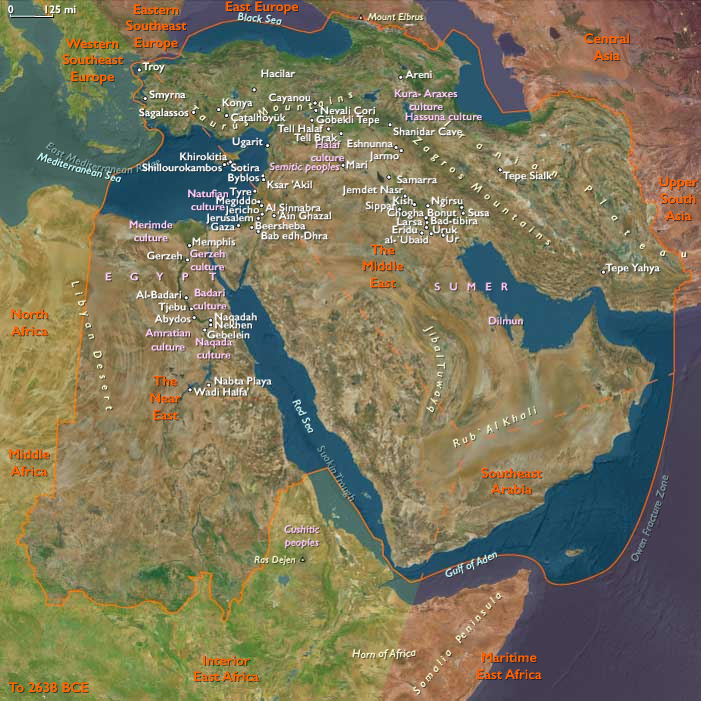
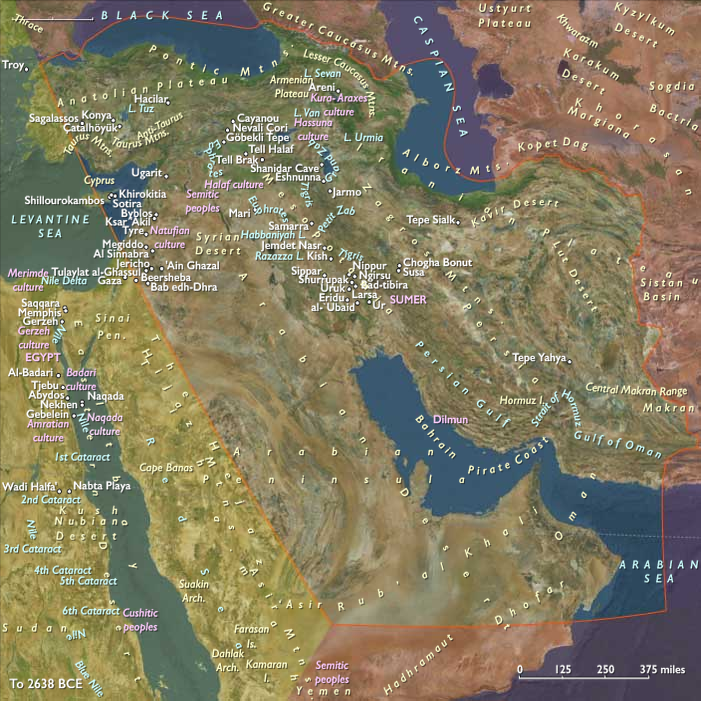
Between 4509 and 4366 BCE, the archaeological site of Tepe Yahya, located approximately 225 kilometers (140 miles) south of Kerman in present-day Iran, began its initial occupation around 4500 BCE. This site became an important center of early human settlement and technological advancement in the region.
Chalcolithic Technological Spread
By 4500 BCE, the Chalcolithic era—characterized by the concurrent use of copper and stone tools—had spread widely throughout the Fertile Crescent. This marked significant technological advancement, fostering improved tools and greater efficiency in daily activities, agriculture, and trade.
Domestication and Agricultural Development
The domestication of oxen, which possibly began as early as the sixth millennium BCE in Mesopotamia, profoundly impacted agricultural practices by providing farmers with the necessary power for developing plowing techniques. The introduction of the plow significantly enhanced agricultural productivity and facilitated expansion into previously difficult-to-cultivate areas.
Regional Animal Domestication
Animal domestication continued extensively across the region, reaching as far north as present-day Turkey and as far south as the Zagros Mountains. These practices supported increasingly stable and productive agricultural systems, contributing to the prosperity and expansion of communities across a broad geographic area.
This period highlights significant advancements in technology, agriculture, and domestication, underpinning further social and economic developments across the ancient Middle East.
Groups
Topics
Commodoties
Subjects
- Architecture
- Painting and Drawing
- Environment
- Decorative arts
- Faith
- Government
- Custom and Law
- Technology
- Metallurgy
Regions
Subregions
Years: 4509BCE - 4366BCE
Groups
Topics
Commodoties
Subjects
- Architecture
- Painting and Drawing
- Environment
- Decorative arts
- Faith
- Government
- Custom and Law
- Technology
- Metallurgy
Regions
Subregions