
The Middle East: 832–843 CE Abbasid …
Years: 832 - 843
The Middle East: 832–843 CE
Abbasid Shifts: New Capital, Turkish Dominance, and Internal Challenges
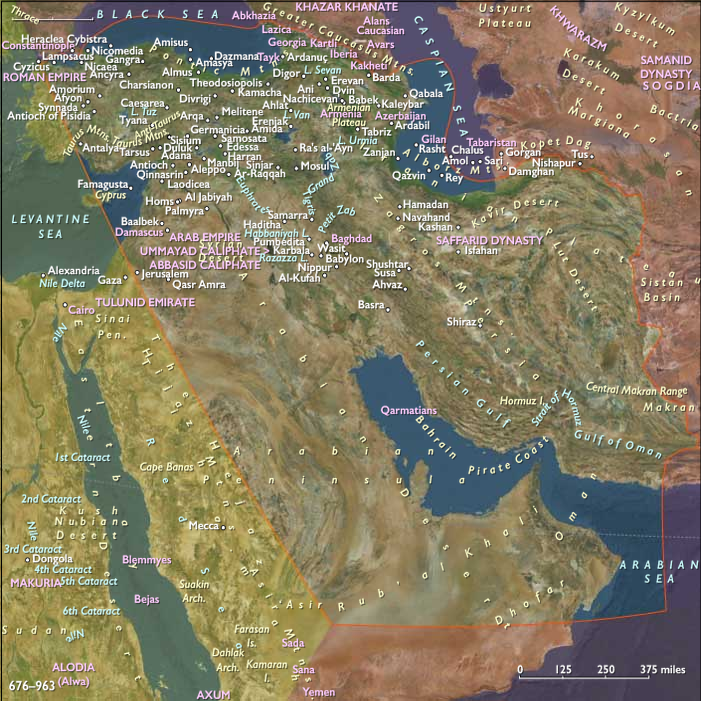
This era marks significant shifts within the Abbasid Caliphate, beginning notably with Caliph al-Mu'tasim (833–842), who, confronting growing unrest in Baghdad, relocates the imperial capital to the newly founded city of Samarra in 836. This strategic move is aimed at reducing tensions between the population of Baghdad and the caliph’s increasingly influential Turkish guards and military elite.
The establishment of Samarra signals a deeper transformation in Abbasid governance, as Turkic mercenary groups, initially recruited as loyal personal guards, rapidly ascend to dominant positions within the military and bureaucracy. Their influence expands dramatically, and within a few decades, these Turkish commanders become kingmakers, exerting powerful influence over the succession and policies of subsequent caliphs.
These administrative and military changes coincide with continuing theological controversies initiated by Caliph al-Ma'mun’s enforcement of Mu'tazilism. Al-Mu'tasim sustains the policy of the mihna (inquisition), enforcing doctrinal conformity concerning the created nature of the Qur'an. This inquisition alienates many traditionalists, contributing to growing sectarian divides and internal dissent within the caliphate.
Economically and culturally, Samarra briefly flourishes under Abbasid patronage, becoming known for its impressive architectural achievements, notably the famed Great Mosque of Samarra with its distinctive spiral minaret, symbolizing Abbasid grandeur.
Nevertheless, despite the caliphate’s apparent strength, this era sows seeds of instability. Reliance on Turkish mercenaries fractures traditional Arab-Persian alliances, significantly altering the caliphate's internal power structures and setting the stage for subsequent periods of fragmentation and regional autonomy across the Middle East.
People
Groups
Topics
Commodoties
Subjects
- Commerce
- Labor and Service
- Faith
- Government
- Scholarship
- Custom and Law
- Medicine
- Mathematics
- Astronomy
- Philosophy and logic
Regions

Subregions
Years: 832 - 843
People
Groups
Topics
Commodoties
Subjects
- Commerce
- Labor and Service
- Faith
- Government
- Scholarship
- Custom and Law
- Medicine
- Mathematics
- Astronomy
- Philosophy and logic
Regions
Subregions