
The Middle East: 856–867 CE Catastrophe …
Years: 856 - 867
The Middle East: 856–867 CE
Catastrophe and Political Anarchy under the Abbasids
This era is marked by two dramatic events, both deeply impactful for the Abbasid Caliphate and the broader region.
The 856 Damghan Earthquake
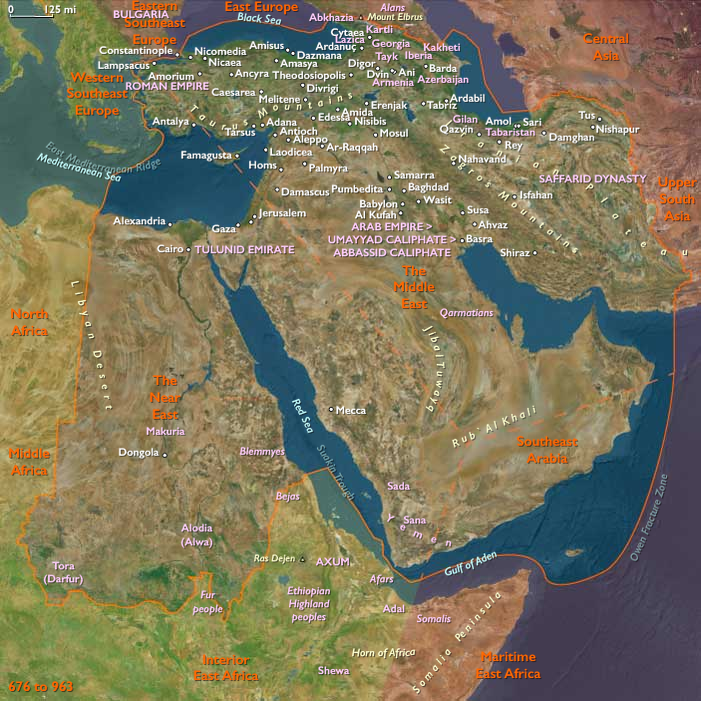
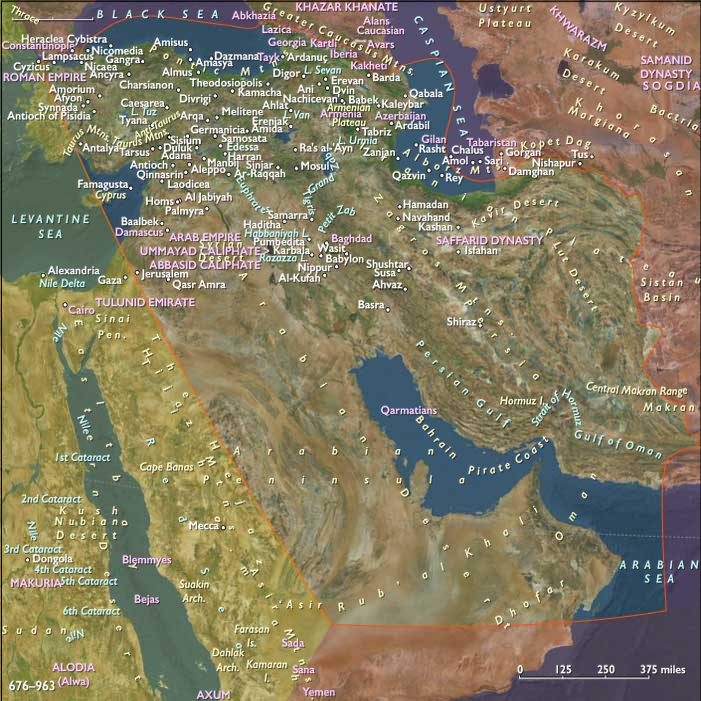
On December 22, 856, one of the most devastating earthquakes in recorded history—the Damghan Earthquake (also known as the Qumis Earthquake)—strikes northeastern Persia. With an estimated magnitude of 7.9 and a maximum intensity of X (Extreme) on the Mercalli scale, this disaster devastates an area stretching some 350 kilometers (approximately 220 miles) along the southern edge of the eastern Alborz Mountains, affecting regions such as Tabaristan and Gorgan. Its epicenter is near Damghan, then the provincial capital of Qumis.
The earthquake causes catastrophic destruction, resulting in approximately 200,000 deaths, making it one of the deadliest earthquakes in world history. The physical and economic infrastructure of the region is severely damaged, significantly impacting local populations for generations.
The Anarchy at Samarra (861–870)
Meanwhile, the Abbasid Caliphate itself plunges deeper into political turmoil during a period historians later call the Anarchy at Samarra (861–870). Following the assassination of Caliph al-Mutawakkil in 861, a rapid and violent succession of caliphs reflects severe internal instability and the dangerous dominance of rival military factions, particularly powerful Turkish guards.
Caliph al-Muntasir briefly rules for six months before dying under suspicious circumstances, possibly poisoned by the Turkish commanders who had earlier supported him. His successor, al-Musta'in, attempts to assert independence but is quickly caught between factions of Turkish military elites. In 865, as divisions within the Turkish ranks become evident, al-Musta'in flees to Baghdad with some Turkish and Tahirid support. However, another faction of the Turkish army in Samarra selects al-Mu'tazz as a rival caliph, and the ensuing siege of Baghdad forces al-Musta'in's surrender and subsequent execution in 866.
This turmoil vividly illustrates the declining central power of the Abbasid caliphs, who increasingly become puppets controlled by military commanders. It signifies a critical shift in Abbasid political fortunes, demonstrating the vulnerability and fragmentation within the empire's heartland, and sets the stage for further decentralization and the rise of autonomous regional powers.
People
Groups
Topics
Commodoties
Subjects
Regions
Subregions
Years: 856 - 867
People
Groups
Topics
Commodoties
Subjects
Regions
Subregions