
Atlantic West Europe (244–387): Crisis, Transformation, and …
Years: 244 - 387
Atlantic West Europe (244–387): Crisis, Transformation, and the Foundations of Late Antiquity
From 244 to 387, Atlantic West Europe—covering Gaul (modern France), the Rhineland, Alsace, Aquitaine, and the Low Countries—experienced profound transformations, shaped by imperial crises, military turmoil, economic shifts, and the rise of Christianity. This turbulent era marked a decisive transition from classical Roman stability toward the evolving complexities of Late Antiquity.
Political and Military Developments
The Crisis of the Third Century (244–284)
-
Roman authority weakened dramatically amid invasions, internal rebellions, and rapid imperial turnover. Germanic raids, particularly by the Franks, devastated northeastern Gaul and the Rhineland, causing widespread economic and social disruption.
-
The Gallic Empire (260–274), founded by the usurper Postumus, temporarily provided stability, defending regional interests but ultimately reintegrating into the Roman Empire under Emperor Aurelian (274).
Diocletianic and Constantinian Reforms (284–337)
-
Emperor Diocletian (r. 284–305) enacted critical reforms, dividing administrative responsibilities and fortifying the Rhine frontier, leading to improved security and governance.
-
Constantine the Great (r. 306–337) strengthened the region by reinforcing the Rhine defenses and stabilizing Gaul politically and economically through administrative reorganization and promotion of Christianity, notably after the pivotal Battle of Milvian Bridge (312).
Julian and Valentinian Dynasties (337–375)
-
Emperor Julian (355–363) governed Gaul effectively, decisively defeating the Alemanni at the Battle of Strasbourg (357), temporarily securing the region’s eastern borders.
-
Valentinian I (364–375) further fortified Rhine defenses, yet frequent frontier skirmishes continued, highlighting persistent vulnerabilities.
Frontier Crises and Magnus Maximus (376–387)
-
The Battle of Adrianople (378) significantly weakened Roman military resources, exposing Gaul to increased frontier threats.
-
Magnus Maximus (383–387), proclaimed emperor by his troops in Britain, briefly stabilized Atlantic West Europe, ruling from Trier before his defeat by Theodosius I (387).
Economic and Social Developments
Economic Instability and Ruralization
-
The persistent raids and invasions of the mid-third century profoundly damaged regional economies. Trade routes became insecure, leading to urban decline, depopulation, and the rise of rural estates (villae) as self-sufficient economic units.
Urban Resilience and Recovery
-
Despite widespread disruptions, major urban centers—such as Trier, Lyon, and Bordeaux—remained significant, serving as administrative, economic, and cultural hubs.
-
Trier notably flourished as an imperial residence, witnessing extensive monumental building under Constantine and later emperors.
Agricultural Shifts and Economic Reorganization
-
A gradual shift toward localized economies and rural estate-based agriculture reflected adaptation to political instability. The emergence of self-sufficient estates formed the economic backbone for the later medieval manorial system.
Religious and Cultural Developments
Rise and Establishment of Christianity
-
Christianity significantly expanded during this era, transitioning from persecution under Diocletian (303–313) to becoming the dominant religious force under Constantine and his successors.
-
Saint Martin of Tours (c. 316–397) profoundly shaped regional Christianity through extensive missionary work and the establishment of monastic communities, embedding Christianity deeply into Gaul’s social fabric.
Intellectual Continuity Amidst Instability
-
Cities like Bordeaux maintained vibrant intellectual life, nurturing classical scholarship and early Christian literature. Figures such as Ausonius of Bordeaux (active late 4th century) exemplified continued literary and intellectual pursuits despite widespread turmoil.
Long-Term Impact and Historical Significance
Between 244 and 387, Atlantic West Europe endured imperial fragmentation, frontier instability, and socio-economic disruption but also experienced substantial restructuring that laid critical foundations for Late Antiquity and early medieval society:
-
Political decentralization paved the way for localized power structures, foreshadowing feudal development.
-
Economic reorganization established self-sufficient rural estates as dominant economic units.
-
Christianity’s entrenchment reshaped cultural and social identities, influencing future European civilization profoundly.
This transformative era marked the definitive departure from classical antiquity, creating the political, social, and cultural landscape that would define the region for centuries.
People
- Aurelian
- Ausonius
- Constantine the Great
- Diocletian
- Julian the Apostate
- Magnus Maximus
- Martin of Tours
- Postumus
- Theodosius I
- Valentinian I
Groups
- Polytheism (“paganism”)
- Frisii (East Germanic tribe)
- Franks
- Germania Inferior (Roman province)
- Gallia Belgica (Roman province)
- Saxons
- Alamanni (Germanic tribal alliance)
- Roman Empire (Rome): Non-dynastic
- Gallic Empire
- Roman Empire: Tetrarchy
- Roman Empire: Constantinian dynasty (Nicomedia)
- Christianity, Nicene
- Roman Empire: Constantinian dynasty (Constantinople)
- Roman Empire: Valentinian dynasty (Rome)
- Roman Empire: Theodosian dynasty (Constantinople)
Topics
- Crisis of the Third Century (Roman Civil “War” of 235-84)
- Diocletianic Persecution
- Strasbourg, Battle of
- Adrianople, Battle of
Subjects
Regions
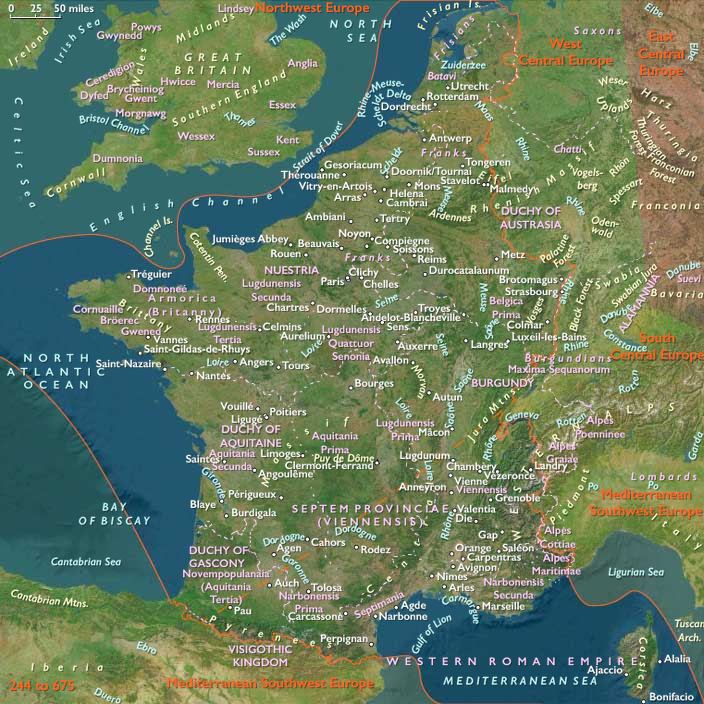
Subregions
Related Events
Showing 10 events out of 60511 total
Years: 244 - 387
People
- Aurelian
- Ausonius
- Constantine the Great
- Diocletian
- Julian the Apostate
- Magnus Maximus
- Martin of Tours
- Postumus
- Theodosius I
- Valentinian I
Groups
- Polytheism (“paganism”)
- Frisii (East Germanic tribe)
- Franks
- Germania Inferior (Roman province)
- Gallia Belgica (Roman province)
- Saxons
- Alamanni (Germanic tribal alliance)
- Roman Empire (Rome): Non-dynastic
- Gallic Empire
- Roman Empire: Tetrarchy
- Roman Empire: Constantinian dynasty (Nicomedia)
- Christianity, Nicene
- Roman Empire: Constantinian dynasty (Constantinople)
- Roman Empire: Valentinian dynasty (Rome)
- Roman Empire: Theodosian dynasty (Constantinople)
Topics
- Crisis of the Third Century (Roman Civil “War” of 235-84)
- Diocletianic Persecution
- Strasbourg, Battle of
- Adrianople, Battle of
Subjects
Regions
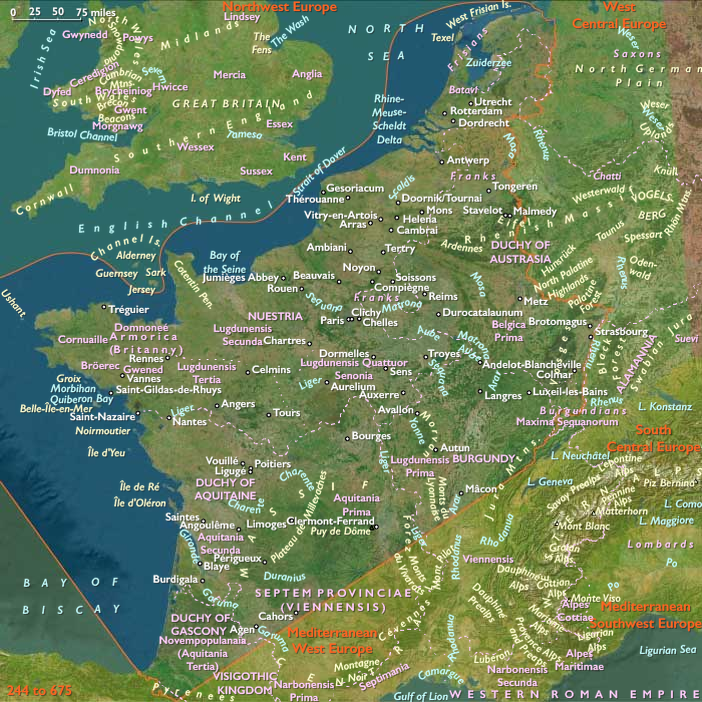
Subregions