
The Muscovites, suffering negligible losses, advance to …
Years: 1514 - 1514
September
The Muscovites, suffering negligible losses, advance to the area between Orsha and Dubrovno on the Krapivna River, where they set up camp.
Ivan Chelyadnin, confident that the Lithuanian-Polish forces will have to cross one of the two bridges on the Dnieper River, splits his own forces to guard those crossings.
However, Ostrogski's army crosses the river farther north via two pontoon bridges.
On the night of September 7, the Polish-Lithuanian army begins preparations for a final battle with the Muscovites.
Hetman Konstantyn Ostrogski places most of his sixteen thousand horses from the Grand Duchy in the center, while most of the Polish infantry and the auxiliary troops manned the flanks.
The Bohemian and Silesian infantry are deployed in the center of the line, in front of the reserves comprising Lithuanian and Polish cavalry.
On September 8, 1514, shortly after dawn, Ivan Chelyadnin gives the order to attack.
The Muscovite forces attempt to outflank the Lithuanians and Poles by attacking their flanks, which are manned by Polish, Lithuanian light hussar and Tatar troops.
One of the pincers of the attack is commanded by Chelyadnin personally, while the other is led by Prince Bulgakov-Golitsa.
The initial attack fails, and the Muscovites withdraw toward their starting positions.
Chelyadnin is still confident that the odds, almost 3:1 in his favor, will give him victory.
However, preoccupied with his own wing of the Muscovite forces, he loses track of the other sectors and fails to coordinate a defense against the counterattack by the Lithuanian light and Polish heavy cavalry, which until now has been kept in reserve.
The Lithuanian and Polish light horse and Tarars attack the overextended center of the Muscovite lines in an attempt to split them.
At the crucial moment, the Polish-Lithuanian cavalry seems to waver, then goes into retreat.
The Muscovites pursue with all their cavalry reserves.
The Lithuanian Tatars and Polish cavalry, after retreating for several minutes under chase from the Russians, suddenly turn to the sides.
The Muscovite cavalry now finds themselves confronted by artillery concealed in the forest.
From both sides, Polish and Lithuanian forces appear and proceed to surround the Muscovites.
Ivan Chelyadnin sounds retreat, which soon becomes a rout.
The Muscovite forces are pursued by the army of the Grand Duchy of Lithuania for five kilometers.
The Muscovite defeat is often attributed to repeated failures by Ivan Chelyadnin and Golitsa to coordinate their operations.
Sigismund von Herberstein reports that forty thousand Muscovites were killed.
According to accounts in Polish chronicles, thirty thousand Russians were killed and an additional three thousand were taken captive, including Ivan Chelyadnin and eight other commanders.
The forces of the Grand Duchy of Lithuania and Kingdom of Poland seize the Muscovite camp and all three hundred cannon.
Locations
People
- Albert of Prussia
- Konstanty Ostrogski
- Maximilian I of
- Sigismund I (”the Old”) Jagiello
- Vasili III of Russia
Groups
- Lithuanians (Eastern Balts)
- Poles (West Slavs)
- Czechs [formerly Bohemians] (West Slavs)
- Russians (East Slavs)
- Moscow, Grand Principality of
- Tatars
- Poland of the Jagiellonians, Kingdom of
- Lithuania, Grand Duchy of
- Holy Roman Empire
- Teutonic Knights of Prussia, or Monastic state of the Teutonic Knights (House of the Hospitalers of Saint Mary of the Teutons in Jerusalem)
Topics
Commodoties
Subjects
Regions
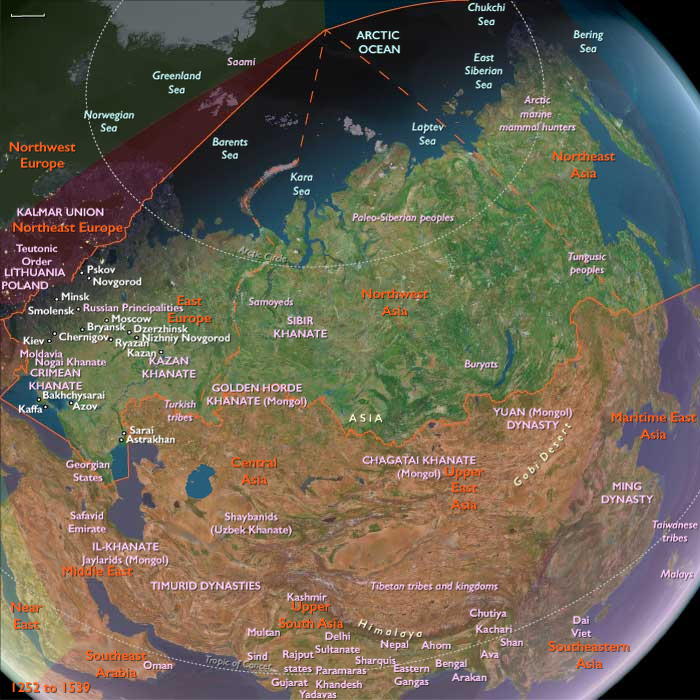
Subregions
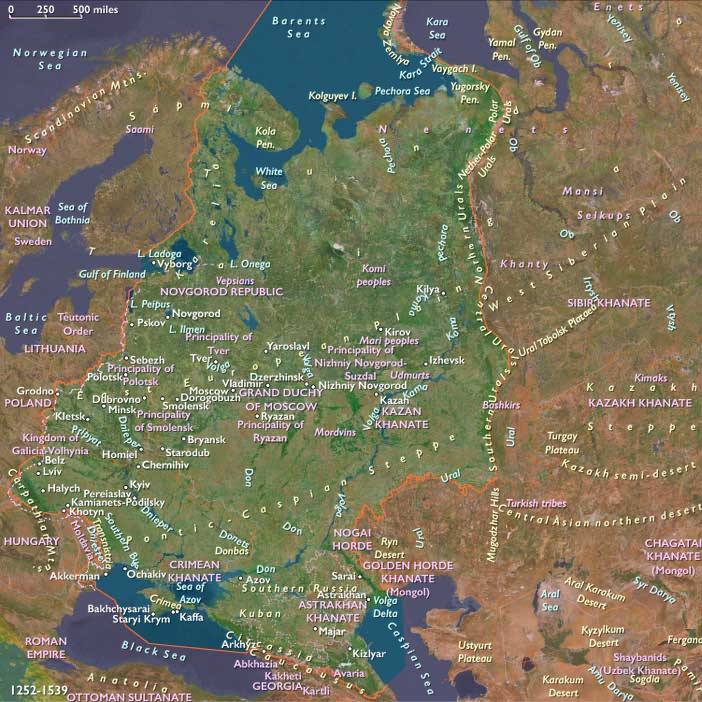
Related Events
Showing 10 events out of 39167 total
Years: 1514 - 1514
September
Locations
People
- Albert of Prussia
- Konstanty Ostrogski
- Maximilian I of
- Sigismund I (”the Old”) Jagiello
- Vasili III of Russia
Groups
- Lithuanians (Eastern Balts)
- Poles (West Slavs)
- Czechs [formerly Bohemians] (West Slavs)
- Russians (East Slavs)
- Moscow, Grand Principality of
- Tatars
- Poland of the Jagiellonians, Kingdom of
- Lithuania, Grand Duchy of
- Holy Roman Empire
- Teutonic Knights of Prussia, or Monastic state of the Teutonic Knights (House of the Hospitalers of Saint Mary of the Teutons in Jerusalem)
Topics
Commodoties
Subjects
Regions
Subregions