Dominique Jean Larrey initiates the modern method…
June 1793 CE
After seeing the speed with which the carriages of the French flying artillery maneuvered across the battlefields, Larrey had adapted them as ambulance volantes ("Flying ambulances") for rapid transport of the wounded and manned them with trained crews of drivers, corpsmen and litterbearers.
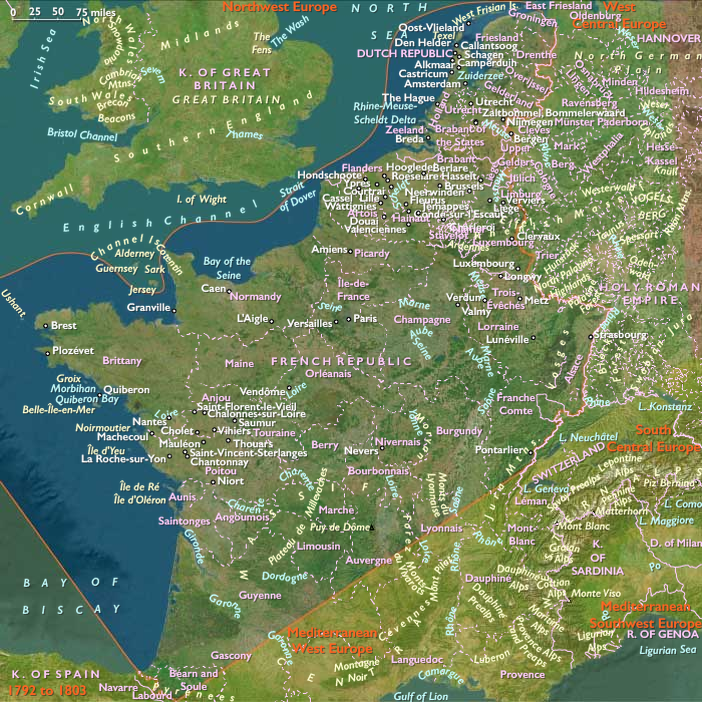
At the Battle of Metz (1793) Larrey successfully demonstrates the value of field ambulances.
The quartermaster-general Jacques-Pierre Orillard de Villemanzy orders prototypes to be built, after which ambulances will be supplied to all the Republic's armies.
The politicians hear of this, and order a national contest to find the best design, thus delaying their delivery by over two years.
Larrey also increases the mobility and improved the organization of field hospitals, effectively creating a forerunner of the modern MASH units.
He establishes a rule for the triage of war casualties, treating the wounded according to the seriousness of their injuries and urgency of need for medical care, regardless of their rank or nationality.
Soldiers of enemy armies, as well as those of the French and their allies, are treated.
Larrey was born in the little village of Beaudéan in the Pyrenees as the son of a shoemaker, who later moved to Bordeaux.
Orphaned at the age of thirteen, Larrey was then raised by his uncle Alexis, who was chief surgeon in Toulouse.
After serving a six-year apprenticeship, he had gone to Paris to study under Pierre-Joseph Desault, who was chief surgeon at the Hôtel-Dieu de Paris'
His studies cut short by war, Larrey had gone to Brest, where he had been appointed in the navy and gave lectures.
Sent in 1788 to Newfoundland and Labrador, he was back in Paris by 1789 and finished his thesis on Eskimos.
He cooperated with Jean-Nicolas Corvisart, Marie François Xavier Bichat and Raphaël Bienvenu Sabatier in Les Invalides
In 1792, during the War of the First Coalition he joined the Army of the Rhine.
In Mainz, he met with Samuel Thomas von Sömmerring.
Locations
Groups
Topics
Regions
West Europe
View →Subregions