Near East (7,821 – 6,094 BCE) Early…
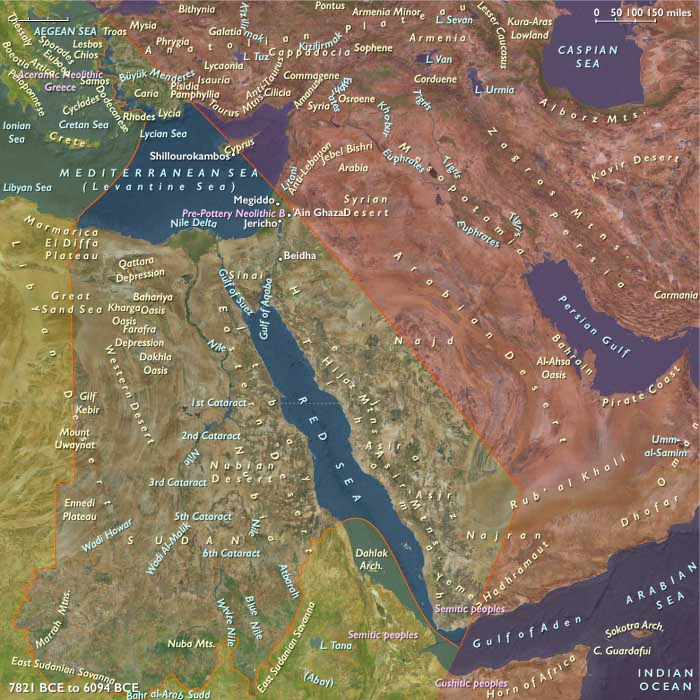
7821 BCE to 6094 BCE
Near East (7,821 – 6,094 BCE) Early Holocene — Nile Mesolithic, Red Sea Littoral, and Anatolian Coasts
Geographic and Environmental Context
The Near East includes Egypt, Sudan, Israel, most of Jordan, western Saudi Arabia, western Yemen, southwestern Cyprus, and western Turkey (Aeolis, Ionia, Doris, Lydia, Caria, Lycia, Troas) plus Tyre (extreme SW Lebanon).-
Anchors: the Nile Valley and Delta; Sinai–Negev–Arabah; the southern Levant (with Tyre as the sole Levantine node in this subregion); Hejaz–Asir–Tihāma on the Red Sea; Yemen’s western uplands/coast; southwestern Cyprus; western Anatolian littoral (Smyrna–Ephesus–Miletus–Halicarnassus–Xanthos; Troad).
Climate & Environment
-
Thermal optimum lifted Nile productivity; Aegean coasts stabilized; monsoonal Hejaz–Yemen slopes greened seasonally.
Subsistence & Settlement
-
Semi-sedentary Nile hamlets (fish, mollusks, wild cereals); reed-craft and basketry; small livestock browsing near Levant–Negev margins.
-
Western Anatolia coasts: broad-spectrum foragers exploited shellfish, fish, and fallow deer; Yemen Tihāma episodes of coastal foraging.
Technology
-
Ground stone for seed processing; larger mortars; early pottery at fringes (Anatolian contacts); dugouts on Nile backwaters.
Corridors
-
Nile channel–backwater routes; Aegean island-hops; Red Sea shore lanes between wadis.
Symbolism
-
Ritual feasts on levee mounds; house-burials; figurine precursors in coastal Anatolia.
Adaptation
-
Wetland anchoring with seed/fish storage established resilient semi-sedentism.
Groups
Topics
Commodities
Regions
The Near and Middle East
View →Subregions