
The Near East (3933–3790 BCE): Societal Complexity …
Years: 3933BCE - 3790BCE
The Near East (3933–3790 BCE): Societal Complexity and Saharan Aridification
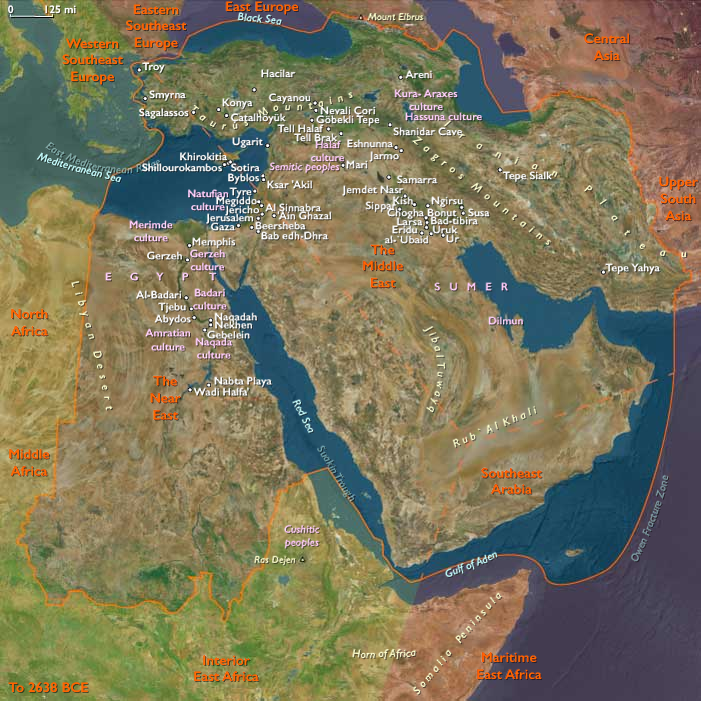
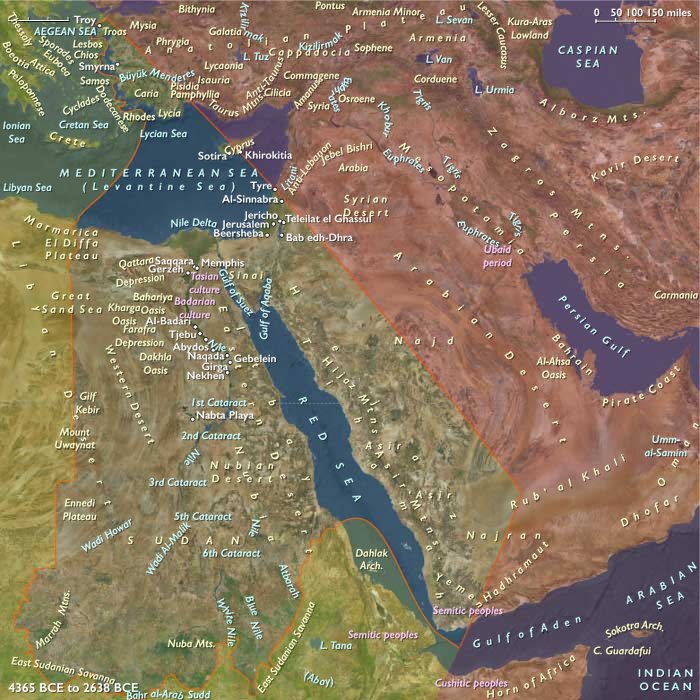
Nabta Playa and Archaeoastronomical Innovation
In the Nubian Desert, at a site known as Nabta Playa, once a flourishing lakeside settlement, remarkable megalithic structures have been erected. These stone monuments predate Stonehenge by roughly one thousand years and are among the world's earliest known archaeoastronomical devices. Current archaeological interpretations suggest these megaliths functioned as a prehistoric calendar, specifically designed to mark the summer solstice, highlighting a sophisticated understanding of astronomical phenomena by these Neolithic societies.
Neolithic Societal Complexity
Communities around Nabta Playa, established just prior to the region's extensive desertification, participate fully in the Neolithic revolution. These groups adopt a settled or semi-nomadic lifestyle, centered around domesticated plants and animals, indicative of considerable agricultural and pastoral development. Significantly, the level of sociocultural complexity observed at Nabta Playa—characterized by organized leadership, hierarchical authority, and structured societal arrangements—suggests foundational influences that will later shape both the local Neolithic societies and, subsequently, the early dynastic structures of Egypt’s Old Kingdom.
Advanced Settlement Patterns and Infrastructure
Compared to contemporaneous Nile Valley societies, the Nabta Playa settlements demonstrate advanced infrastructural and social organization. Their settlements include elaborate above-ground and subterranean stone constructions, systematically arranged village layouts, and deep wells designed for year-round water storage. Evidence indicates, however, that Nabta Playa was primarily occupied seasonally, with inhabitants migrating into the area mainly during summer months when the local lake provided sufficient water and grazing opportunities for cattle. Analysis of human remains indicates migration from sub-Saharan Africa, underscoring dynamic population movements triggered by changing climatic conditions.
Cultural Innovations of Gerzean Egypt
In Egypt, the Gerzean period sees continued cultural innovation and continuity. Mudbrick architecture becomes prominent, though not yet widespread in application as it will become in subsequent eras. Additionally, cosmetic palettes—both oval and theriomorphic (animal-shaped)—emerge during this period. Although rudimentary in execution and lacking the detailed relief artistry they will exhibit in later periods, these palettes indicate developing ceremonial and decorative practices within Egyptian society.
Human Migration Triggered by Saharan Aridification
Around 3900 BCE, significant aridification of the Sahara region forces extensive human migration toward the Nile Valley, dramatically reshaping demographic and settlement patterns. This climatic shift plays a pivotal role in driving societal evolution, encouraging increased population density and social complexity along the fertile Nile, laying the groundwork for subsequent developments in Egyptian civilization.
Groups
- Jericho, Ancient
- Egypt (Ancient), Predynastic
- Tasian culture
- Amratian culture (Naqada I)
- Badarian culture
Topics
Commodoties
Subjects
Regions
Subregions
Years: 3933BCE - 3790BCE
Groups
- Jericho, Ancient
- Egypt (Ancient), Predynastic
- Tasian culture
- Amratian culture (Naqada I)
- Badarian culture
Topics
Commodoties
Subjects
Regions
Subregions