
The Near East (4077–3934 BCE): Environmental Changes …
Years: 4077BCE - 3934BCE
The Near East (4077–3934 BCE): Environmental Changes and Cultural Diversification
Environmental Transformation
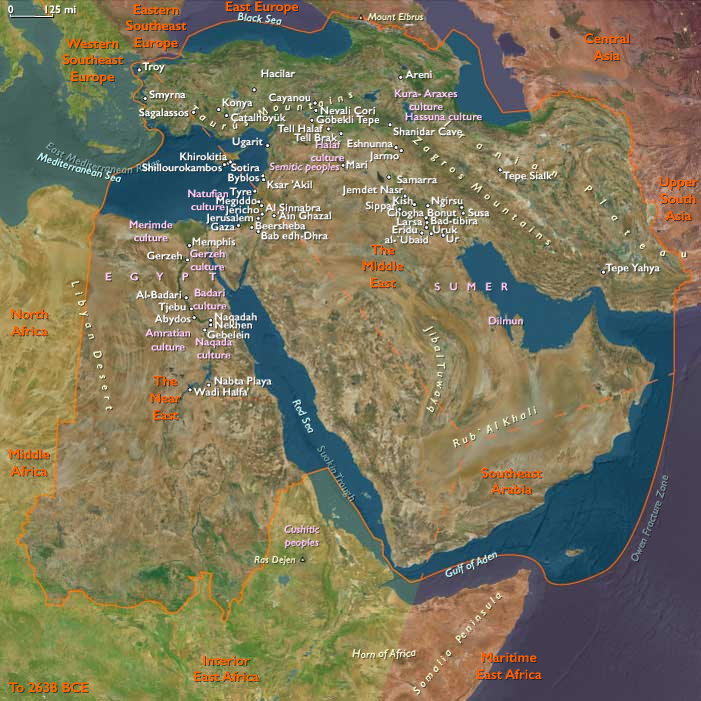
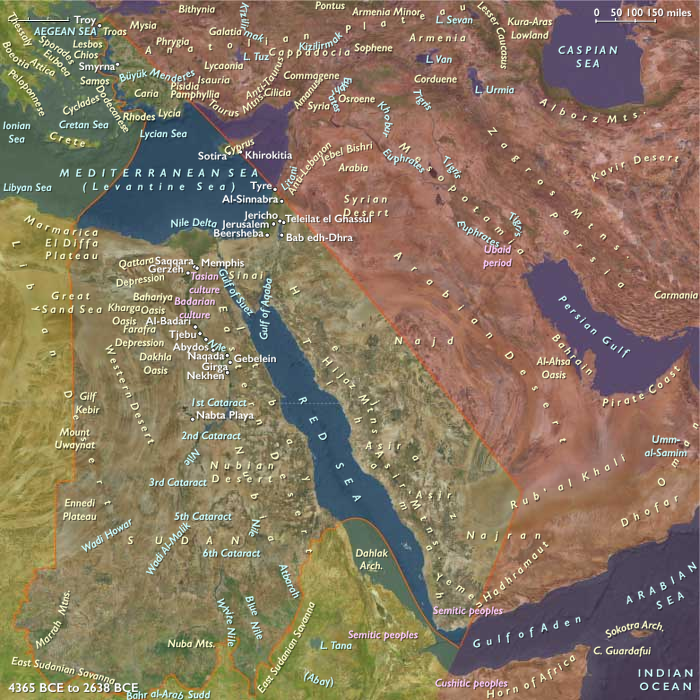
Human settlement became increasingly confined to the Nile valley and its immediate fringes, as declining rainfall transformed surrounding lands into arid deserts after 4000 BCE.
Tasian and Badarian Cultures
Around 4000 BCE, two distinct cultures emerged in southern Egypt: the northern-influenced Tasian culture, evolving through phases labeled Naqada I (Amratian) and Naqada II (Gerzean), and the eastern desert-originated Badarian culture. Tasian pottery, often black-topped and painted, displayed diverse fabrics and decorations.
Early Domestication and Metallurgy
The domestication of date palms around 4000 BCE in eastern Arabia significantly impacted diets and economies. Copper metallurgy also appeared around this time, with evidence found in Egypt and Mesopotamia. The domestication of the donkey from Nubian and Somalian wild ass species provided essential pack and farming animals, enhancing transportation and agriculture throughout Egypt and Nubia.
Groups
- Jericho, Ancient
- Egypt (Ancient), Predynastic
- Tasian culture
- Amratian culture (Naqada I)
- Badarian culture
Topics
Commodoties
Subjects
Regions
Subregions
Years: 4077BCE - 3934BCE
Groups
- Jericho, Ancient
- Egypt (Ancient), Predynastic
- Tasian culture
- Amratian culture (Naqada I)
- Badarian culture
Topics
Commodoties
Subjects
Regions
Subregions