Middle East (49,293 – 28,578 BCE) Upper…
49293 BCE to 28578 BCE
Middle East (49,293 – 28,578 BCE) Upper Pleistocene I — Loess Steppes, Rock Shelters, and Gulf Lowstand Coasts
Geographic and Environmental Context
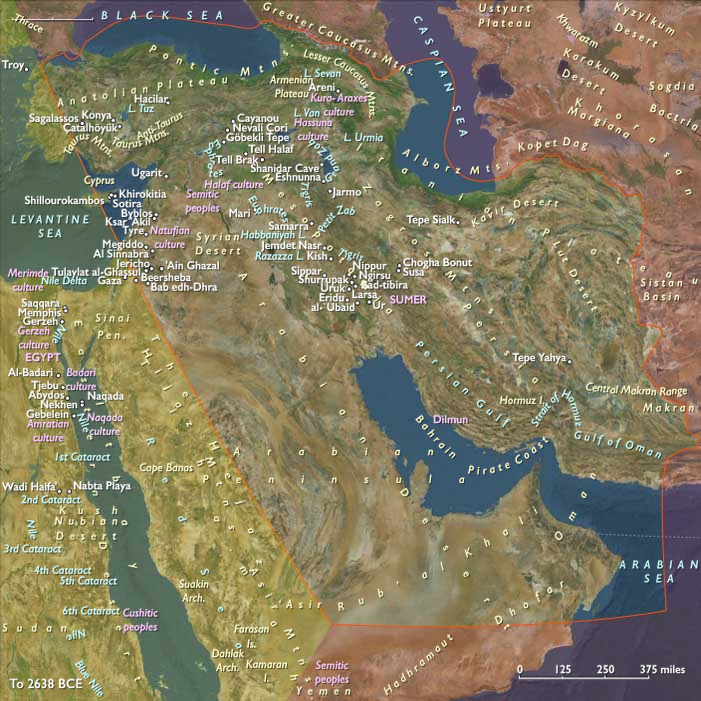
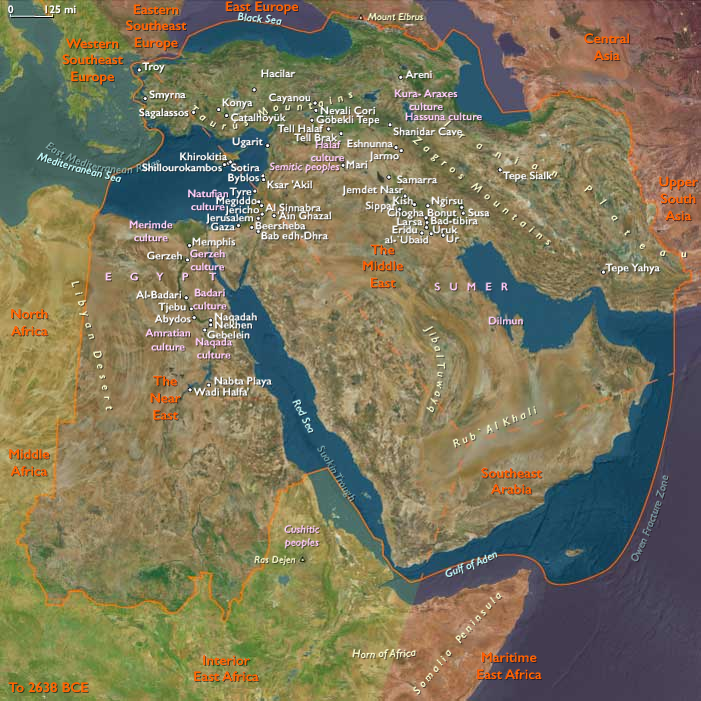
The Middle East includes Iraq, Iran, Syria, Armenia, Georgia, Azerbaijan, eastern Jordan, most of Turkey’s central/eastern uplands (including Cilicia), eastern Saudi Arabia, northern Oman, Qatar, Bahrain, the UAE, northeastern Cyprus, and all but the southernmost Lebanon.-
Anchors: the Tigris–Euphrates alluvium and marshes; the Zagros (Luristan, Fars), Alborz, Caucasus (Armenia–Georgia–Azerbaijan); northern Syrian plains and Cilicia; Khuzestan and Fars lowlands; the Arabian/Persian Gulf littoral (al-Ahsa–Qatar–Bahrain–UAE–northern Oman); northeastern Cyprus and the Lebanon coastal elbow (north).
Climate & Environment
-
Last Glacial Maximum (LGM) builds: cooler, drier; loess–steppe and open woodland across Zagros–Upper Mesopotamia; wetter pockets in windward uplands; Gulf sea level ~100 m lower exposed a broad Arabian Gulf plain.
Subsistence & Settlement
-
Highly mobile foragers hunted onager, gazelle, aurochs, wild equids, with seasonal use of caves/rock sheltersin Zagros and Caucasus foothills; spring–fall rounds onto steppe terraces and river benches.
-
Intertidal foraging on the exposed Gulf shelf and along the northeastern Cyprus and Levantine elbows (northern Lebanon) where accessible.
Technology & Material Culture
-
Blade–microblade lithics (high-quality cherts); bone points; early adhesives for composite tools; tailored hide clothing (needles).
-
Personal ornaments (pierced teeth/shell, ochre).
Movement & Interaction Corridors
-
Tigris–Euphrates terraces and tributaries (Diyala, Greater/Lesser Zab) structured mobility; Zagros passesfunneled upland–lowland movement; Caucasus river fans offered refugia.
Symbolism & Ritual
-
Ochre burials; engraved bone/stone; hearth renewal in caves; animal-master ideation inferred from treatment of high-value prey.
Adaptation & Resilience
-
Upland–lowland switching and river-corridor targeting buffered aridity; fuel caching and winter windbreaks enabled cold-season stays.
Transition
As climate warmed into the Bølling–Allerød, riparian and piedmont habitats would support broader diets and more frequent reuse of favored camps.
Images

The Middle East ion the Upper Paleolithic
Commodities
Subjects
Regions
The Near and Middle East
View →Subregions