
Near East (765–754 BCE): Judah's Prosperity and…
765 BCE to 754 BCE
Near East (765–754 BCE): Judah's Prosperity and Royal Hubris
Setting the Stage: A Region in Transition
In the mid-eighth century BCE, the Near East was marked by shifting power dynamics and evolving states. Egypt, fragmented and weakened by internal strife, left a power vacuum in the Levant, enabling smaller kingdoms like Judah and Israel to strengthen and consolidate their territories. To the northeast, the Neo-Assyrian Empire was gradually reasserting its dominance, a geopolitical force whose ambitions would soon cast a long shadow over the region. Meanwhile, local rivalries, trade networks, and religious movements continued to shape political and cultural developments across the area. It is against this backdrop of fluid alliances and emerging threats that the kingdom of Judah under King Uzziah achieved a brief but significant period of prosperity and stability.
Judah: Prosperity Under King Uzziah
From approximately 765 to 754 BCE, Judah experiences a notable period of prosperity and political stability under King Uzziah (also known as Azariah). The Hebrew scriptures (2 Kings; 2 Chronicles) attribute this success directly to the king's fidelity and obedience to Yahweh. Under Uzziah’s reign, Judah expands its territory into Philistine lands, capturing important cities like Ashdod and Jamnia, while exacting tribute from neighboring peoples such as the Ammonites. Uzziah strengthens Judah by fortifying Jerusalem's walls, constructing defensive towers, and implementing innovative war machinery. Additionally, Judah's economy flourishes as desert regions are cultivated through advanced water conservation and agricultural methods.
Uzziah's Hubris and Downfall
Despite Judah’s outward success, King Uzziah's power leads to pride, precipitating his eventual downfall. According to scriptural accounts, Uzziah oversteps sacred boundaries by attempting to burn incense in the Temple—a privilege exclusively reserved for the priestly class. When the priests confront Uzziah and seek to expel him from the sacred precinct, he responds with anger, triggering divine retribution. Immediately, he is afflicted with leprosy, forcing him into isolation and marking the effective end of his personal reign. His son, Jotham, assumes governance as a regent, continuing to rule in his father’s name until Uzziah’s death roughly a decade later.
Legacy of the Era
The era from 765 to 754 BCE underscores the tensions inherent between royal authority and religious institutions in Judah. Uzziah’s reign illustrates the fragility of human leadership, reminding subsequent generations of the importance of humility and adherence to religious law. While Judah’s political and military accomplishments under Uzziah remain significant, his ultimate fate serves as a lasting narrative about the dangers of hubris, influencing Judean views on kingship and religious authority for centuries to follow.
Groups
Regions
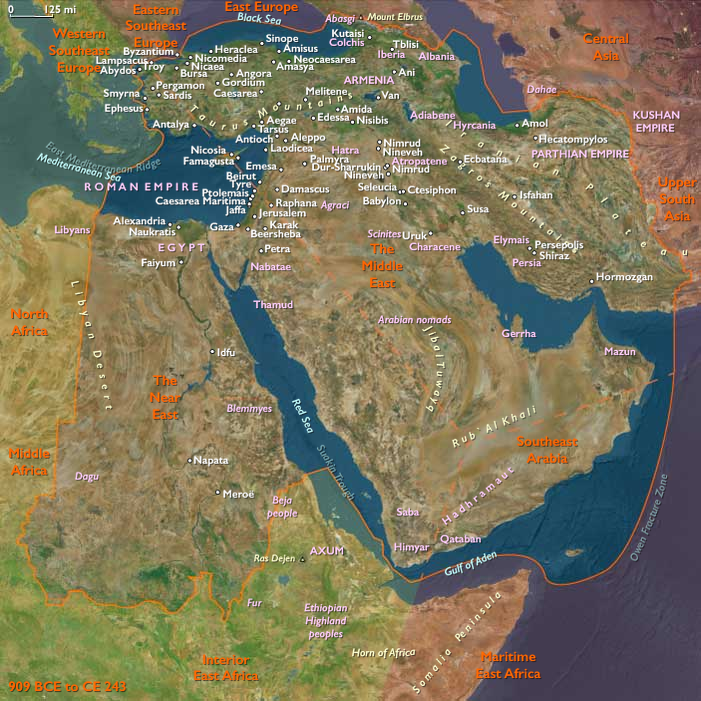
The Near and Middle East
View →Subregions
