The New Zealand Company had hastily organized…
December 1839 CE
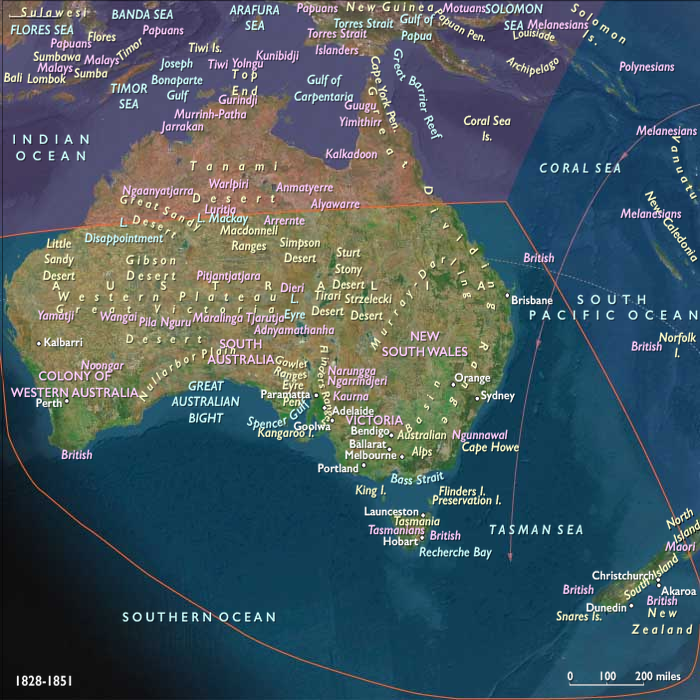
The New Zealand Company had hastily organized a land-buying expedition, which had sailed to New Zealand in the Tory in May 1839, commanded by Edward Gibbon Wakefield's younger brother, Colonel William Wakefield.
A second vessel, the survey ship Cuba, with a team headed by Captain William Mein Smith, R.A., had sailed in August, followed a month later by the first of nine immigrant ships, even before word had reached London of the success of the Tory and Cuba.
The immigrant fleet has instructions to sail to Port Hardy on D'Urville Island where they will be told of their final destination.
With the aid of whaler and trader Dicky Barrett, who has good contacts with Maori and a grasp of their language, William Wakefield had begun negotiating to buy land from the Maori around Petone in the Wellington area as soon as he arrived in New Zealand.
By the end of 1839, he has concluded several purchases that quickly become mired in controversy over their legitimacy.
The settlement is far from what had been planned in England: among the many falsehoods in company prospectuses and advertising about the nature of the country, Wellington had been described as a place of undulating plains suitable for the cultivation of grapevines, olives and wheat.
Plans prepared in England show parallel streets and sections that bear no relation to the physical contours of the area: streets and sections, parks, and cemeteries have been drawn in an area that consists of swampy delta or high hills and steep gullies.
Locations
Groups
Commodities
Regions
Australasia
View →Subregions