
The Ohio legislature had just chosen James…
June 1880 CE
The Ohio legislature had just chosen James A. Garfield in 1879 for the U.S. Senate seat when a faint movement began for Garfield as the next Republican nominee for President to succeed Hayes, who had chosen not to stand for reelection.
Garfield had endorsed John Sherman in early 1880 for the party's Presidential nomination in exchange for Sherman's earlier support of Garfield for the Senate.However, at the outset of the Republican convention, a deadlock had ensued between supporters of former President Grant, James G. Blaine, and Sherman; the delegates began to look to Garfield as an optimal compromise choice.
Garfield had eloquently defended dissenting West Virginia delegates in his speech against Sen. Conkling's convention rule that stated all state delegates must vote unanimously for only one candidate.
After over thirty ballots, the vote totals for the leading contenders were within five votes of where they had been on the first ballot.
With the 34th ballot, Wisconsin began the break to Garfield that ends with his nomination as the party's Presidential candidate.
Garfield's capture of the 1880 nomination for the Presidency over the prominent contenders is considered historic.
Garfield defeats the front runner Ulysses S. Grant's controversial third term bid for the nomination.
Thomas Nichol, Wharton Barker, and Benjamin Harrison are widely considered to be the primary architects of Garfield's ascendancy during the convention, but no one could have controlled this unpredictable outcome for such a dark horse—one who had personally objected at every step.
To obtain Republican Stalwart support for the ticket, former New York customs collector Chester A. Arthur is chosen as the vice-presidential nominee and Garfield's running mate.
People
Subjects
Regions
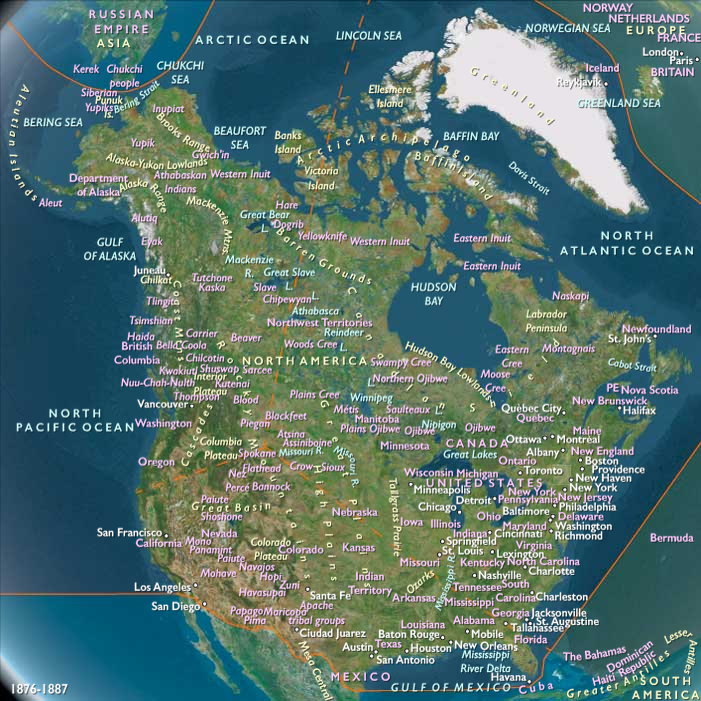
Northern North America
View →Subregions
