
The Old Saxons who had remained in…
631 CE
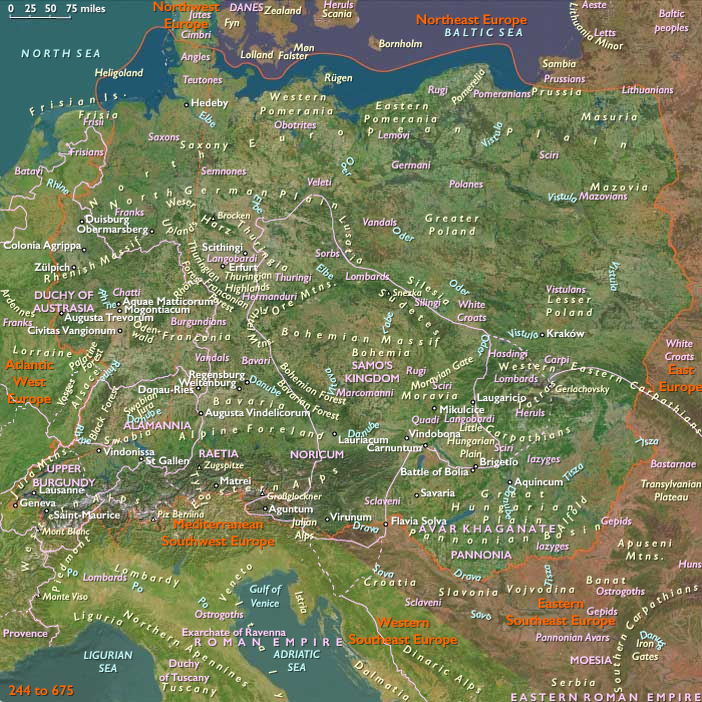
The Old Saxons who had remained in Germania after the fall of the Western Roman Empire in the fifth century were loosely associated with the Merovingian kingdom of Franks, but practically remained independent and maintained their old pagan religion, which appears to have focused on the worship of the Irminsul or "great pillar"; a divine tree that connected Heaven and Earth and is thought to have existed at a site close to modern Obermarsberg.
For the most part, the Saxon lands are a broad plain, save on the south, where it rises into hills and the low mountainous country of the Harz and Hesse.
This low divide is all that separates the country of the Saxons from their ancient enemies and ultimate conquerors, the Franks.
The lack of clear physical definition along this border, from time immemorial, has been the cause of incessant tribal conflict between them.
Saxons as inhabitants of present-day Northern Germany are mentioned in 555, when Theudebald, the Frankish king, died and the Saxons used this opportunity for war.
The Saxons were defeated by Chlothar I, Theudebald's successor.
Some of their Frankish successors fought against the Saxons, others were allied with them; Chlothar II had won a decisive victory against the Saxons, who appeal to Chlothar’s son and heir Dagobert I against the yearly tribute of five hundred cows that that they still pay.
People
Commodities
Regions
Central Europe
View →Subregions
