
Egyptian Muslims destroy Ethiopia's neighboring Nile River …
Years: 1396 - 1539
Egyptian Muslims destroy Ethiopia's neighboring Nile River valley's Christian states in the fourteenth and fifteenth centuries.
Tenuous relations with Christians in western Europe and the East Roman Empire continue via the Coptic Church in Egypt.
The Coptic patriarchs in Alexandria are responsible for the assignment of Ethiopian patriarchs—a church policy that Egypt's Muslim rulers occasionally try to use to their advantage.
For centuries after the Muslim conquests of the early medieval period, this link with the Eastern churches constitutes practically all of Ethiopia's administrative connection with the larger Christian world.
A more direct if less formal contact with the outside Christian world is maintained through the Ethiopian Monophysite community in Jerusalem and the visits of Ethiopian pilgrims to the Holy Land.
Ethiopian monks from the Jerusalem community attends the Council of Florence in 1441 at the invitation of the pope, who is seeking to reunite the Eastern and Western churches.
Westerners have learned about Ethiopia through the monks and pilgrims and become attracted to it for two main reasons.
First, many believe Ethiopia is the long-sought land of the legendary Christian priest-king of the East, Prester John.
Second, the West views Ethiopia as a potentially valuable ally in its struggle against Islamic forces that will continue to threaten southern Europe until the Turkish defeat at the Battle of Lepanto in 1571.
Portugal, the first European power to circumnavigate Africa and enter the Indian Ocean, displays initial interest in this potential ally by sending a representative to Ethiopia in 1493.
The Ethiopians, in turn, send an envoy to Portugal in 1509 to request a coordinated attack on the Muslims.
Europe receives its first written accounts of the country from Father Francisco Álvares, a Franciscan who accompanies a Portuguese diplomatic expedition to Ethiopia in the 1520s.
His book, A True Relation of the Lands of Prester John of the Indies, stirs further European interest and proves a valuable source for future historians.
Locations
Groups
- Egyptians
- Polytheism (“paganism”)
- Tigray-Tigrinya people
- Somalis
- Aksum (or Axum), Kingdom of
- Agaw people
- Sidama people
- Coptic Orthodox Church of Alexandria
- Oromo people
- Islam
- Papal States (Republic of St. Peter)
- Portuguese people
- Afar people
- Amhara people
- Christians, Eastern Orthodox
- Christians, Roman Catholic
- Ifat, Sultanate of
- Hadiya Sultanate
- Franciscans, or Order of St. Francis
- Ethiopia, Solomonid Dynasty of
- Adal Sultanate
- Portuguese Empire
- Ottoman Empire
Topics
Commodoties
Subjects
Regions
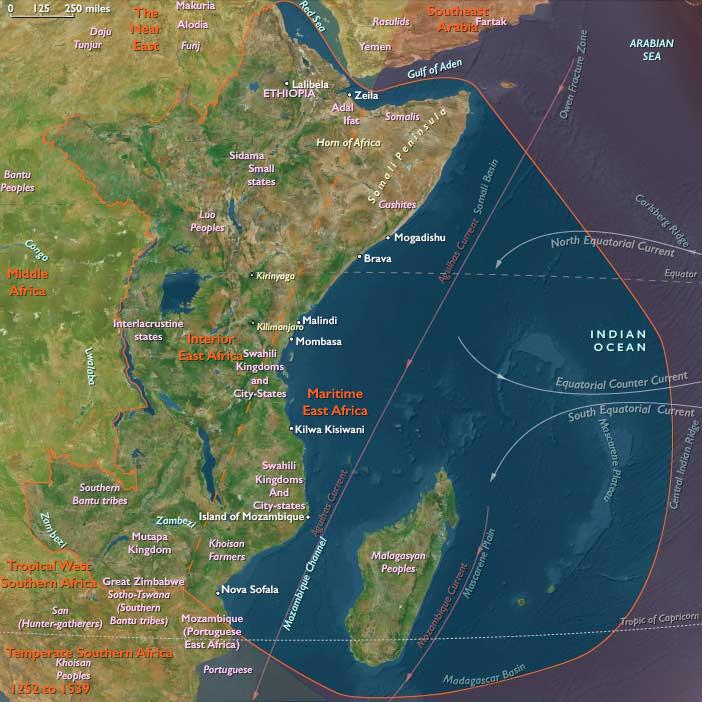
Subregions
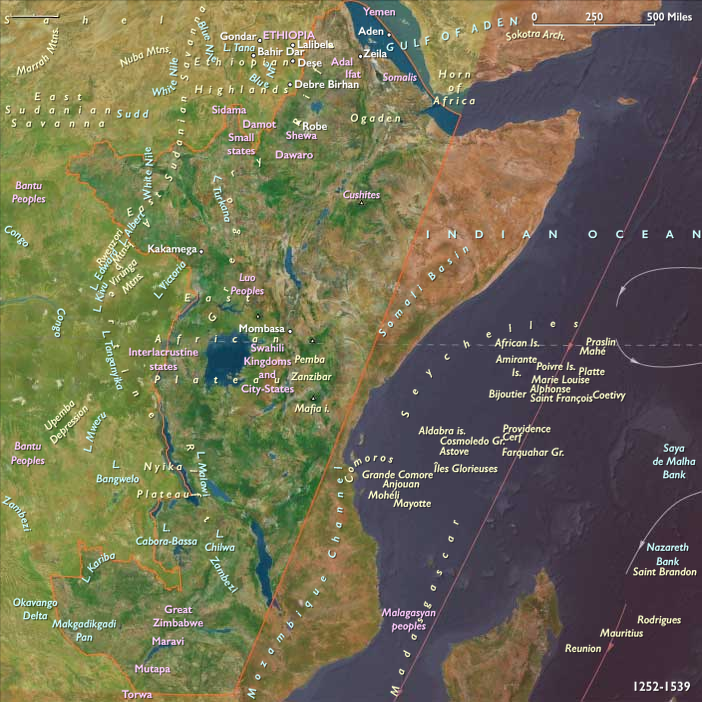
Related Events
Showing 1 events out of 1 total
Years: 1396 - 1539
Locations
Groups
- Egyptians
- Polytheism (“paganism”)
- Tigray-Tigrinya people
- Somalis
- Aksum (or Axum), Kingdom of
- Agaw people
- Sidama people
- Coptic Orthodox Church of Alexandria
- Oromo people
- Islam
- Papal States (Republic of St. Peter)
- Portuguese people
- Afar people
- Amhara people
- Christians, Eastern Orthodox
- Christians, Roman Catholic
- Ifat, Sultanate of
- Hadiya Sultanate
- Franciscans, or Order of St. Francis
- Ethiopia, Solomonid Dynasty of
- Adal Sultanate
- Portuguese Empire
- Ottoman Empire
Topics
Commodoties
Subjects
Regions
Subregions