
The failure of Narcisso Lopez's expeditions and…
1852 CE to 1863 CE
The failure of Narcisso Lopez's expeditions and his death in 1851 and the United States Civil War had ended, at least temporarily, the clamor for annexation.
The abolition of slavery in the United States deprives Cuban slaveholders of the reason for wanting to tie themselves permanently to their northern neighbor.
Abraham Lincoln's coming to power also has a significant effect on the Cuban policy of the United States, for Lincoln and his advisers are willing, as long as Spain remains nonaggressive, to allow Cuba to stay under Spanish control.
The expansionist attempts of the 1840s and 1850s thus give way to the less aggressive era of the 1860s.
The proponents of the acquisition of Cuba are not defeated, however, only silenced.
What their brethren are unable to achieve in mid-century, the expansionists of the 1890s will accomplish at the turn of the century when the United States occupies Cuba during the Spanish-American War and later exerts considerable political and economic influence over the affairs of the island.
People
Groups
Commodities
Regions
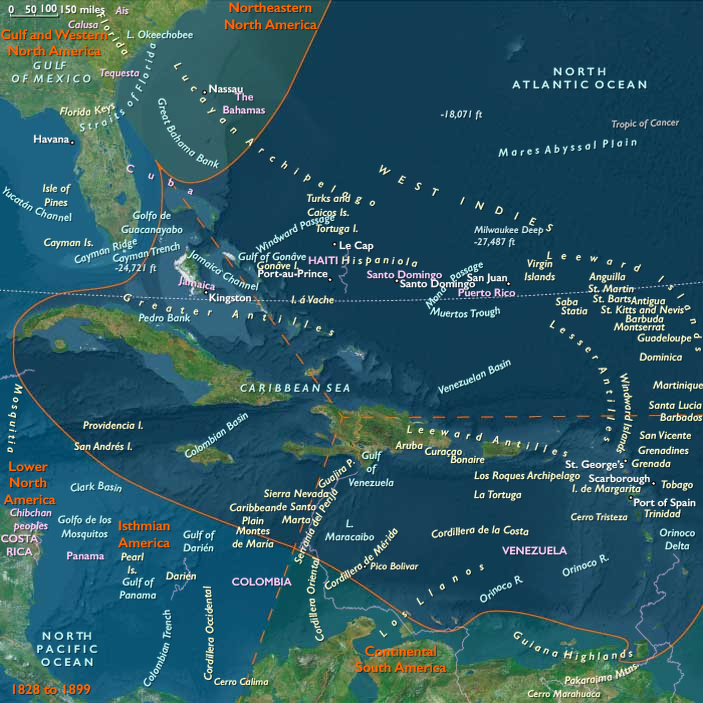
West Indies
View →Subregions
