
The Oxford Gazette is first published on…
November 1665 CE
The Oxford Gazette is first published on November 7, 1665.
It is today, as The London Gazette, one of the official journals of record of the British government in which certain statutory notices are required to be published, the oldest surviving English newspaper and the oldest continuously published newspaper in the United Kingdom.
Locations
Commodities
Subjects
Regions
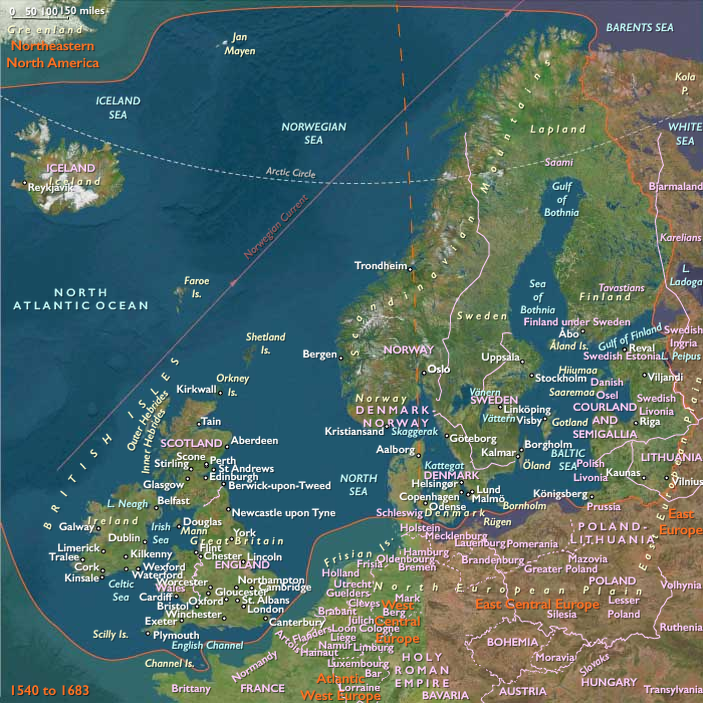
North Europe
View →Subregions
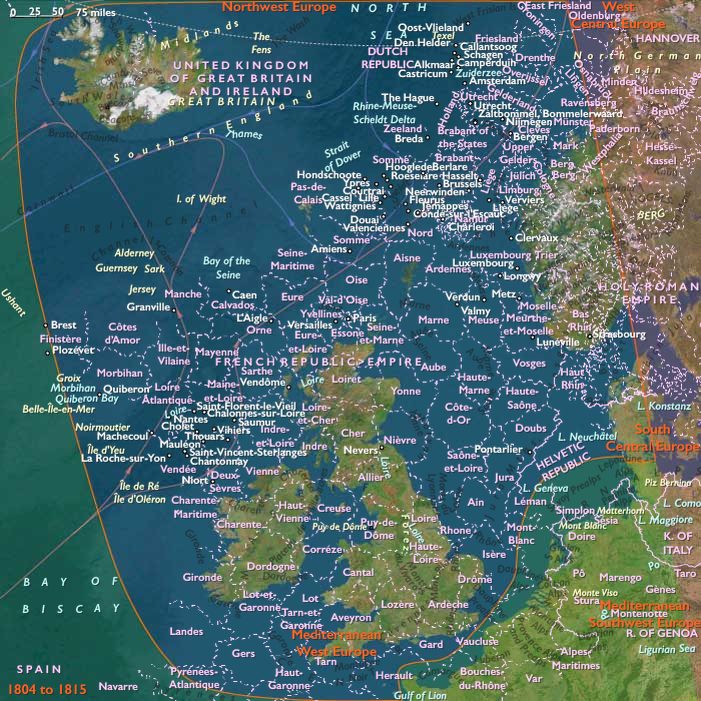
Northwest Europe
View →Related Events
No active filters.
Showing 10 events out of 31059 total
The supporters of Polish nobleman Jerzy Sebastian Lubomirski paralyze the proceedings of the Sejm.
Lubomirski himself, with the support of part of the state army and of levee-en-masse (pospolite ruszenie) forces, defeats the army of at King Jan II Kazimierz Vasa at Częstochowa in 1665.
François Caron, the Director General of the newly formed French East India Company, sails to Madagascar in 1665.
The Company fails to found a colony on Madagascar but ...
...establishes ports on the nearby islands of Bourbon and Île-de-France (today's Réunion and ...
...Mauritius, respectively).
The Habsburg emperor’s cession of a large portion of Hungarian land to the Ottoman Turks under the Peace of Vasvar has provoked the opposition of many previously pro-Habsburg Hungarian Roman Catholic magnates, including the palatine administrator Ferenc Wesselényi; the bán (governor) of Croatia, Péter Zrínyi; the chief justice of Hungary, Ferenc Nádasdy; and Ferenc Rákóczi.
Forming a conspiracy to free Hungary and Croatia from Habsburg rule, they secretly negotiate for assistance from France and Turkey.
A Lady Writing a Letter (also known as A Lady Writing; Dutch: Schrijvend meisje) is an oil painting attributed to Vermeer.
It is believed to have been completed around 1665.
The Lady is seen to be writing a letter and has been interrupted, so gently turns her head to see what is happening.
She wears twelve pearls (ten on the necklace and two earrings).
Most of Vermeer’s paintings are set in his house, which he had inherited.
Many of the objects seen in the painting, such as the woman's coat, the cloth on the table, and the string of pearls, appear in other Vermeer works.
This has led to speculation that he or his family members owned the objects, and even that the subjects of the paintings are his relatives.
It has often been suggested that in his paintings, Vermeer sought to grant to his models that which he could now endow his wife and family: calm and affluence.
Not a care had these rogues for the health of their elders!” Samuel Pepys Diaries - London, 1665
Robert Hooke, employed at Christ Church College, Oxford, as a "chemical assistant" to Dr Thomas Willis, for whom Hooke had developed a great admiration, here met the natural philosopher Robert Boyle, and gained employment as his assistant from about 1655 to 1662, constructing, operating, and demonstrating Boyle's "machina Boyleana" or air pump.
He did not take his Master of Arts until 1662 or 1663.
Hooke had in 1659 described some elements of a method of heavier-than-air flight to Wilkins, but concluded that human muscles were insufficient to the task.
Hooke became Curator of Experiments in 1662 to the newly founded Royal Society, and took responsibility for experiments performed at its weekly meetings.
He will hold this position for over forty years.
Hooke is known for his law of elasticity (Hooke's Law), his work as "the father of microscopy", and for coining the term "cell" to describe the basic unit of life.
The descriptive term for the smallest living biological structure is coined by Hooke in a book he publishes in 1665 when he compares the cork cells he sees through his microscope to the small rooms in which monks live.
The word cell comes from the Latin cellula, meaning 'a small room'.
Kingston Lacy, a country house and estate near Wimborne Minster, Dorset, takes its name from its ancient lords, the Lacys, Earls of Lincoln, who hold it together with Shapwick and Blandford.
After the destruction of the family seat at Corfe Castle in the English Civil War, a new site for a home had been chosen on the Lacy Estate by Sir John Bankes, attorney General and Chief Justice to King Charles I.
His son Ralph Bankes, a servant of the restored Charles II and a knighted member of the Privy Chamber, eventually pays for and finishes the house.
Designed by Sir Roger Pratt and built between 1663 and 1665, the original house is based on Clarendon House, built for the Lord Chancellor, which Bankes had visited several times.
Kingston Lacy features interiors influenced by Inigo Jones, but executed by his heir John Webb.
Charles II gives the newly acquired lands between New England and Maryland to his brother, the Duke of York (later King James II), as a proprietary colony, in 1665.
The colony, renamed New York, stretches from...