
The Thirty Years' War has had a …
Years: 1540 - 1683
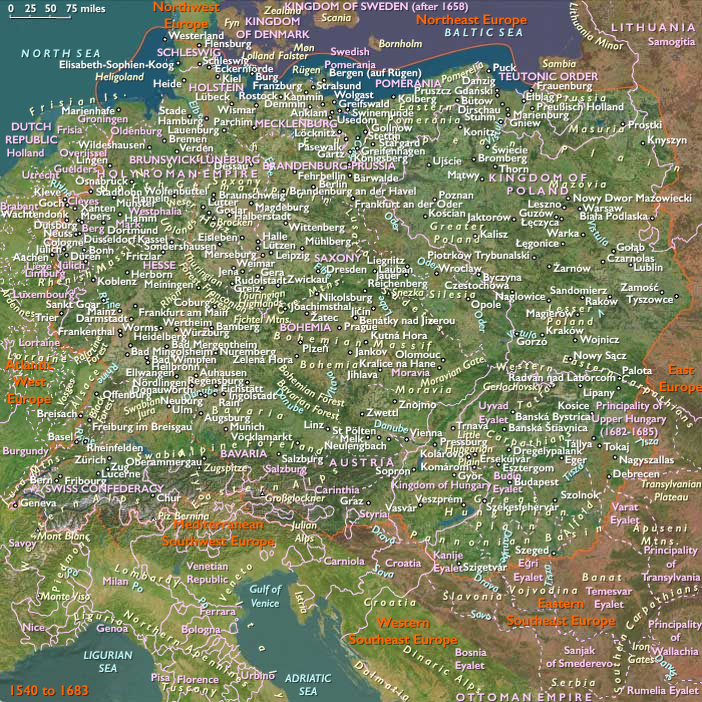
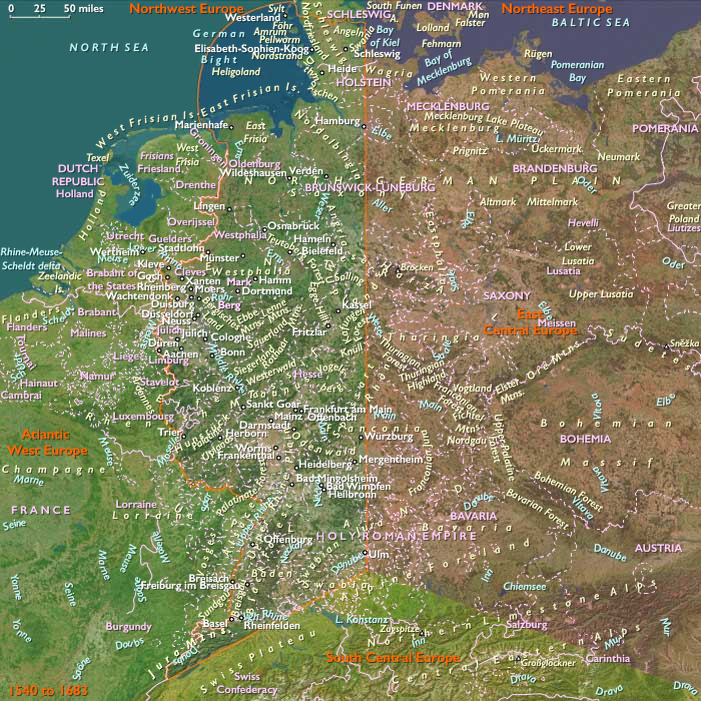
The Thirty Years' War has had a devastating effect on the German people.
Historians have usually estimated that between one-fourth and one-third of the population perished from direct military causes or from illness and starvation related to the war.
Some regions were affected much more than others.
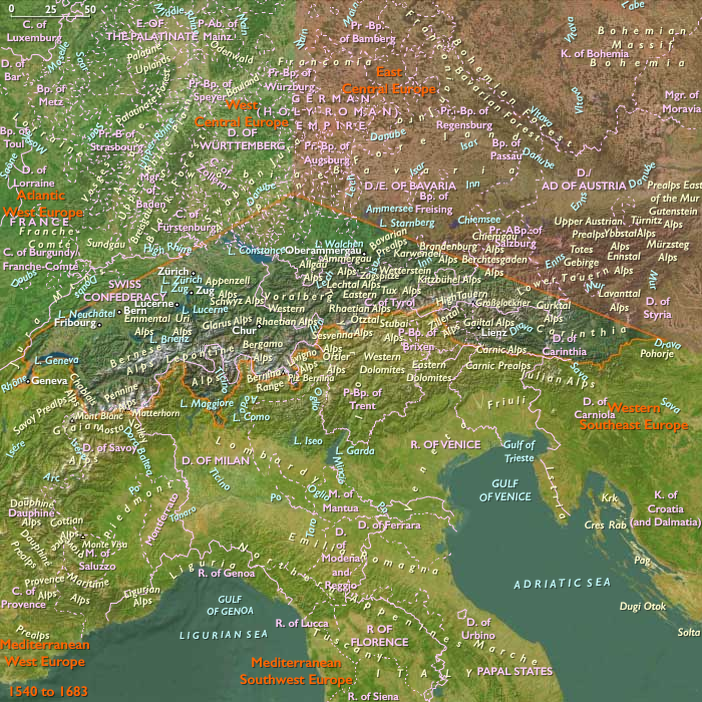
For example, an estimated three-quarters of Wurttemberg's population died between 1634 and 1639.
Overall losses were serious enough that historians believe that it took a century after the Thirty Years' War for Germany's population to reach the level of 1618.
Germany's economy was also severely disrupted by the ravages of the Thirty Years' War.
The war exacerbated the economic decline that had begun in the second half of the sixteenth century as the European economy shifted westward to the Atlantic states—Spain, France, England, and the Low Countries.
The shift in trade means that Germany is no longer located at the center of European commerce but on its fringes.
The thriving economies of many German towns in the late Middle Ages and first half of the sixteenth century gradually dry up, and Germany as a whole enters a long period of economic stagnation that will end only in the second half of the nineteenth century.
Groups
- Germans
- Papal States (Republic of St. Peter)
- Mainz, Electoral Archbishopric of
- Christians, Roman Catholic
- Trier, Electoral Archbishop of
- Bohemia, Kingdom of
- Holy Roman Empire
- Cologne, Electorate of
- Palatinate, Electoral (Wittelsbach)
- Brandenburg, (Hohenzollern) Margravate of
- Bavaria, Wittelsbach Duchy of
- Lutheranism
- Protestantism
- Sweden, (second) Kingdom of
- Calvinists
- France, (Bourbon) Kingdom of
- Protestant League (League of Evangelical Union)
- Catholic League, the (German)
Topics
- Protestant Reformation
- Counter-Reformation (also Catholic Reformation or Catholic Revival)
- Thirty Years' War
Subjects
Regions
Subregions

Related Events
Showing 10 events out of 23 total
Years: 1540 - 1683
Groups
- Germans
- Papal States (Republic of St. Peter)
- Mainz, Electoral Archbishopric of
- Christians, Roman Catholic
- Trier, Electoral Archbishop of
- Bohemia, Kingdom of
- Holy Roman Empire
- Cologne, Electorate of
- Palatinate, Electoral (Wittelsbach)
- Brandenburg, (Hohenzollern) Margravate of
- Bavaria, Wittelsbach Duchy of
- Lutheranism
- Protestantism
- Sweden, (second) Kingdom of
- Calvinists
- France, (Bourbon) Kingdom of
- Protestant League (League of Evangelical Union)
- Catholic League, the (German)
Topics
- Protestant Reformation
- Counter-Reformation (also Catholic Reformation or Catholic Revival)
- Thirty Years' War
Subjects
Regions
Subregions