The People's Crusade and the Massacres of…
December 1096 CE
The People's Crusade and the Massacres of 1096: The Impact on Rashi and Jewish Scholarship
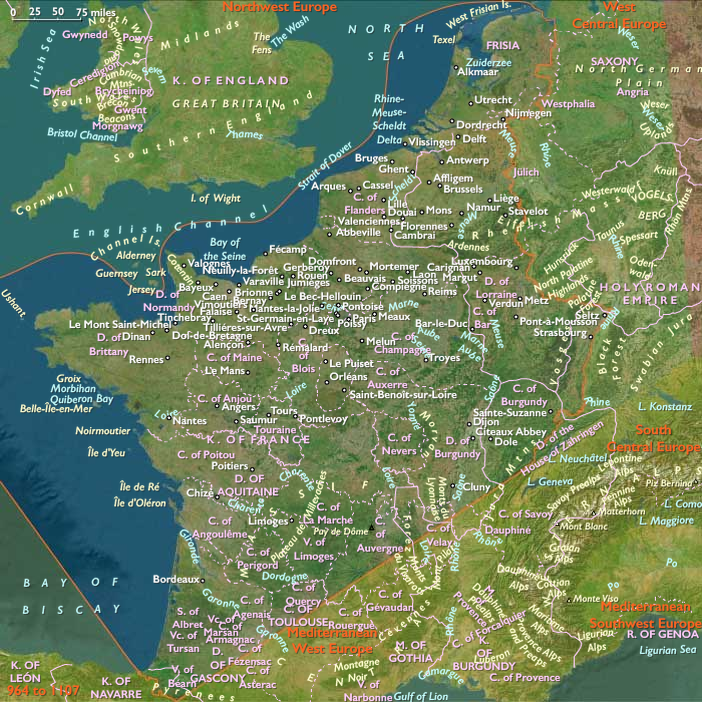
During the People's Crusade in 1096, thousands of Jews were massacred across the Rhineland, particularly in Lorraine, Worms, Mainz, and Cologne. Among the 12,000 Jews murdered, several prominent Jewish scholars and their families perished, including the three sons of Rabbi Isaac ben Eliezer Halevi, the teacher of Rashi, one of the greatest Jewish scholars of all time.
The destruction of Jewish communities and yeshivot (talmudic academies) prompted Rashi to compose Selichot (penitential poems) mourning the tragedy.
The Massacre of the Jewish Communities in the Rhineland (1096)
- The People’s Crusade, a loosely organized movement of peasants and minor knights, turned against Jewish communities in the Holy Roman Empire, considering them infidels alongside Muslims.
- In Worms, Mainz, and other cities, entire Jewish communities were slaughtered, often choosing mass suicide over forced conversion.
- Among those killed were the three sons of Rabbi Isaac ben Eliezer Halevi, one of Rashi’s own teachers.
Rashi’s Response: Mourning Through Poetry and Commentary
- Rashi responded to the tragedy by writing Selichot, penitential poems that mourned the destruction of Jewish communities and learning centers.
- These poems reflected both deep sorrow and religious devotion, serving as a communal lamentation for those lost.
Rashi’s Legacy and Scholarship
- Born in Troyes, Rashi studied in Mainz and Worms, two of the most prominent Jewish intellectual centers of the time.
- After completing his studies, he founded a talmudic academy in Troyes, training students who would carry on his methods of interpretation.
- His commentaries on the Hebrew Bible and the Babylonian Talmud became definitive texts for Jewish scholarship.
- Rashi’s method of commentary emphasized:
- Utter simplicity and clarity.
- Minimal dialectical argumentation, focusing instead on grammar and rational explanation.
- Occasional use of French and German words to clarify difficult Hebrew phrases.
- Humility, as seen in his frequent admissions of “I do not know the meaning.”
Impact of the Crusade on Jewish Scholarship
- The destruction of Rhineland yeshivot (academies of Jewish learning) was a severe blow to European Jewry, dispersing Jewish scholars and communities.
- Rashi’s academy in Troyes became even more critical for the survival of Jewish scholarship, ensuring that Jewish legal and biblical study continued despite the devastation.
- His students and descendants (the Tosafists) built upon his work, producing advanced commentaries on the Talmud in the centuries that followed.
Conclusion: Rashi’s Enduring Influence
Despite the devastation of 1096, Rashi’s intellectual contributions ensured the continuity of Jewish learning. His commentaries remain fundamental to this day, studied in yeshivot and Jewish communities worldwide. The massacres that shook Jewish communities across the Rhineland deeply impacted Jewish history, but Rashi’s work helped preserve Jewish tradition and scholarship for future generations.
Locations
Groups
Commodities
Subjects
Regions
West Europe
View →Subregions