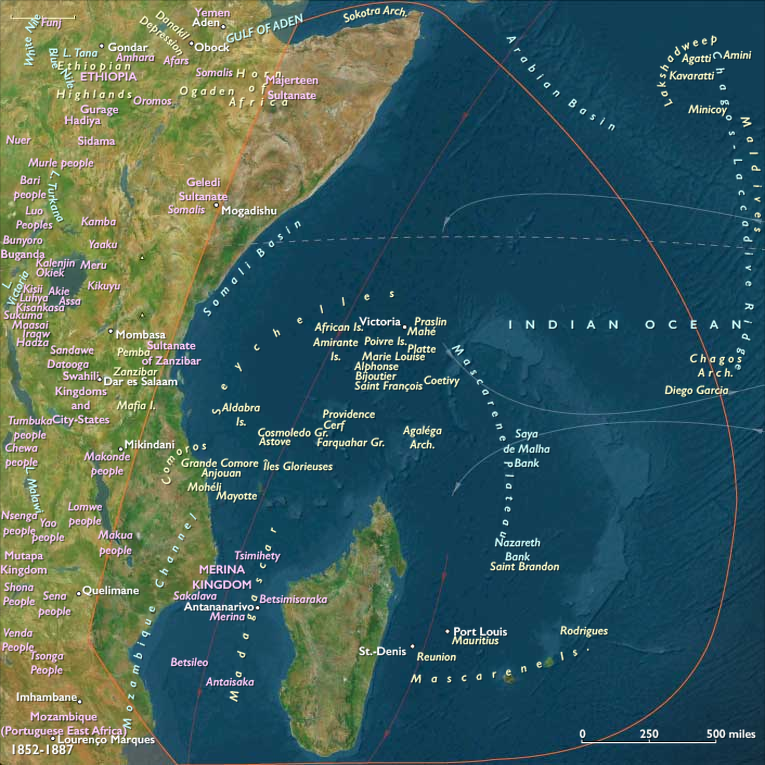
Mauritius under the British is no longer…
1852 CE to 1863 CE
Mauritius under the British is no longer a free port.
To compensate for the resulting loss in trade, the government has encouraged sugar production.
In 1825 Britain had equalized the duty on sugar from all of its colonies, providing a strong stimulus for Mauritians to produce more sugar.
Production had leaped from eleven thousand tons in 1825 to twenty-one thousand tons in 1826; by 1854 production exceeds one hundred thousand tons.
By the mid-nineteenth century, Mauritius has reached the apex of its importance in the world sugar market: it is Britain's main sugar-producing colony and produces 9.4 percent of the world's sugarcane between 1855 and 1859.
Although overall production will continue to rise into the twentieth century, declines in world prices and a massive increase in production in other countries will rob Mauritius of its dominant role in subsequent years.
Nonetheless, as sugar increases in economic importance, the percentage of food crop production drops accordingly, and landownership becomes concentrated in large, profitable estates.
Locations
Commodities
Regions
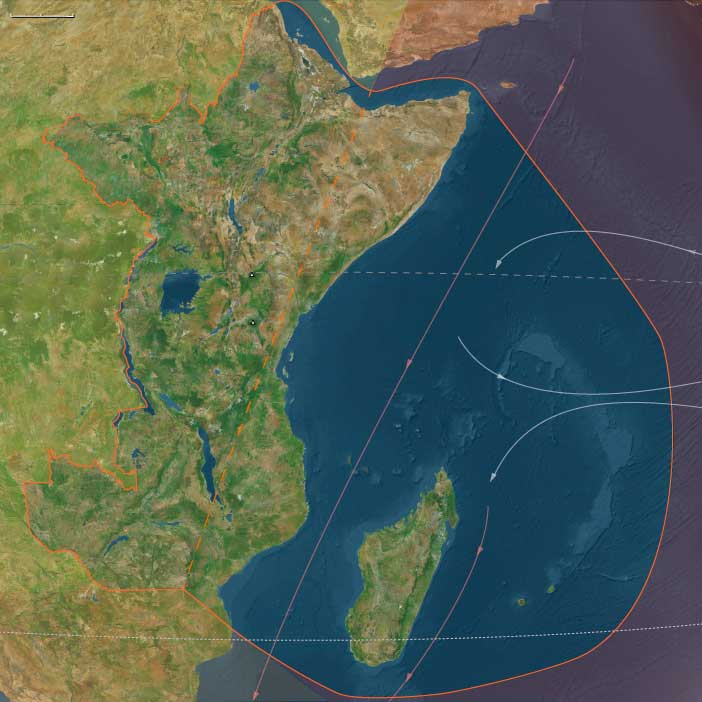
East Africa
View →Subregions