
The Polish Sejm’s refusal to ratify the …
Years: 1651 - 1651
June
The Polish Sejm’s refusal to ratify the Treaty of Zboriv leads to a resumption of fighting in 1651.
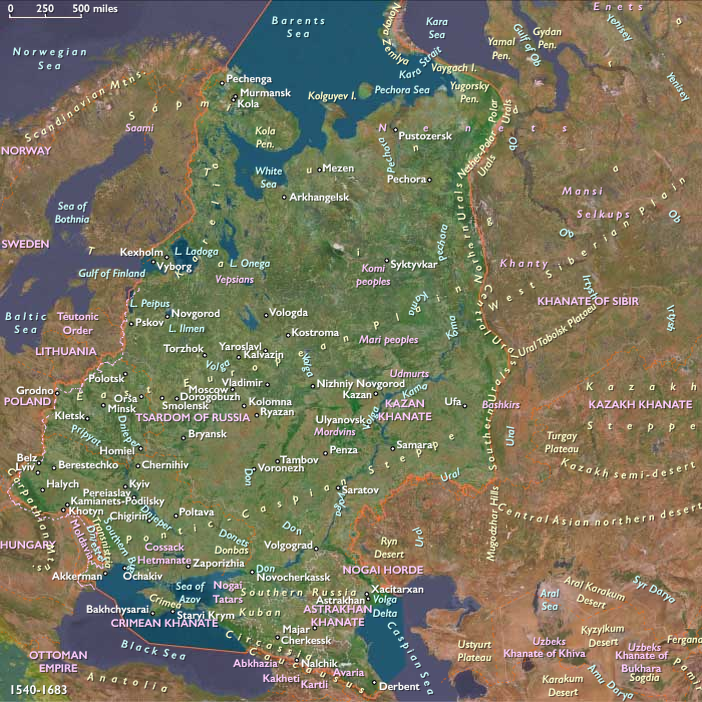
At the three-day Battle of Berestechko (the biggest battle of the seventeenth century), two thousand Polish cavalry (one regiment under the command of Aleksander Koniecpolski, supported by Jerzy Lubomirski, six pancerni cavalry companies of Jeremi Wiśniowiecki and winged hussars under the command of Stefan Czarniecki) repulse the Tatars, who suffer heavy losses.
During the first day of the battle, on June 28, the Poles are victorious.
Encouraged by their victory in the first day, the Poles deploy all available cavalry on the second.
Polish infantry and artillery stay in the camp and do not support the cavalry, thus enabling the Tatar cavalry to defeat its Polish counterpart.
The Tatars come near to the Polish camp but are repulsed by heavy fire from the Polish infantry.
The Poles lose three hundred soldiers, including many officers.
The rebels are victorious during the second day of the battle.
On the afternoon of the third day of battle, Duke Jeremi Wiśniowiecki leads a successful charge of eighteen cavalry companies against the right wing of the Cossack-Tatar Army.
The Polish center, under the command of John Casimir, moves forward.
The Tatars try to attack it, but are repulsed.
During the fight, a Polish nobleman called Otwinowski notices a banner of the Tatar Khan.
Polish artillery starts to fire in that direction, and a Tatar standing next to the Khan falls dead.
Panicked, the Khan escapes and the Tatars retreat, kidnapping Khmelnytsky.
Only the Cossack wagons remain at the field of battle, which Polish forces now besiege.
Initially, the wagons had been commanded by Colonel Filon Dzhalalii but after some days, he had been replaced by Colonel Ivan Bohun, a close associate and friend of Khmelnytsky.
Locations
People
Groups
- Jews
- Crimean Khanate
- Cossacks, Zaporozhian
- Polish-Lithuanian Commonwealth (Commonwealth of the Two Nations)
- Cossack Hetmanate of the Zaporozhian Host
Topics
Commodoties
Subjects
Regions
Subregions
Related Events
Showing 10 events out of 31714 total
Years: 1651 - 1651
June
Locations
People
Groups
- Jews
- Crimean Khanate
- Cossacks, Zaporozhian
- Polish-Lithuanian Commonwealth (Commonwealth of the Two Nations)
- Cossack Hetmanate of the Zaporozhian Host
Topics
Commodoties
Subjects
Regions
Subregions