Constance of Arles' Final Surrender to Her…
1031 CE
Constance of Arles' Final Surrender to Her Sons (1031–1032)
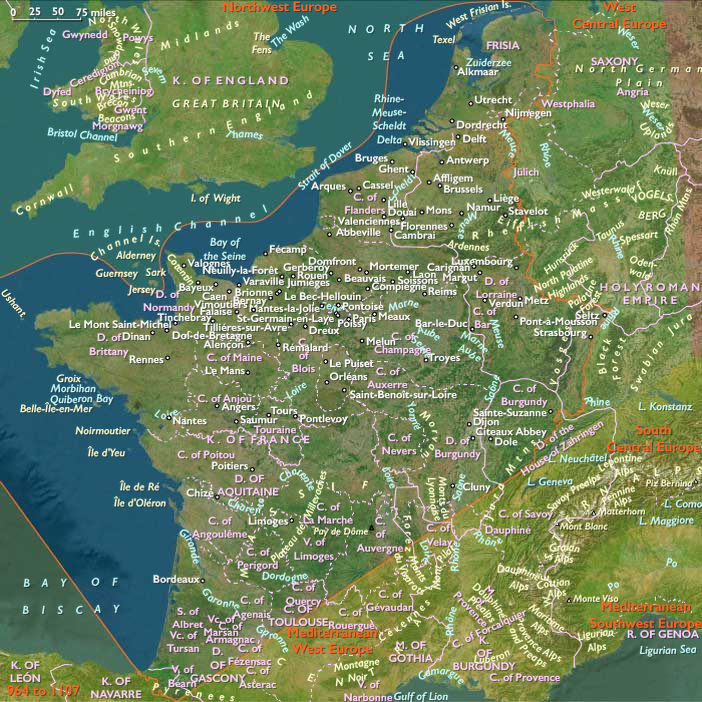
After Robert II’s death in 1031, Queen Constance of Arles fiercely resisted the authority of her son, Henry I, leading to a prolonged Capetian civil war. Refusing to surrender her dower lands, she took military action against her own sons, forcing Henry to rely on Norman support. However, it was Henry’s ruthless siege of Le Puiset that ultimately forced Constance to surrender.
Constance’s Resistance and the Capetian Civil War
- Following Robert II’s death, Constance refused to recognize Henry I’s full authority, continuing her campaign to install her favored son, Robert of Burgundy, as king.
- She seized key fortresses and aligned with nobles who opposed Henry, prolonging the instability within the fragile Capetian monarchy.
- Even after being forced out of Poissy and escaping to Pontoise, Constance remained defiant, maintaining control over her lands and seeking to rally further opposition.
The Siege of Le Puiset and Constance’s Capitulation
- By 1032, Henry I, with Norman backing, had turned the tide of war in his favor.
- As a show of unrelenting force, Henry laid siege to Le Puiset, one of Constance’s strongholds, and vowed to slaughter all its inhabitants if she did not surrender.
- Faced with imminent destruction, Constance relented and surrendered to her sons, finally recognizing Henry I’s rule.
Aftermath and Legacy
- With his mother’s surrender, Henry I finally secured his throne, though the war had weakened Capetian authority and delayed his consolidation of power.
- Constance’s reluctant submission marked the end of her political influence, and she died shortly after, in 1032 or 1034.
- Robert of Burgundy, though denied the throne, was later compensated with the Duchy of Burgundy, a move that ensured his loyalty to the Capetian crown.
- The civil war and succession struggle demonstrated the tenuous nature of Capetian rule, where kings struggled to assert direct control over their own dynasty and vassals.
The siege of Le Puiset was a turning point that ended Constance’s rebellion, but it underscored the brutality of medieval succession conflicts, where even royal families were torn apart by ambition and political rivalries.
Locations
People
Groups
Commodities
Subjects
Regions
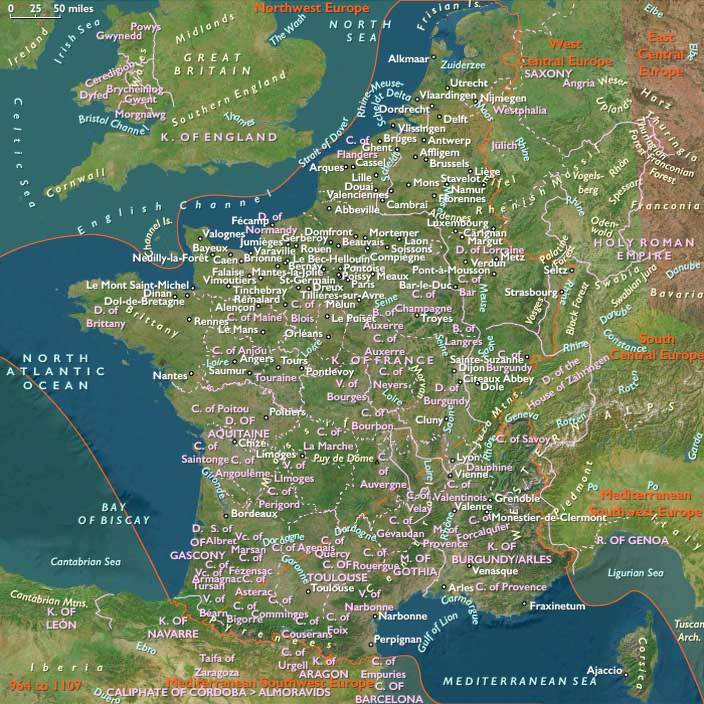
West Europe
View →Subregions