The House of Luxembourg and Its Succession…
1396 CE to 1539 CE
The House of Luxembourg and Its Succession Crisis (14th–15th Century)
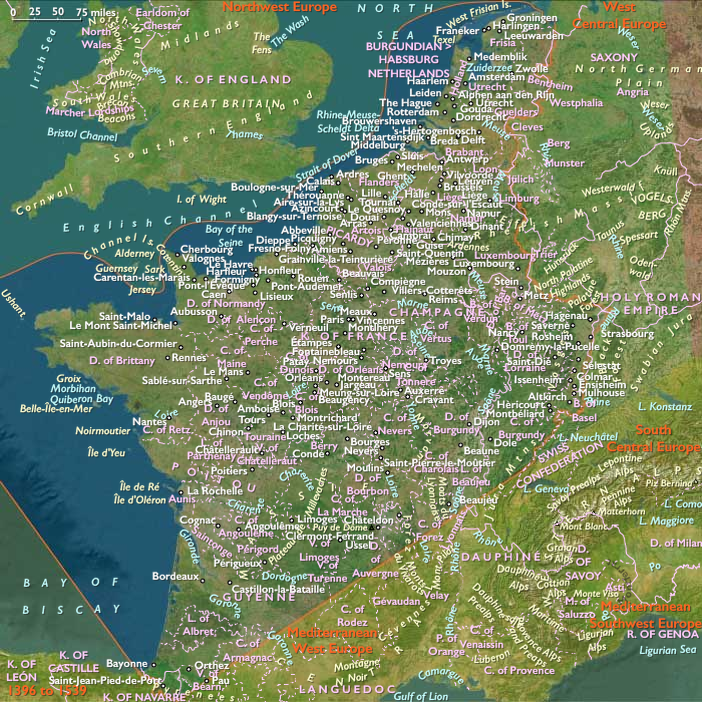
The House of Luxembourg was one of the most powerful dynasties in Central Europe, with three members serving as Holy Roman Emperors in the 14th and early 15th centuries. However, by 1437, the dynasty faced a succession crisis due to the lack of a male heir, leading to the sale of Luxembourg to Philip the Good of Burgundy.
I. The House of Luxembourg and the Holy Roman Empire
- Three members of the House of Luxembourg reigned as Holy Roman Emperors:
- Henry VII (r. 1308–1313) – Founder of the Luxembourg imperial line, crowned Emperor in 1312.
- Charles IV (r. 1346–1378) – Issued the Golden Bull of 1356, which regulated the election of future emperors.
- Sigismund (r. 1410–1437) – Last Luxembourg Emperor, known for ending the Western Schism and initiating Church reforms.
II. The 1437 Succession Crisis and the Sale of Luxembourg
- Sigismund of Luxembourg had no male heirs, leading to the extinction of the male line of the House of Luxembourg.
- His daughter, Elisabeth of Luxembourg, inherited the Duchy of Luxembourg, but her reign was precariousdue to competing claims.
- Facing mounting pressure, Duchess Elisabeth sold Luxembourg to Philip the Good, Duke of Burgundy, in 1443, effectively transferring the duchy into Burgundian hands.
III. The Fortification of Luxembourg
- Over the following centuries, Luxembourg became one of the most fortified cities in Europe, as it passed through various ruling houses:
- Burgundians (1443–1477) – Integrated Luxembourg into the Burgundian Netherlands.
- Habsburgs (1477–1795) – Strengthened the fortifications as part of the Spanish and later Austrian Netherlands.
- Bourbons (1679–1697) – During Louis XIV’s wars, the French expanded and modernized Luxembourg’s fortress.
- Hohenzollerns (1815–1867) – Under Prussian control, Luxembourg was further fortified into a strategic stronghold.
- French occupation (1684, 1795–1815) – Napoleon’s forces took control of Luxembourg, reinforcing its military significance.
IV. Legacy and Significance
- The end of the House of Luxembourg as a ruling dynasty marked the shift of its territories into Burgundian, Habsburg, and later European power struggles.
- Luxembourg’s fortifications became legendary, earning it the nickname "the Gibraltar of the North."
- The Luxembourg crisis of the 19th century eventually led to its independence in 1867, but the territory’s strategic importance remained a defining factor in European conflicts.
The House of Luxembourg’s 1437 succession crisis ended its imperial ambitions, but the duchy itself remained a crucial European stronghold, as successive powers fortified and contested it for centuries.
Locations
Groups
Subjects
Regions
West Europe
View →Subregions