Nominoe, Imperial Governor of Brittany, and His Relationship with Charles the Bald (841–842)
Initially,Nominoe, the imperial governor ofBrittany, maintains anamicable relationshipwithCharles the Bald, who becomesKing of West Franciaafter the death ofLouis the Pious in 840.
Nominoe's Position in Brittany
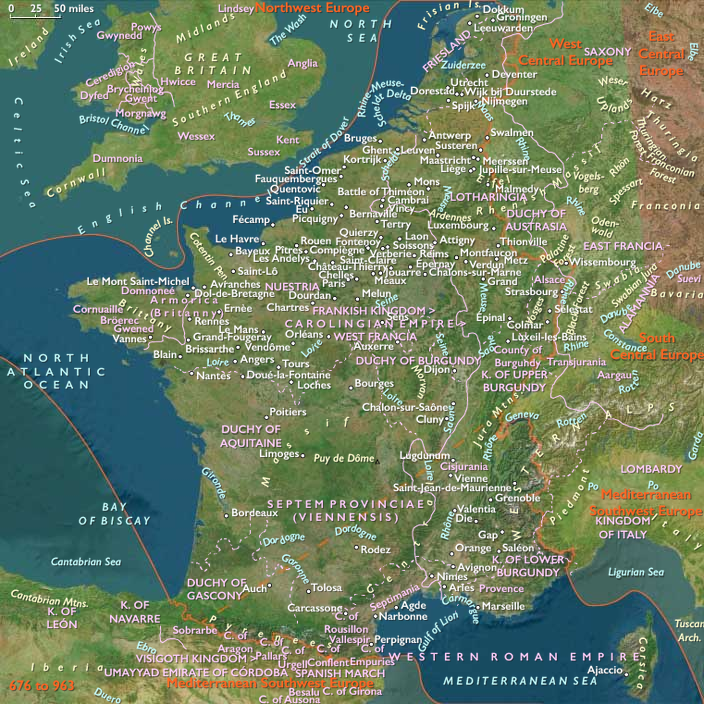
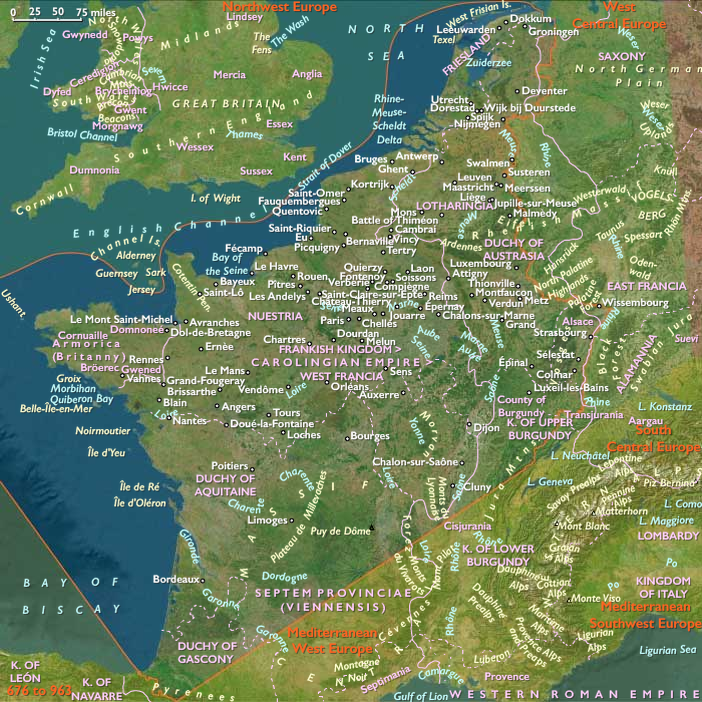
Nominoe'spower baseis in theVannetais, and two charters refer to him asCount of Vannes, though it is unclear whether he held this title as early as819or as late as834.
Hemay not have controlled land outside of Vannes, and his ability tocollect revenue from Breton-speaking territoriesappears to beno greater than that of other regional aristocrats.
Hisloyalty to the Carolingiansmakes him akey figurein maintainingFrankish influence in Brittany, a historicallyindependent-minded region.
Charles the Bald’s Approach to Nominoe (841–842)
Inspring 841, during arevolt in Neustria, Charlessends emissaries from Le Mansto determine whetherNominoe would submitto his rule.
Nominoe agrees to submit, but according to Nithard’s account, this isnot due to compulsion—suggesting thatNominoe is too powerful to be coerced.
Later in841, Nominoerebuffs Emperor Lothair I, whoclaims Neustria, showing hiscontinued allegiance to Charles.
Nominoe’s Continued Loyalty (842)
OnJanuary 25, 842, Nominoe makes adonation “in alms for the king”to theAbbey of Redon, demonstrating hiscommitment to Charles the Bald.
Breton soldiers, along withGascons,take part in the military display at the Oaths of Strasbourg (842), further reinforcing theirsupport for Charles’ alliance with Louis the GermanagainstLothair I.
The Fragile Alliance and the Future of Brittany
WhileNominoe remains loyal to Charles in these early years, hisregional power base continues to grow, and tensions betweenBreton independenceandFrankish rulewill eventually surface. In the coming years,Nominoe will rebel, setting the stage forBrittany’s struggle for autonomyagainst the Carolingians.