Achaeans are any of the ancient Greek…
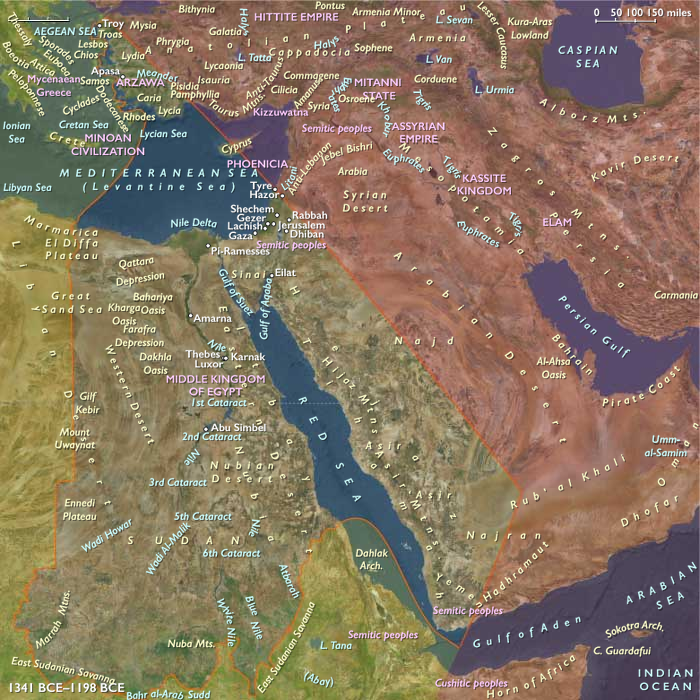
1341 BCE to 1198 BCE
Achaeans are any of the ancient Greek people, identified in Homer, along with the Danaoi and the Argeioi, as the Greeks who besieged Troy.
Their area as described by Homer—the mainland and western isles of Greece, Crete, Rhodes, and adjacent isles, except the Cyclades—is precisely that covered by the activities of the Mycenaeans in the fourteenth and thirteenth centuries BCE, as revealed by archaeology.
From this and other evidence, some authorities have identified the Achaeans with the Mycenaeans.
Other evidence suggests that the Achaeans did not enter Greece until the so-called Dorian invasions of the twelfth century BCE.
It seems at least possible that Homer's Achaean chiefs, with their short genealogies and their renown for infiltrating into Mycenaean kingships by way of military service and dynastic marriages, held power in the Mycenaean world only for a few generations in its last, warlike, and semi-barbarous phase, until replaced by the Dorians, their relatively close kindred. (The Achaeans of the northern Peloponnesus in historic times were reckoned by Herodotus to be descendants of these earlier Achaeans. The name Ahhiyawa, which occurs in Hittite documents of the fourteenth and thirteenth centuries BCE, has sometimes been identified with the Achaeans, but this is disputed.)
Groups
Topics
Regions
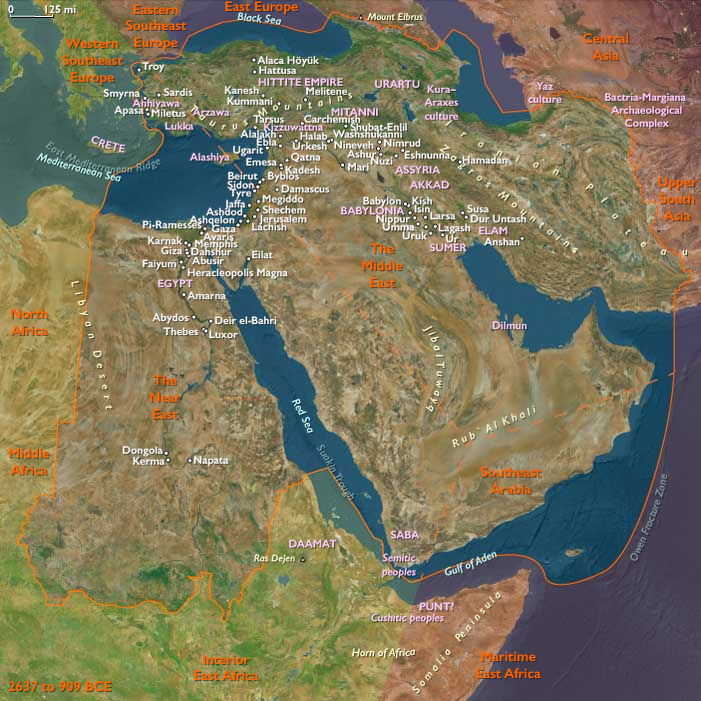
The Near and Middle East
View →Subregions