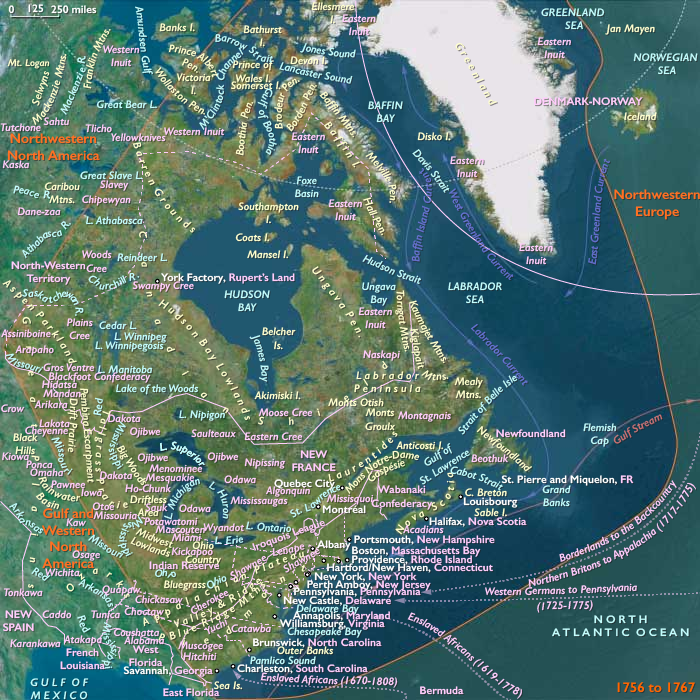
Amherst, worried that Bourlamaque's retreat might be…
October 1759 CE
Amherst's army begins on October 11 to sail and row north on Lake Champlain to attack Bourlamaque's position at the Île-aux-Noix in the Richelieu River.
Over the next two days, one of the French ships is captured; the French abandon and burn the others to prevent their capture.
He receives word of Quebec's fall on October 18.
As there is an "appearance of winter" (parts of the lake are beginning to freeze), and provincial militia enlistments are set to end on November 1, Amherst calls off his attack, dismisses his militia forces, and returns the army to winter quarters.
The British definitively gain control of Canada with the surrender of Montreal in 1760.
The fort, which had always been called Ticonderoga by the British (after the place where the fort is located), will be held by them through the end of the French and Indian War.
Following that war, it will be manned by small garrisons until 1775, when it will be captured by American militia early in the American Revolutionary War.
People
Groups
Iroquois (Haudenosaunee, also known as the League of Peace and Power, Five Nations, or Six Nations)
View →
New France (French Colony)
View →
France, (Bourbon) Kingdom of
View →
Ohio Country
View →
Friends, Religious Society of (Quakers)
View →
Connecticut (English Crown Colony)
View →
New York, Province of (English Colony)
View →
Pennsylvania, Province of (English Colony)
View →
Massachusetts, Province of (English Crown Colony)
View →
New Jersey (English Colony)
View →
Britain, Kingdom of Great
View →
Rogers' Rangers
View →
Topics
Regions
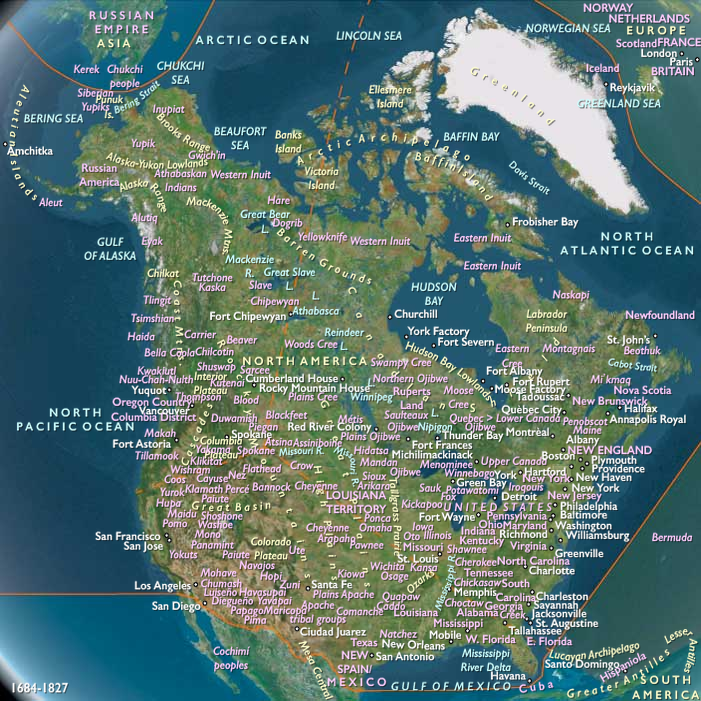
Northern North America
View →Subregions