The Expulsion of the Jews from France…
July 1306 CE
The Expulsion of the Jews from France (1306): Philip IV’s Financial Motives
By 1306, after years of costly warfare and financial mismanagement, Philip IV of France (Philip the Fair) faced a severely depleted royal treasury. To remedy this crisis, he orchestrated a mass expulsion of Jews, seizing their property, wealth, and outstanding debts for the benefit of the Crown.
The Secret Orders and Financial Preparations
- On January 2, 1306, Philip issued secret orders preparing for the banishment of all Jews from his kingdom.
- The crown would confiscate all Jewish assets, including:
- Houses and land, to be sold at auction.
- Movable goods and personal belongings.
- Buried treasures found in Jewish homes, which were reserved for the king.
- Jewish creditors were replaced by the king himself, who ordered Christian debtors to declare their debts—which were now payable directly to the royal treasury.
To maximize his financial gain, Philip timed the sale of Jewish property to coincide with the prohibition of clipped or debased money, ensuring that purchases were made in full-value currency. Additionally, informants were incentivized—one-fifth of any hidden Jewish wealth discovered would go to its finder.
The Arrest and Expulsion (July 22, 1306)
- On July 22, 1306, the day after Tisha B’Av, a Jewish day of mourning, Jews across France were arrested.
- In prison, they were notified that they were sentenced to exile.
- They were permitted to take only the clothes on their backs and twelve sous tournois per person.
- They were given one month to leave the kingdom, under penalty of execution for those who remained beyond the deadline.
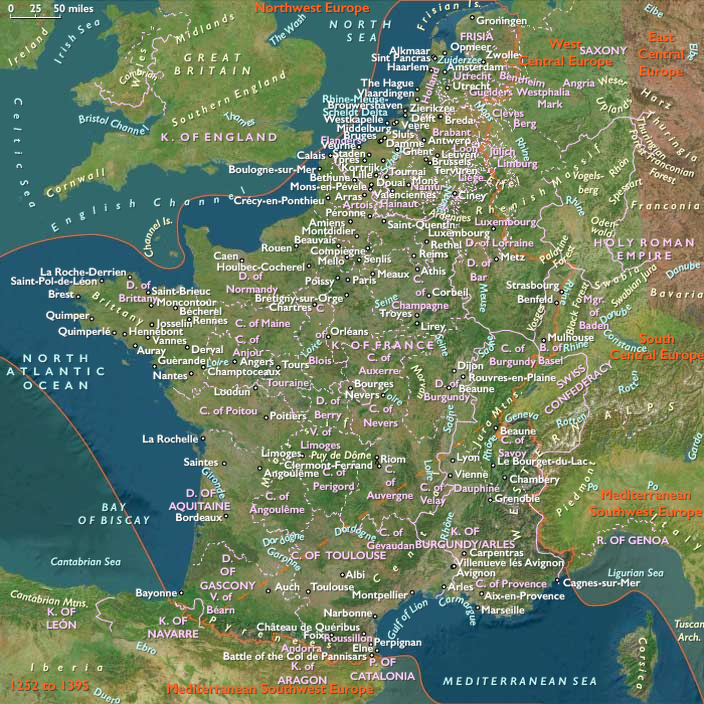
Most Jews fled to neighboring duchies, but the vast expansion of the French kingdom in the 13th century limited their options. While Champagne, Normandy, Anjou, Touraine, and Languedoc were now under French control, exiles could only find refuge in Lorraine, the County of Burgundy, Savoy, Dauphiné, Roussillon, and parts of Provence. (Over time, many Jews would gradually return in small numbers.)
Philip IV’s Broader Financial Targets
- The expulsion of the Jews was part of a wider pattern of financial exploitation under Philip IV.
- He also targeted Lombard bankers and wealthy abbots, seizing their assets to fund his military campaigns and administrative expansion.
- His devotion to Saint Louis (Louis IX), who had previously imposed anti-Jewish measures, may have influenced his decision, though Philip’s motives were primarily financial rather than religious.
Impact and Legacy
- The expulsion of the Jews eliminated a longstanding source of royal revenue, forcing Philip to seek new ways to fund the monarchy, including later targeting the Knights Templar in 1307.
- French commerce suffered, as Jewish merchants and moneylenders had played a vital economic role in trade and finance.
- The return of Jews to France in the following decades demonstrated that, despite their expulsion, their economic expertise remained indispensable to medieval society.
Philip IV’s 1306 expulsion of the Jews was not driven by religious zeal, but by financial necessity, illustrating the growing use of state power for economic exploitation in medieval Europe.
Locations
People
Groups
Regions
West Europe
View →Subregions