
Napoleon has calculated that Kutuzov, expecting reinforcements …
Years: 1805 - 1805
November
Napoleon has calculated that Kutuzov, expecting reinforcements from Russia to defend its political allies, will withdraw toward Vienna; he envisions that his and Kutuzov's armies will engage in a great battle at Vienna, and that this battle will decide the war.
As a consequence, Napoleon draws divisions from four of the other seven corps of the Grande Armée to create a new VIII Corps.
This corps is to secure the north shore of the Danube, block any of the Austrian or Russian groups from reinforcing one another and, more importantly, prevent Kutuzov from crossing the river and escaping to Russia.
The new VIII Corps, under the overall command of Édouard Mortier, includes three infantry divisions and a division of cavalry.
Corps Mortier, as it is known, had crossed the Danube at Linz and Passau in early November 1805 and marched east, on the north bank of the Danube.
Operating independently, the corp's cavalry had conducted reconnaissance ahead of them and on the flanks.
General Gazan's division (about six thousand men) takes the lead; Mortier is with them.
They are followed by Dupont's division (another four thousand) about one day's march behind
Jean-Baptiste Dumonceau's division (another four thousand), marching another day behind Dupont, brings up the rear.
A flotilla of fifty boats acquired at Passau provides communications across the Danube.
Before sending Mortier on his mission, Napoleon had instructed him to protect his north flank at all times against possible Russian reinforcements, advice he had reiterated in subsequent written orders.
Napoleon had also advised Mortier to secure all crossings of the Danube between Linz and Vienna.
On November 9, Gazan's division had reached Marbach an der Donau and covered the fifty kilometers (thirty-one miles) to Dürenstein by early on the following afternoon.
Here it skirmishes with some Russian patrols to the east of the town and expels them.
Feeling confident, the French establish a forward post just upstream from Stein.
In Dürenstein itself, Mortier establishes his command post and directs the construction of a small field hospital.
Although the position seems secure, Mortier ignores Napoleon's strict instructions and neglects to protect his left (north) flank.
This failure is an important factor when Mortier loses his corps' so-called "eyes": after he and Gazan crossed the Danube, the French dragoons had veered to the northwest, leaving only three squadrons of the 4th Dragoons available for reconnaissance.
These had left the division and are operating independently of Gazan's command.
As a consequence, Mortier and Gazan march blindly through the narrow canyon west of Dürenstein, not knowing what lies ahead of them.
Kutuzov had led the Coalition army across the Danube at Krems, a short distance past Stein, and destroyed the bridge behind him.
His actions have deprived the France commanders of a possible route across the Danube, putting the deployment of the entire French division at further risk in the case of retreat.
In this decision Kutuzov abandons Vienna to the French, who are converging on the Austrian capital from the north, west and southwest, for the security of uniting with reinforcements from Galicia.
Contrary to Napoleon's expectation, Kutuzov chooses a military solution over a political one.
Unknown to either Gazan or Mortier, the Coalition has concentrated a force of approximately twenty-four thousand men (mostly Russians and a few Austrians) within a few kilometers of the French position at Dürenstein.
In comparison, Gazan's division has only six thousandmen.
The Austro-Russian force is a mixture of infantry, Jägers (frequently deployed as skirmishers), Russian musketeers and Russian and Austrian cavalry, accompanied by more than sixty-eight artillery pieces.
The Russian cavalry, units of the greatly feared Cossacks, are well-suited for patrolling the river bank; indeed, on November 9 they had taken forty French soldiers as prisoners.
Furthermore, reinforcements stand in Moravia, less than two weeks' march away.
If the main body of the French army crosses the river, they will require time to prepare.
Kutuzov, who had learned the military arts under the tutelage of the legendary Russian Generalissimo Suvorov, has overall command and will have ample warning of any large-scale French movement.
As a consequence, Napoleon draws divisions from four of the other seven corps of the Grande Armée to create a new VIII Corps.
This corps is to secure the north shore of the Danube, block any of the Austrian or Russian groups from reinforcing one another and, more importantly, prevent Kutuzov from crossing the river and escaping to Russia.
The new VIII Corps, under the overall command of Édouard Mortier, includes three infantry divisions and a division of cavalry.
Corps Mortier, as it is known, had crossed the Danube at Linz and Passau in early November 1805 and marched east, on the north bank of the Danube.
Operating independently, the corp's cavalry had conducted reconnaissance ahead of them and on the flanks.
General Gazan's division (about six thousand men) takes the lead; Mortier is with them.
They are followed by Dupont's division (another four thousand) about one day's march behind
Jean-Baptiste Dumonceau's division (another four thousand), marching another day behind Dupont, brings up the rear.
A flotilla of fifty boats acquired at Passau provides communications across the Danube.
Before sending Mortier on his mission, Napoleon had instructed him to protect his north flank at all times against possible Russian reinforcements, advice he had reiterated in subsequent written orders.
Napoleon had also advised Mortier to secure all crossings of the Danube between Linz and Vienna.
On November 9, Gazan's division had reached Marbach an der Donau and covered the fifty kilometers (thirty-one miles) to Dürenstein by early on the following afternoon.
Here it skirmishes with some Russian patrols to the east of the town and expels them.
Feeling confident, the French establish a forward post just upstream from Stein.
In Dürenstein itself, Mortier establishes his command post and directs the construction of a small field hospital.
Although the position seems secure, Mortier ignores Napoleon's strict instructions and neglects to protect his left (north) flank.
This failure is an important factor when Mortier loses his corps' so-called "eyes": after he and Gazan crossed the Danube, the French dragoons had veered to the northwest, leaving only three squadrons of the 4th Dragoons available for reconnaissance.
These had left the division and are operating independently of Gazan's command.
As a consequence, Mortier and Gazan march blindly through the narrow canyon west of Dürenstein, not knowing what lies ahead of them.
Kutuzov had led the Coalition army across the Danube at Krems, a short distance past Stein, and destroyed the bridge behind him.
His actions have deprived the France commanders of a possible route across the Danube, putting the deployment of the entire French division at further risk in the case of retreat.
In this decision Kutuzov abandons Vienna to the French, who are converging on the Austrian capital from the north, west and southwest, for the security of uniting with reinforcements from Galicia.
Contrary to Napoleon's expectation, Kutuzov chooses a military solution over a political one.
Unknown to either Gazan or Mortier, the Coalition has concentrated a force of approximately twenty-four thousand men (mostly Russians and a few Austrians) within a few kilometers of the French position at Dürenstein.
In comparison, Gazan's division has only six thousandmen.
The Austro-Russian force is a mixture of infantry, Jägers (frequently deployed as skirmishers), Russian musketeers and Russian and Austrian cavalry, accompanied by more than sixty-eight artillery pieces.
The Russian cavalry, units of the greatly feared Cossacks, are well-suited for patrolling the river bank; indeed, on November 9 they had taken forty French soldiers as prisoners.
Furthermore, reinforcements stand in Moravia, less than two weeks' march away.
If the main body of the French army crosses the river, they will require time to prepare.
Kutuzov, who had learned the military arts under the tutelage of the legendary Russian Generalissimo Suvorov, has overall command and will have ample warning of any large-scale French movement.
Locations
People
- Archduke Charles of Austria, Duke of Teschen
- Auguste Marmont
- Ferdinand I of Austria
- Francis II, Holy Roman Emperor
- Joachim Murat
- Karl Mack von Leiberich
- Michel Ney
- Mikhail Kutuzov
- Napoleon
- Nicolas Jean-de-Dieu Soult
Groups
- Austria, Archduchy of
- Bavaria, Wittelsbach Duchy of
- Portugal, Bragança Kingdom of
- Russian Empire
- Britain (United Kingdom of Great Britain and Ireland)
- Baden, Electorate and Margravate of
- Austrian Empire
- France, (first) Empire of
- Bavaria, Kingdom of
Topics
Subjects
Regions
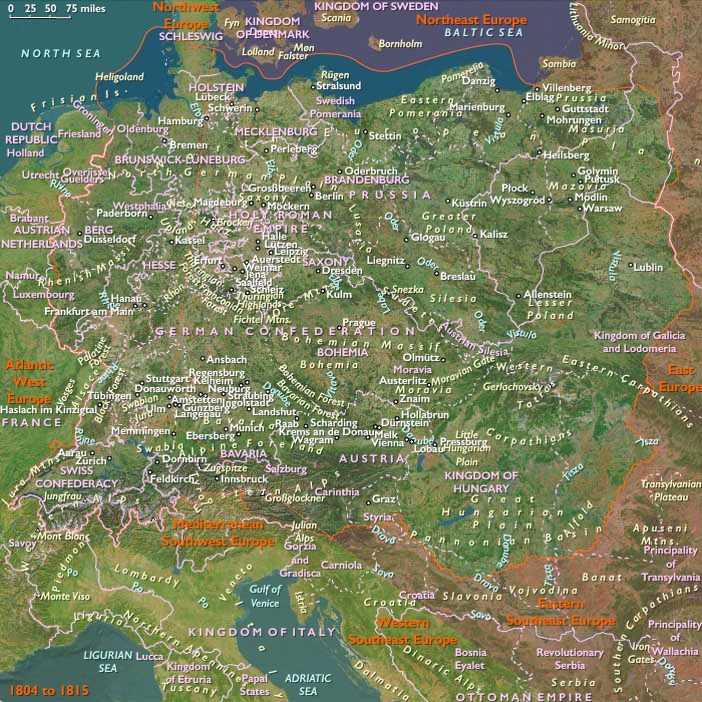
Subregions
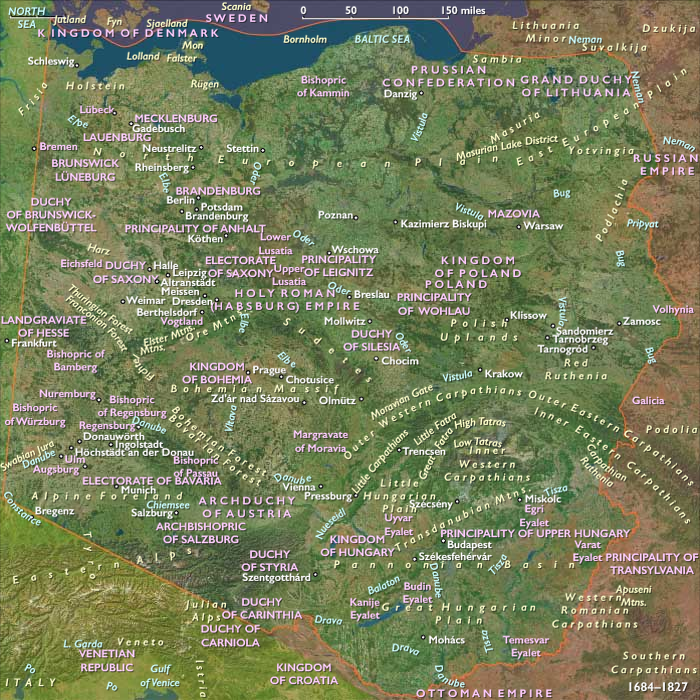
Related Events
Showing 10 events out of 22216 total
Years: 1805 - 1805
November
Locations
People
- Archduke Charles of Austria, Duke of Teschen
- Auguste Marmont
- Ferdinand I of Austria
- Francis II, Holy Roman Emperor
- Joachim Murat
- Karl Mack von Leiberich
- Michel Ney
- Mikhail Kutuzov
- Napoleon
- Nicolas Jean-de-Dieu Soult
Groups
- Austria, Archduchy of
- Bavaria, Wittelsbach Duchy of
- Portugal, Bragança Kingdom of
- Russian Empire
- Britain (United Kingdom of Great Britain and Ireland)
- Baden, Electorate and Margravate of
- Austrian Empire
- France, (first) Empire of
- Bavaria, Kingdom of
Topics
Subjects
Regions
Subregions