
Filters:
The major impact of the Safavid-Ottoman conflict …
Years: 1540 - 1683
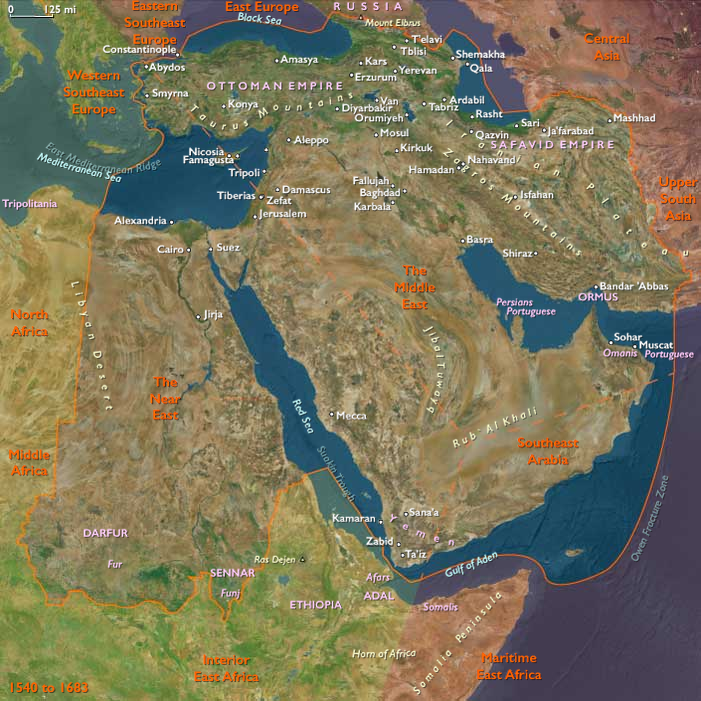
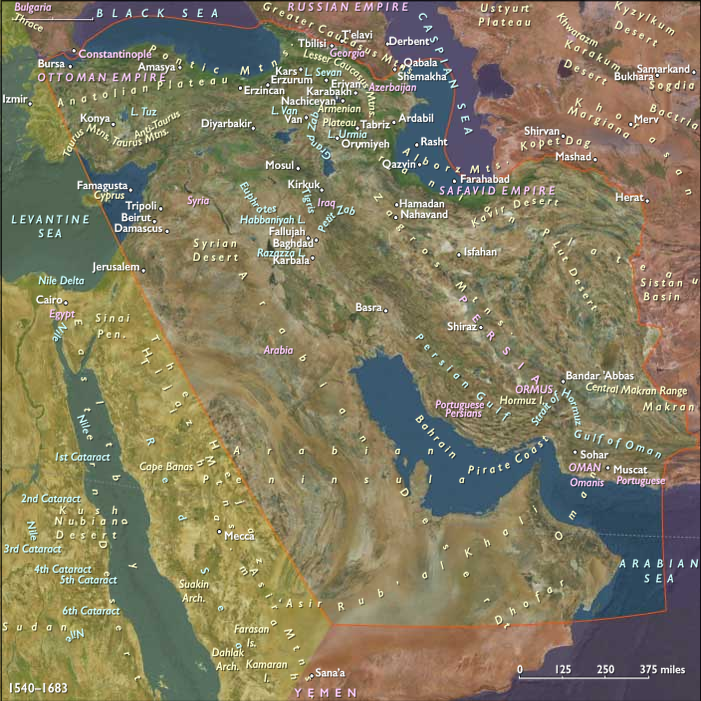
The major impact of the Safavid-Ottoman conflict on Iraqi history is the deepening of the Shia-Sunni rift.
Both the Ottomans and the Safavids use Sunni and Shia Islam respectively to mobilize domestic support.
Thus, Iraq's Sunni population suffers immeasurably during the brief Safavid reign (1623-38), while Iraq's Shias will be excluded from power altogether during the longer period of Ottoman supremacy (1638-1916).
The Sunnis during the Ottoman period gain the administrative experience that will allow them to monopolize political power in the twentieth century.
The Sunnis are able to take advantage of new economic and educational opportunities while the Shias, frozen out of the political process, remain politically impotent and economically depressed.
The frequent conflicts with the Safavids have sapped the strength of the Ottoman Empire by the seventeenth century and have weakened its control over its provinces.
Tribal authority once again dominates in Iraq.
The nomadic population swells with the influx of Bedouin from Najd, in the Arabian Peninsula.
Bedouin raids on settled areas become impossible to curb.
The large and powerful Muntafiq tribal confederation takes shape in the interior, under the leadership of the Sunni Saadun family of Mecca.
The Shamman—one of the biggest tribal confederations of the Arabian Peninsula—enter the Syrian desert and clash with the `Anazzah confederation.
A new tribal confederation, the Bani Lam, takes root on the lower Tigris near Al Amarah.
The Kurdish Baban Dynasty emerges in the north and organizes Kurdish resistance.
The resistance makes it impossible for the Ottomans to maintain even nominal suzerainty over Iraqi Kurdistan (land of the Kurds).
Between 1625 and 1668, local shaykhs rule Al Basrah and the marshlands, home of the Madan (Marsh Arabs).
The powerful shaykhs basically ignore the Ottoman governor of Baghdad.
Both the Ottomans and the Safavids use Sunni and Shia Islam respectively to mobilize domestic support.
Thus, Iraq's Sunni population suffers immeasurably during the brief Safavid reign (1623-38), while Iraq's Shias will be excluded from power altogether during the longer period of Ottoman supremacy (1638-1916).
The Sunnis during the Ottoman period gain the administrative experience that will allow them to monopolize political power in the twentieth century.
The Sunnis are able to take advantage of new economic and educational opportunities while the Shias, frozen out of the political process, remain politically impotent and economically depressed.
The frequent conflicts with the Safavids have sapped the strength of the Ottoman Empire by the seventeenth century and have weakened its control over its provinces.
Tribal authority once again dominates in Iraq.
The nomadic population swells with the influx of Bedouin from Najd, in the Arabian Peninsula.
Bedouin raids on settled areas become impossible to curb.
The large and powerful Muntafiq tribal confederation takes shape in the interior, under the leadership of the Sunni Saadun family of Mecca.
The Shamman—one of the biggest tribal confederations of the Arabian Peninsula—enter the Syrian desert and clash with the `Anazzah confederation.
A new tribal confederation, the Bani Lam, takes root on the lower Tigris near Al Amarah.
The Kurdish Baban Dynasty emerges in the north and organizes Kurdish resistance.
The resistance makes it impossible for the Ottomans to maintain even nominal suzerainty over Iraqi Kurdistan (land of the Kurds).
Between 1625 and 1668, local shaykhs rule Al Basrah and the marshlands, home of the Madan (Marsh Arabs).
The powerful shaykhs basically ignore the Ottoman governor of Baghdad.
People
Groups
- Iranian peoples
- Arab people
- Persian people
- Kurdish people
- Bedouin
- Anazzah
- Shammar
- Oghuz Turks
- Muslims, Sunni
- Muslims, Shi'a
- Turkmen, Iraqi
- Marsh Arabs
- Al-Muntafiq
- Banu Lam
- Ottoman Empire
- Persia, Safavid Kingdom of
Topics
- Safavid conversion of Iran to Shia Islam
- Ottoman–Safavid War (1532–1555)
- Ottoman–Safavid War (1578–1590)
- Ottoman–Safavid War (1603–1618)
- Ottoman–Safavid War, or Turko-Persian War of 1623-39
Subjects
Regions
Subregions
Years: 1540 - 1683
People
Groups
- Iranian peoples
- Arab people
- Persian people
- Kurdish people
- Bedouin
- Anazzah
- Shammar
- Oghuz Turks
- Muslims, Sunni
- Muslims, Shi'a
- Turkmen, Iraqi
- Marsh Arabs
- Al-Muntafiq
- Banu Lam
- Ottoman Empire
- Persia, Safavid Kingdom of
Topics
- Safavid conversion of Iran to Shia Islam
- Ottoman–Safavid War (1532–1555)
- Ottoman–Safavid War (1578–1590)
- Ottoman–Safavid War (1603–1618)
- Ottoman–Safavid War, or Turko-Persian War of 1623-39
Subjects
Regions
Subregions