
The School of Salamanca and the Debate…
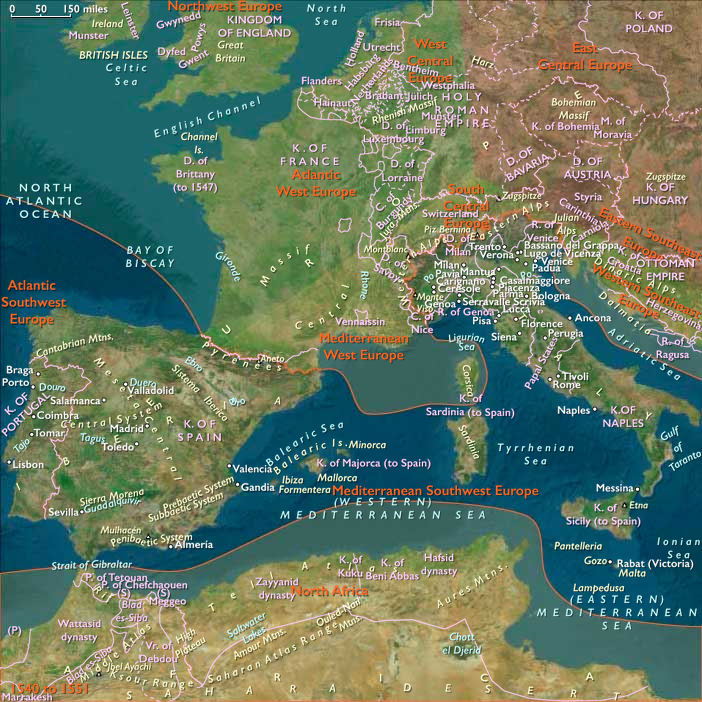
1550 CE
The School of Salamanca and the Debate on the Morality of Colonization (16th Century)
Throughout the 16th century, the School of Salamanca, a group of Spanish theologians, jurists, and philosophers, engaged in critical debates on the ethics of colonization, economic theory, human rights, and theology. These scholars, deeply influenced by Thomistic philosophy (the teachings of St. Thomas Aquinas), helped shape early concepts of international law and human dignity, particularly in relation to Spain’s conquests in the Americas and its involvement in the transatlantic slave trade.
1550: The Valladolid Debate and the School of Salamanca’s Decree
- The Valladolid Debate (1550–1551), convened by Emperor Charles V, was a landmark theological and legal discussion on the legitimacy of Spanish colonization in the New World.
- The debate pitted two Dominican theologians against each other:
- Bartolomé de las Casas – Argued that indigenous peoples had full rights as free human beings and should not be enslaved.
- Juan Ginés de Sepúlveda – Defended the Spanish conquest, using Aristotelian arguments of "natural slavery" and the need to Christianize the natives.
- The School of Salamanca supported Las Casas’ view, issuing a decree in 1550 affirming that indigenous peoples of the Americas were not "slaves" by nature.
Contradiction: Justification of West African Slavery
- While the Salamanca theologians defended indigenous rights, they did not extend the same protections to enslaved West Africans.
- They argued that West Africans could be enslaved under certain conditions, believing:
- They were already enslaved in Africa before European intervention.
- The transatlantic slave trade was legally justified if it involved prisoners of war.
- Conversion to Christianity was a form of salvation, supposedly improving the condition of the enslaved.
- This ethical contradiction allowed Spain and Portugal to continue justifying African slavery even as they debated the morality of conquering and exploiting indigenous Americans.
Long-Term Impact of the School of Salamanca’s Debates
-
Foundations of International Law
- Thinkers like Francisco de Vitoria and Domingo de Soto laid the groundwork for modern human rights and international law, influencing later scholars such as Hugo Grotius.
-
Increased Protections for Indigenous Peoples
- While Spanish colonial abuses continued, the theological arguments of Las Casas and the School of Salamanca led to greater legal protections for Native Americans, including the New Laws of 1542, which sought to end the encomienda system.
-
Continuation of the Transatlantic Slave Trade
- The acceptance of African slavery by Spanish theologians contributed to the massive expansion of the transatlantic slave trade, particularly under Portugal and Spain, leading to the enslavement of millions of Africans over the next three centuries.
Conclusion: A Progressive Yet Contradictory Legacy
The School of Salamanca played a pioneering role in human rights discourse, challenging the morality of Spanish colonization in the Americas. However, their failure to apply the same principles to West African slavery exposed the deep contradictions within European moral and legal justifications for empire-building. While they advanced ideas of sovereignty, natural rights, and international law, they also helped sustain one of history’s greatest human tragedies—the African slave trade.
Locations
Groups
Topics
Commodities
Subjects
Regions
Southwest Europe
View →Subregions
