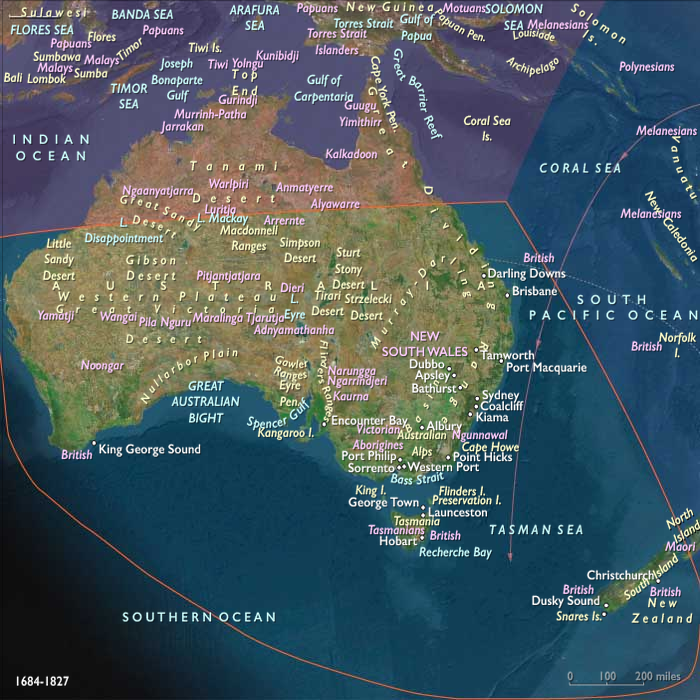
The Second Fleet, the name of the…
June 1790 CE
The Second Fleet, the name of the second fleet of ships sent with settlers, convicts and supplies to colony at Sydney Cove in Port Jackson, Australia, comprises six ships: one Royal Navy escort, four convict ships, and a supply ship.
The ships had been intended to sail to Australia together, arriving at Sydney Cove in 1789.
The escort had been disabled en route, however, and failed to make the destination, and one convict ship, which had been delayed, arrives two months after the other ships.
Unlike the preceding First Fleet, where great efforts had been taken to ensure the health of the convicts, the Second Fleet had been contracted to private businesses who kept the convicts in horrific conditions.
The Lady Juliana, which had sailed before the other convict ship, is not always counted as a member of the Second Fleet.
The storeship Justinian did not sail with the convict ships and arrives before them.
HMS Guardian sets out before the convict ships but strikes ice after leaving the Cape of Good Hope, returns to southern Africa, and is wrecked on the coast.
The Surprize, Neptune and Scarborough had been contracted from the firm "Camden, Calvert & King" who undertook to transport, clothe and feed the convicts for a flat fee of £17 7s. 6d per head, whether they landed alive or not.
This firm had previously been involved in transporting slaves to North America.
The only agents of the Crown in the crew are the naval agent, Lieutenant John Shapcote, and the Captain of the Guard; all other crew had been supplied by the firm.
They left England on January 19, 1790, with one thousand and six convicts (nine hundred and twenty-eight male and seventy-eight female) on board, making made only one stop on the way, at the Cape of Good Hope, where twenty male convicts, survivors from Guardian, had been taken on board.
The three vessels had made a faster trip than the First Fleet, arriving at Port Jackson in the last week of June 1790, three weeks after Lady Juliana, and one week after the storeship Justinian.
The passage had been relatively fast, but the mortality rate is the highest in the history of transportation to Australia.
Of the one thousand and twenty-six convicts embarked, two hundred and sixty-seven (two hundred and fifty-six men and eleven women) have died during the voyage (a twenty-six percent mortality rate).
They had been deliberately starved on Neptune, kept heavily ironed, and frequently refused access to the deck.
Scurvy could not be checked.
Rations on Scarborough had not been withheld deliberately, but a reported mutiny attempt had led to the convicts being closely confined below decks.
Captain William Hill, commander of the guard, will afterwards write a strong criticism of the ships' masters stating that “the more they can withhold from the unhappy wretches the more provisions they have to dispose of at a foreign market, and the earlier in the voyage they die, the longer they can draw the deceased's allowance to themselves”.
Half-naked convicts, on arrival at Port Jackson,are lying without bedding, too ill to move.
Those unable to walk had been slung over the side.
All are covered with lice.
At least four hundred and eighty-six sick are landed (forty-seven percent of those embarked), and of these, one hundred and twenty-four die shortly after they had landed.
Among the arrivals on the Second Fleet are D'Arcy Wentworth and his convict mistress Catherine Crowley, on Neptune, and John Macarthur, a young lieutenant in the New South Wales Corps, and his wife Elizabeth, on Scarborough.
Macarthur's eldest son, Edward Macarthur, who will in 1855 become Commander-in-chief of Her Majesty's forces in Australia, is believed to be the only passenger on these ships of whom a photograph (taken later in life) exists.
Groups
Commodities
Subjects
Regions
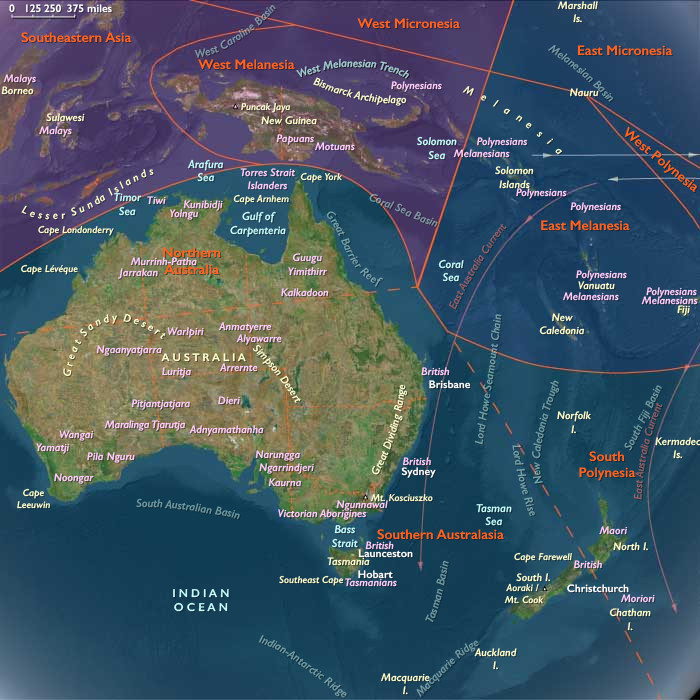
Australasia
View →Subregions