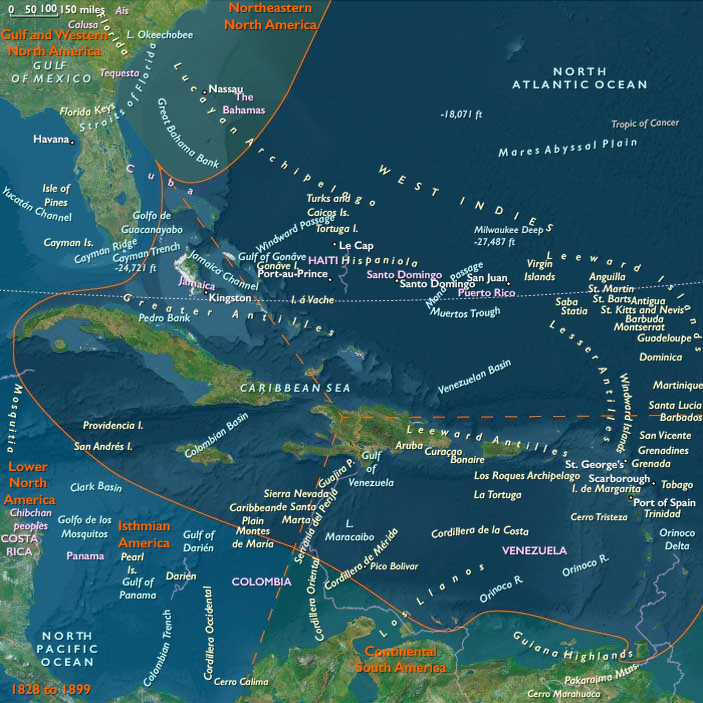
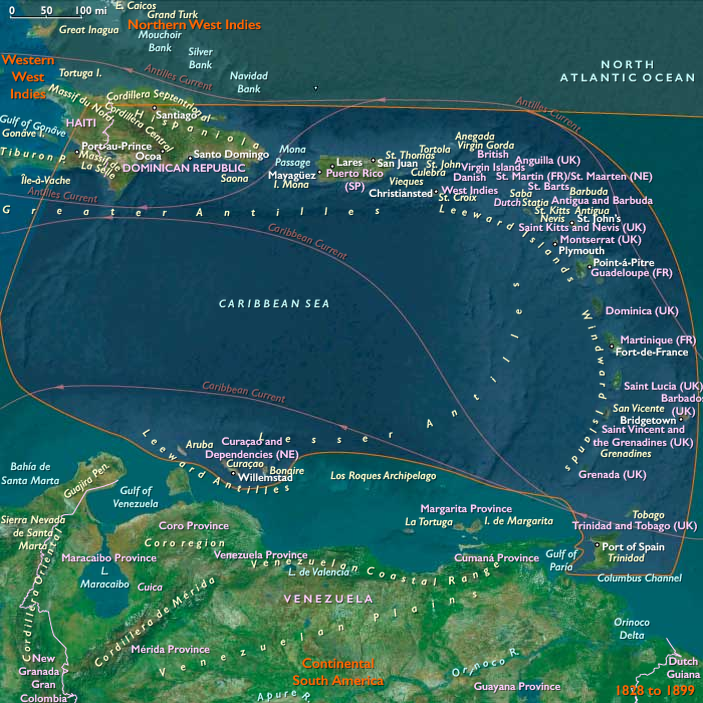
Abolition of slavery is difficult for the…
1828 CE to 1839 CE
Extending those civil rights, as always, is neither easily nor gracefully achieved because the political systems have existed for centuries as the narrow instruments of the small, white, landed elite—largely absentee—whose members are threatened by the removal of their special trade preferences.
Above all, there are economic difficulties.
Sugar prices are falling, and West Indian producers are facing severe competition not only from other producers in the British Empire (such as India, South Africa, and Australia) and non-imperial cane sugar producers (such as Cuba and Brazil) but also from beet sugar producers in Europe and the United States.
Falling prices coincide with rising labor costs, complicated by the urgent need to regard the ex-slaves as wage laborers able and willing to bargain for their pay.
Groups
Topics
Commodities
Regions