
Filters:
The Mamluks indirectly foster relations between Europe …
Years: 1396 - 1539
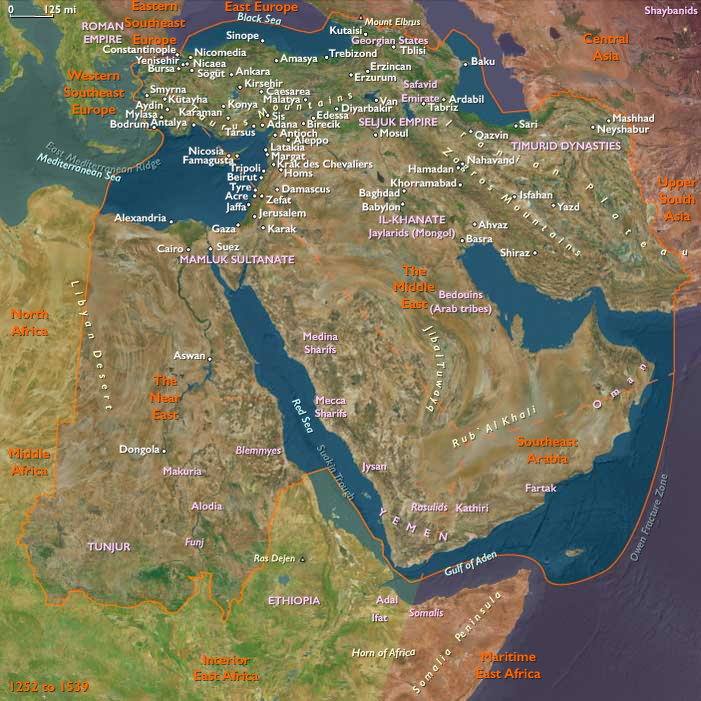
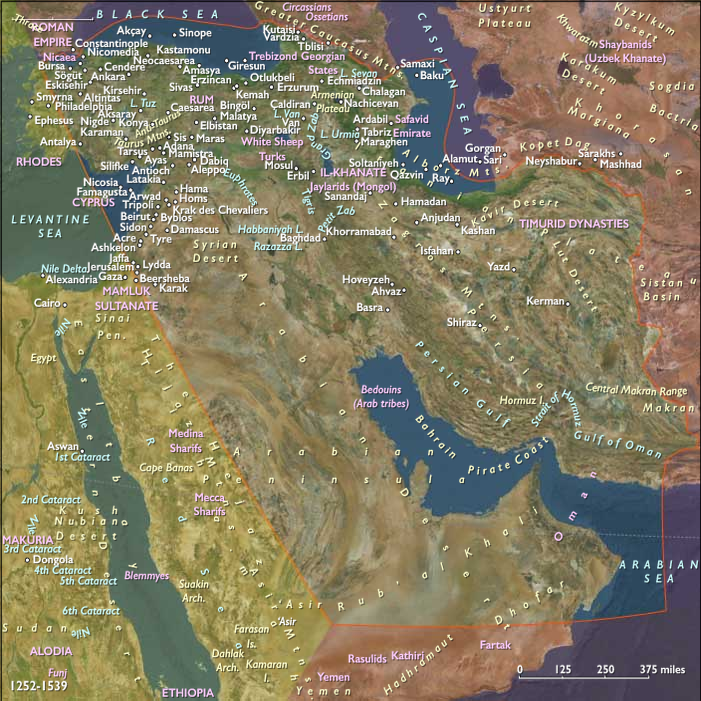
The Mamluks indirectly foster relations between Europe and the Middle East even after the fall of the Byzantine Empire.
The Europeans, accustomed to luxury items from the Middle East, strongly desire both its raw materials and its manufactured products, and the people of the Middle East wish to exploit the lucrative European market.
Beirut, favored by its geographical location, becomes the center of intense trading activity.
Locations
People
Groups
- Semites
- Arab people
- Christians, Maronite
- Christians, Miaphysite (Oriental Orthodox)
- Islam
- Muslims, Sunni
- Muslims, Shi'a
- Papal States (Republic of St. Peter)
- Turkmen people
- Druze, or Druse, the
- Christians, Roman Catholic
- Christians, Eastern Orthodox
- Palestine, Mamluk
- Roman Empire, Eastern: Palaiologan dynasty
- Egypt and Syria, Mamluk Burji Sultanate of
Subjects
Regions
Subregions
Years: 1396 - 1539
Locations
People
Groups
- Semites
- Arab people
- Christians, Maronite
- Christians, Miaphysite (Oriental Orthodox)
- Islam
- Muslims, Sunni
- Muslims, Shi'a
- Papal States (Republic of St. Peter)
- Turkmen people
- Druze, or Druse, the
- Christians, Roman Catholic
- Christians, Eastern Orthodox
- Palestine, Mamluk
- Roman Empire, Eastern: Palaiologan dynasty
- Egypt and Syria, Mamluk Burji Sultanate of
Subjects
Regions
Subregions