The route taken by peoples who migrated…
2637 BCE to 910 BCE
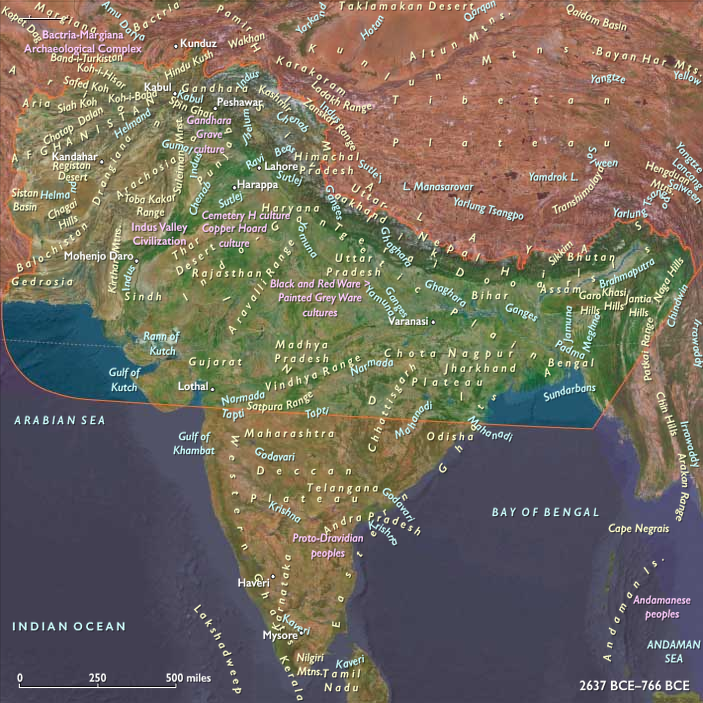
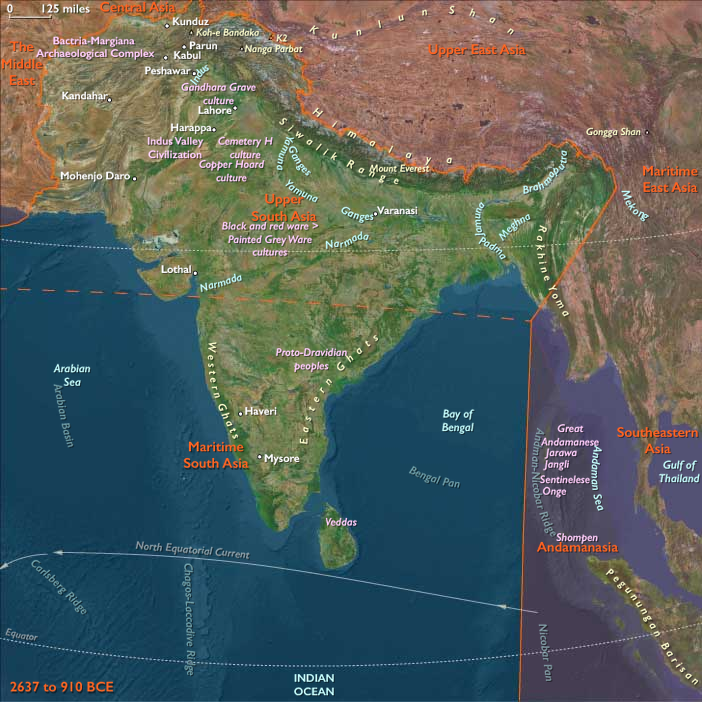
The route taken by peoples who migrated to India until the entry of the Europeans by sea in the late fifteenth century, and with the exception of the Arab conquests of Muhammad bin Qasim in the early eighth century, has been through the mountain passes, most notably the Khyber Pass, in northwestern Pakistan.
Unrecorded migrations may have taken place earlier, but it is certain that migrations increase in the second millennium BCE.
The records of these people—who speak an Indo-European language—are literary, not archaeological, and are preserved in the Vedas, collections of orally transmitted hymns.
In the greatest of these, the "Rig Veda," the Aryan speakers appear as a tribally organized, pastoral, and pantheistic people.
The later Vedas and other Sanskritic sources, such as the Puranas (literally, "old writings"—an encyclopedic collection of Hindu legends, myths, and genealogy), indicate an eastward movement from the Indus Valley into the Ganges Valley (called Ganga in Asia) and southward at least as far as the Vindhya Range, in central India.
Locations
Topics
Regions
South Asia
View →Subregions