The so-called “Fowling Scene” fresco from the…
1353 BCE to 1342 BCE
The so-called “Fowling Scene” fresco from the tomb of Nebamun at Thebes, painted around 1350, depicts an Egyptian nobleman and his family hunting from a boat gliding through a lush papyrus marsh.
The tomb features the famous Pond in a Garden false fresco painting.
Amenhotep II, a pharaoh of the Eighteenth dynasty of Egypt, builds the so-called Colossus of Memnon near Thebes.
Amenhotep III dies in 1351/50, having maintained extensive diplomatic contacts with other Near Eastern states, especially Mitanni and Babylonia, as recorded in the so-called Amarna tablets.
His humbly born wife Tiye has been prominently associated with him during his long and peaceful reign over the Egyptian empire (now at its most powerful).
Amenhotep III enjoys the distinction of having the most surviving statues of any Egyptian Pharaoh depicting his likeness, with over two hundred and fifty of his statues having been discovered and identified.
His lengthy reign, which has been relatively peaceful and uneventful, has also been a period of unprecedented prosperity and artistic splendor when Egypt reached the very height of its power and influence and which commands immense respect in the international world; however, he also bequeaths an Egypt that is wedded to its traditional political and religious certainties under the Amun priesthood.
His son succeeds him as Amenhotep IV and, immediately upon his accession, begins building a new type of roofless temple to the “Aten” ("Sun disk").
The resulting upheavals from his son's reforming zeal will shake these old certainties to their foundation and bring forth the central question of whether pharaoh is more powerful than the existing domestic order as represented by the Amun priests and their numerous temple estates.
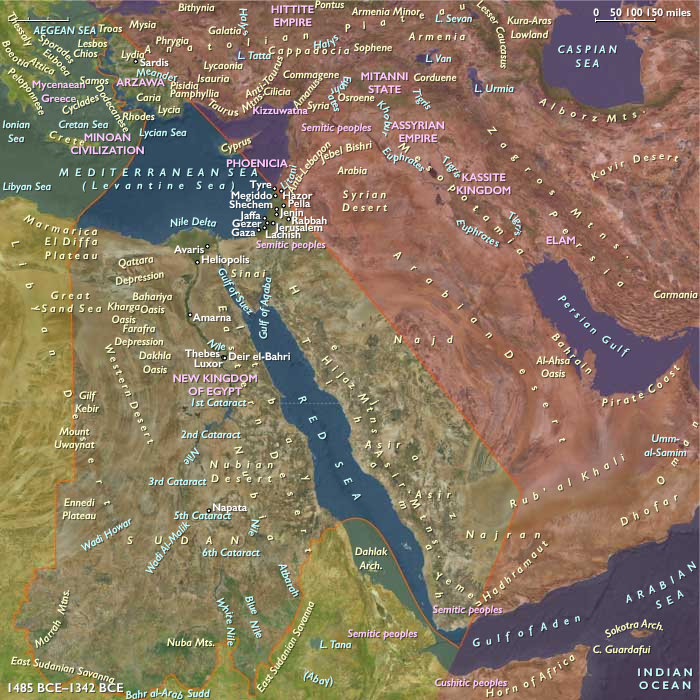
In the fifth year of his reign, Amenhotep IV changes his name from Amenhotep ("Amon is satisfied") to Akhenaten, or Ikhanaton ("beneficial to Aten") and abandons Thebes for a new capital at Tell el-Amarna, living there with his queen Nefertiti, six daughters, and possibly several sons.
Akhenaten blends religious reform and skillful tactics to bolster absolute royal power over the Egyptian bureaucracy and the army.
During Akhenaten’s reign, the only other god acknowledged is King Akhenaton himself.
His followers regard him as eternally revitalized by Aton's rays.
His monotheism, however, is apparently genuine and innovative.
Locations
Groups
Topics
Subjects
Regions
The Near and Middle East
View →Subregions