The civil war is a major turning…
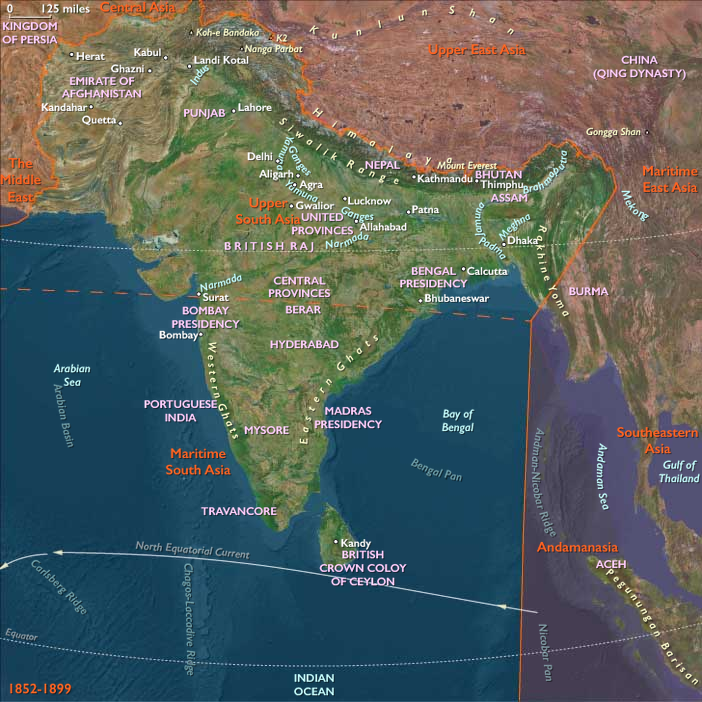
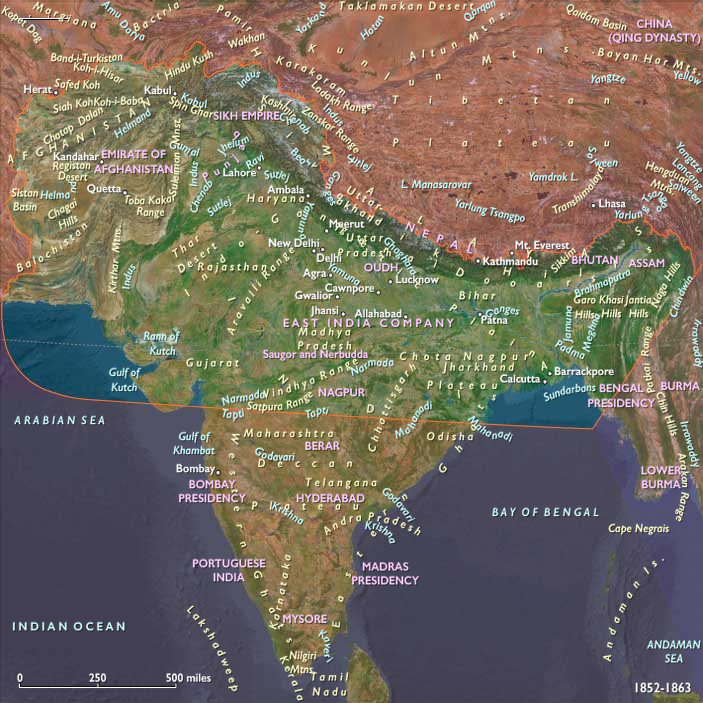
1852 CE to 1863 CE
The civil war is a major turning point in the history of modern India.
In May 1858, the British exile Emperor Bahadur Shah II (r. 1837-57) to Burma, thus formally liquidating the Mughal Empire.
At the same time, they abolish the British East India Company and replace it with direct rule under the British crown.
In proclaiming the new direct-rule policy to "the Princes. Chiefs, and Peoples of India," Queen Victoria (who will be given the title Empress of India in 1877) promises equal treatment under British law, but Indian mistrust of British rule has become a legacy of the 1857 rebellion.
Many existing economic and revenue policies remain virtually unchanged in the post-1857 period, but several administrative modifications are introduced, beginning with the creation in London of a cabinet post, the secretary of state for India.
The governor-general (called viceroy when acting as the direct representative of the British crown), headquartered in Calcutta, runs the administration in India, assisted by executive and legislative councils.
Beneath the governor-general are the provincial governors, who hold power over the district officials, who form the lower rungs of the Indian Civil Service.
For decades the Indian Civil Service has been the exclusive preserve of the British-born, as are the superior ranks in such other professions as law and medicine.
The British administrators are imbued with a sense of duty in ruling India and are rewarded with good salaries, high status, and opportunities for promotion.
Not until the 1910s will the British reluctantly permit a few Indians into their cadre as the number of English-educated Indians rises steadily.
People
Groups
Topics
Subjects
Regions